Mon, Sep 21, 2026
[Archive]
Volume 12, Issue 2 (Spring 2026)
JCCNC 2026, 12(2): 121-132 |
Back to browse issues page




Download citation:
BibTeX | RIS | EndNote | Medlars | ProCite | Reference Manager | RefWorks
Send citation to:


BibTeX | RIS | EndNote | Medlars | ProCite | Reference Manager | RefWorks
Send citation to:
Zuhdy N, Noviani J, Gumilang L, Adnani Q E S, Susiarno H, Adepoju V A. Is It Feasible to Increase the Number of Breastfed Infants? A Literature Review on Midwives’ Support in Breastfeeding. JCCNC 2026; 12 (2) :121-132
URL: http://jccnc.iums.ac.ir/article-1-885-en.html
URL: http://jccnc.iums.ac.ir/article-1-885-en.html
Nabila Zuhdy *1 

 , Josi Noviani2 , Lani Gumilang3 , Qorinah Estiningtyas Sakilah Adnani3 , Hadi Susiarno4 , Victor Abiola Adepoju5
, Josi Noviani2 , Lani Gumilang3 , Qorinah Estiningtyas Sakilah Adnani3 , Hadi Susiarno4 , Victor Abiola Adepoju5
1- Faculty of Medicine, Universitas Padjadjaran, Bandung, West Java, Indonesia , nabila24011@mail.unpad.ac.id
2- Faculty of Medicine, Universitas Padjadjaran, Bandung, West Java, Indonesia
3- Department of Public Health, Faculty of Medicine, Universitas Padjadjaran, Bandung, West Java, Indonesia and Midwifery Working Group, Faculty of Medicine, Universitas Padjadjaran, Bandung, West Java, Indonesia
4- Department of Obstetric and Gynaecology, Faculty of Medicine, Universitas Padjadjaran, Bandung, West Java, Indonesia
5- Department of HIV and Infectious Diseases, Jhpiego (an Affiliate of John Hopkins University), Abuja, Nigeria
2- Faculty of Medicine, Universitas Padjadjaran, Bandung, West Java, Indonesia
3- Department of Public Health, Faculty of Medicine, Universitas Padjadjaran, Bandung, West Java, Indonesia and Midwifery Working Group, Faculty of Medicine, Universitas Padjadjaran, Bandung, West Java, Indonesia
4- Department of Obstetric and Gynaecology, Faculty of Medicine, Universitas Padjadjaran, Bandung, West Java, Indonesia
5- Department of HIV and Infectious Diseases, Jhpiego (an Affiliate of John Hopkins University), Abuja, Nigeria
Keywords: Midwifery, Midwife support, Breastfeeding, Exclusive breastfeeding (EBF), Breastfeeding support
Full-Text [PDF 725 kb]
(359 Downloads)
| Abstract (HTML) (698 Views)
Full-Text: (38 Views)
Introduction
Research acknowledges the benefits of exclusive breastfeeding (EBF) for infants and mothers. Human milk is considered the ideal standard for infant nutrition, protecting newborns against gastrointestinal and ear, nose, and throat infections, as well as food allergies, asthma, and eczema (Le Doare et al., 2018; Turck et al., 2013). The omega-3 and omega-6 fatty acids included in breast milk enhance brain growth (Bzikowska-Jura et al., 2018; Casavale et al., 2019) and the maturation of the neonate’s brain (Gibbs et al., 2018). Prolonged EBF has been identified as a protective factor against sudden infant death syndrome (SIDS) in newborns (Geddes et al., 2021). The advantages of breastfeeding for the mother are evident immediately following childbirth. It induces uterine contractions via oxytocin, which aids in reducing postpartum hemorrhage (Saxton et al., 2015). Furthermore, oxytocin facilitates the enhancement of the maternal-infant relationship and provides a safeguard against postpartum depression (Donadon et al., 2021). Breastfeeding also contributes to reducing women’s risks of developing hypertension, metabolic diseases, and myocardial infarctions (Chowdhury et al., 2015). Research indicates that breastfeeding serves as a protective factor for mothers against cancer, specifically ovarian and breast cancer, as well as heart attacks and type 2 diabetes (Rameez et al., 2019). Advocating for breastfeeding has emerged as a global public health objective.
The World Health Organization (WHO) recommends EBF during the initial six months, without the introduction of any other substances other than breast milk. Following the introduction of supplementary foods, breastfeeding should ideally persist for a minimum of two years and beyond (Dewey, 2003). From six months to one year of age, breast milk provides approximately 50% of a child’s energy and nutrient requirements, and during the second year, it supplies around 33%. Given that the nutrients in breast milk are superior to those in complementary foods, breastfeeding should continue even after the introduction of additional foods. These suggestions are supported by research indicating that EBF markedly decreases infant morbidity and mortality rates in comparison to partial or absent breastmilk consumption (Victora et al., 2016). Notwithstanding these suggestions, breastfeeding rates in several nations remain below the prescribed levels. According to UNICEF data from 2024, only 48% of newborns worldwide are exclusively breastfed throughout the initial five months. South Asia exhibits the greatest percentage at 51%, whereas North America has a rate of merely 26% (UNICEF, 2024). Research indicates various factors contributing to early weaning, such as nipple pain, discomfort, and insufficient milk production (Gianni et al., 2019). There is much societal and educational awareness concerning the acknowledged benefits of breastfeeding. This awareness can create significant societal pressure on women, resulting in feelings of guilt and inadequacy if their breastfeeding practices do not meet expectations (Gila-Díaz et al., 2020).
A 2022 Cochrane comprehensive review indicated that offering breastfeeding support to mothers can probably prolong both the length and exclusivity of breastfeeding. This support may be more effective in reducing the number of women who discontinue breastfeeding at three to four months rather than at later periods. A major factor contributing to early discontinuation is women’s perceived challenges with breastfeeding (Gavine et al., 2022). Studies demonstrate that midwives are crucial to successful breastfeeding. They offer information, guidance, and support to women from pregnancy until the postpartum phase. Numerous complications that emerge in the initial month postpartum can be addressed via comprehensive information and assistance from midwives. This review maps the writings on the role of midwives in providing breastfeeding support and its effect on success rates.
Methods and Materials
Study design
This study employed a literature review approach, focusing on articles published between 2020 and 2025. The objective was to collect and evaluate relevant studies concerning the support midwives provide for breastfeeding. By synthesizing insights from previous research, the study aimed to identify key trends, findings, and existing research gaps.
Search strategy
The literature was sourced from reputable scientific databases, such as PubMed, ScienceDirect, and Cochrane Library. A set of keywords was used, including “midwives”, “midwives’ support”, “breastfeeding “ and “exclusive breast feeding”. Boolean operators (AND, OR) were used to improve search results across databases. This approach followed the PIO framework: population (breastfeeding mothers), intervention (midwives’ support, midwifery continuity of care {MCoC}), and the outcomes (enhanced self-efficacy, and extended durations of EBF) to focus the search on relevant studies.
Inclusion and exclusion criteria
Peer-reviewed full-text articles, available in English and published between 2020 and 2025 were included. Articles were excluded if they were not available in full text or had been published in languages other than English. Literature and systematic reviews and grey literature were also excluded.
Study selection process
To promote objectivity and consistency, the publications were first assessed independently by two reviewers who screened titles and abstracts to determine their initial eligibility based on predefined inclusion and exclusion criteria. In cases where the two reviewers could not reach a common decision on the articles, a discussion was held with all authors present. Articles that passed this initial evaluation underwent a thorough full-text review to confirm their suitability for inclusion.
Data synthesis and analysis
The included articles were gathered and narratively synthesized to achieve a thorough understanding of the topic, with conclusions organized according to the main themes identified in the literature, providing insights into the midwives’ support in breastfeeding.
A thematic synthesis approach was used to organize data into four key themes as follows: breastfeeding counseling boosted mothers’ self-efficacy, increased commitment to breastfeeding, and their performance in breastfeeding; midwives’ support can encourage breastfeeding practices; MCoC increased the chance of EBF and the duration of breastfeeding; and education by midwives on breastfeeding using diverse strategies enhances long-term commitment to breastfeeding. This method allowed for an in-depth examination of the data, emphasizing critical findings and identifying gaps in the literature regarding midwives’ roles in breastfeeding support.
Results
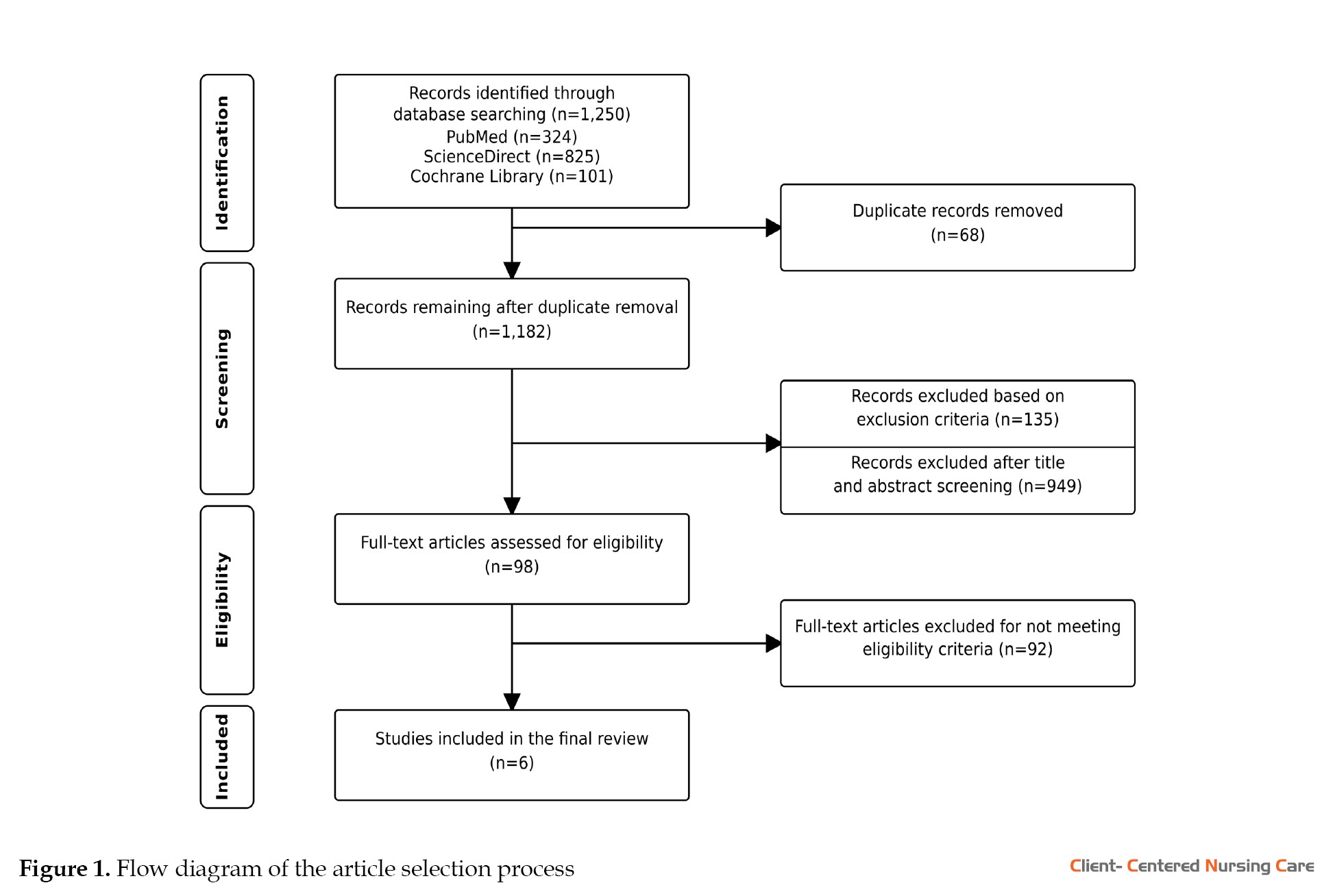
We found a total of 1,250 articles from three different databases and only six articles were eligible for inclusion in the study (Figure 1).
Research acknowledges the benefits of exclusive breastfeeding (EBF) for infants and mothers. Human milk is considered the ideal standard for infant nutrition, protecting newborns against gastrointestinal and ear, nose, and throat infections, as well as food allergies, asthma, and eczema (Le Doare et al., 2018; Turck et al., 2013). The omega-3 and omega-6 fatty acids included in breast milk enhance brain growth (Bzikowska-Jura et al., 2018; Casavale et al., 2019) and the maturation of the neonate’s brain (Gibbs et al., 2018). Prolonged EBF has been identified as a protective factor against sudden infant death syndrome (SIDS) in newborns (Geddes et al., 2021). The advantages of breastfeeding for the mother are evident immediately following childbirth. It induces uterine contractions via oxytocin, which aids in reducing postpartum hemorrhage (Saxton et al., 2015). Furthermore, oxytocin facilitates the enhancement of the maternal-infant relationship and provides a safeguard against postpartum depression (Donadon et al., 2021). Breastfeeding also contributes to reducing women’s risks of developing hypertension, metabolic diseases, and myocardial infarctions (Chowdhury et al., 2015). Research indicates that breastfeeding serves as a protective factor for mothers against cancer, specifically ovarian and breast cancer, as well as heart attacks and type 2 diabetes (Rameez et al., 2019). Advocating for breastfeeding has emerged as a global public health objective.
The World Health Organization (WHO) recommends EBF during the initial six months, without the introduction of any other substances other than breast milk. Following the introduction of supplementary foods, breastfeeding should ideally persist for a minimum of two years and beyond (Dewey, 2003). From six months to one year of age, breast milk provides approximately 50% of a child’s energy and nutrient requirements, and during the second year, it supplies around 33%. Given that the nutrients in breast milk are superior to those in complementary foods, breastfeeding should continue even after the introduction of additional foods. These suggestions are supported by research indicating that EBF markedly decreases infant morbidity and mortality rates in comparison to partial or absent breastmilk consumption (Victora et al., 2016). Notwithstanding these suggestions, breastfeeding rates in several nations remain below the prescribed levels. According to UNICEF data from 2024, only 48% of newborns worldwide are exclusively breastfed throughout the initial five months. South Asia exhibits the greatest percentage at 51%, whereas North America has a rate of merely 26% (UNICEF, 2024). Research indicates various factors contributing to early weaning, such as nipple pain, discomfort, and insufficient milk production (Gianni et al., 2019). There is much societal and educational awareness concerning the acknowledged benefits of breastfeeding. This awareness can create significant societal pressure on women, resulting in feelings of guilt and inadequacy if their breastfeeding practices do not meet expectations (Gila-Díaz et al., 2020).
A 2022 Cochrane comprehensive review indicated that offering breastfeeding support to mothers can probably prolong both the length and exclusivity of breastfeeding. This support may be more effective in reducing the number of women who discontinue breastfeeding at three to four months rather than at later periods. A major factor contributing to early discontinuation is women’s perceived challenges with breastfeeding (Gavine et al., 2022). Studies demonstrate that midwives are crucial to successful breastfeeding. They offer information, guidance, and support to women from pregnancy until the postpartum phase. Numerous complications that emerge in the initial month postpartum can be addressed via comprehensive information and assistance from midwives. This review maps the writings on the role of midwives in providing breastfeeding support and its effect on success rates.
Methods and Materials
Study design
This study employed a literature review approach, focusing on articles published between 2020 and 2025. The objective was to collect and evaluate relevant studies concerning the support midwives provide for breastfeeding. By synthesizing insights from previous research, the study aimed to identify key trends, findings, and existing research gaps.
Search strategy
The literature was sourced from reputable scientific databases, such as PubMed, ScienceDirect, and Cochrane Library. A set of keywords was used, including “midwives”, “midwives’ support”, “breastfeeding “ and “exclusive breast feeding”. Boolean operators (AND, OR) were used to improve search results across databases. This approach followed the PIO framework: population (breastfeeding mothers), intervention (midwives’ support, midwifery continuity of care {MCoC}), and the outcomes (enhanced self-efficacy, and extended durations of EBF) to focus the search on relevant studies.
Inclusion and exclusion criteria
Peer-reviewed full-text articles, available in English and published between 2020 and 2025 were included. Articles were excluded if they were not available in full text or had been published in languages other than English. Literature and systematic reviews and grey literature were also excluded.
Study selection process
To promote objectivity and consistency, the publications were first assessed independently by two reviewers who screened titles and abstracts to determine their initial eligibility based on predefined inclusion and exclusion criteria. In cases where the two reviewers could not reach a common decision on the articles, a discussion was held with all authors present. Articles that passed this initial evaluation underwent a thorough full-text review to confirm their suitability for inclusion.
Data synthesis and analysis
The included articles were gathered and narratively synthesized to achieve a thorough understanding of the topic, with conclusions organized according to the main themes identified in the literature, providing insights into the midwives’ support in breastfeeding.
A thematic synthesis approach was used to organize data into four key themes as follows: breastfeeding counseling boosted mothers’ self-efficacy, increased commitment to breastfeeding, and their performance in breastfeeding; midwives’ support can encourage breastfeeding practices; MCoC increased the chance of EBF and the duration of breastfeeding; and education by midwives on breastfeeding using diverse strategies enhances long-term commitment to breastfeeding. This method allowed for an in-depth examination of the data, emphasizing critical findings and identifying gaps in the literature regarding midwives’ roles in breastfeeding support.
Results
We found a total of 1,250 articles from three different databases and only six articles were eligible for inclusion in the study (Figure 1).
These studies provided valuable insights and were relevant to the objectives of this literature review, significantly deepening our understanding of the topic.
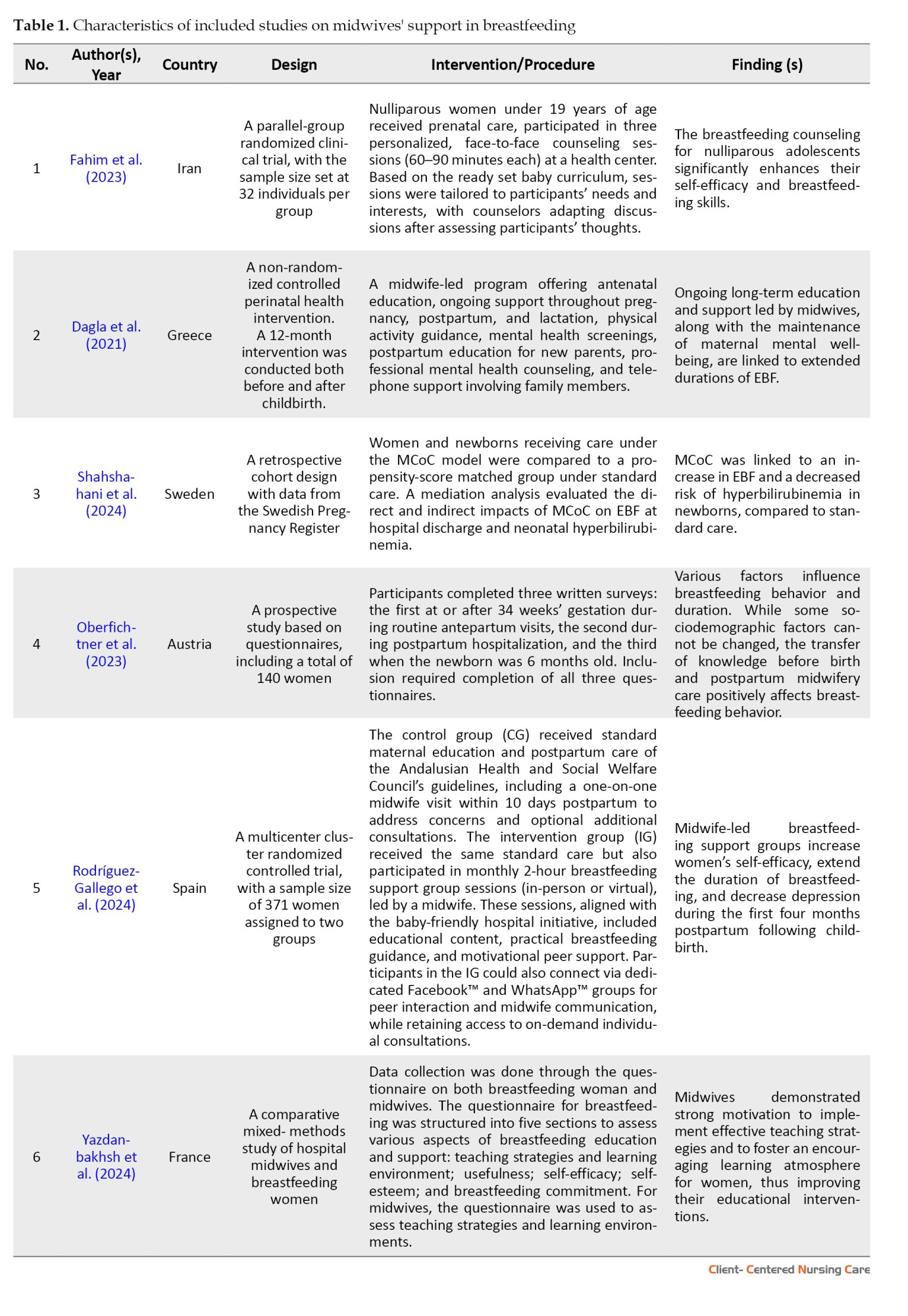
A literature review of six studies from 2020 to 2025 across Iran, Greece, Sweden, Austria, Spain, and France highlights the impact of midwifery-led interventions on breastfeeding outcomes. In Iran, the ready set baby program significantly boosted self-efficacy and skills in nulliparous adolescents. A 12-month Greek intervention linked midwife-led education and maternal mental well-being to longer EBF. A Swedish cohort study showed that MCoC increased EBF and reduced new-born hyperbilirubinemia. In Austria, prenatal knowledge transfer and postpartum care positively influenced breastfeeding behavior. A randomized trial in Spain found that midwife-led support groups enhanced self-efficacy, extended breastfeeding duration, and reduced postpartum depression. In France, midwives’ effective teaching strategies improved educational interventions, fostering a supportive learning environment for breastfeeding women (Table 1).
The obtained data were categorized into four themes based on thematic analysis as follows:
1) Breastfeeding counseling boosted mothers’ self-efficacy, increased their commitment to breastfeeding, and improved their breastfeeding performance.
2) Midwives’ support can encourage breastfeeding practices.
3) MCoC increased the chance of EBF and the duration of breastfeeding.
4) Midwives’ education on breastfeeding using diverse strategies enhances long-term commitment to breastfeeding.
Discussion
Breastfeeding counseling enhanced mothers’ confidence, commitment, and overall efficacy
Breastfeeding self-efficacy (BSE) denotes a mother’s confidence in her ability to effectively nourish her infant through breastfeeding (Gonzales, 2020). This confidence is a crucial factor in both the exclusivity and longevity of breastfeeding (Khorshidifard et al., 2022). Unfortunately, numerous nulliparous women lack the fundamental knowledge and self-efficacy necessary for effective breastfeeding (Ghasemi et al., 2019). Adolescent mothers are particularly disadvantaged, with markedly lower BSE than their older counterparts (Eslami et al., 2020). This gap is frequently associated with their insufficient breastfeeding experience and comparatively lower educational levels, both of which lead to reduced self-efficacy (Aghababaei et al., 2020). As a result, these women require extensive counseling and support to bolster their breastfeeding confidence (Eslami et al., 2020).
A study in Iran indicated that mothers with low BSE are at an elevated risk of prematurely ceasing breastfeeding, especially EBF (Poorshaban et al., 2017). This study denotes that it is essential for mothers to develop the skills required to commence breastfeeding promptly after childbirth, during the crucial postpartum phase. Moreover, conveying information to husbands, family members, and friends through intervention groups regarding prevalent breastfeeding challenges (including concerns about milk supply, re-entering the workforce, breast engorgement, mastitis, and breastfeeding refusal), alongside practical strategies to mitigate these issues, can enhance comprehension of breastfeeding (Poorshaban et al., 2017).
A recent study indicates that BSE is the most significant factor affecting EBF among adolescent mothers (Thaithae et al., 2023). Educational interventions and support have demonstrated efficacy in promoting EBF and BSE (Gonzales, 2020; Wong et al., 2021). The counseling provided by healthcare providers is essential for enhancing breastfeeding success (Dukuzumuremyi et al., 2020). Numerous studies have demonstrated the beneficial impact of lactational counseling and supplementary interventions on maintaining EBF, augmenting self-efficacy, and enhancing overall breastfeeding efficacy (Aghababaei et al., 2020; Ghasemi et al., 2019; Parsa et al., 2020; Shafaei et al., 2020).
An essential component of midwifery care during the perinatal phase is prenatal counseling, which effectively prepares mothers to initiate breastfeeding immediately post-delivery, a strategy that significantly influences future breastfeeding results (Fahim et al., 2023). Inadequate breastfeeding teaching and counseling during antenatal care may result in premature weaning. Prior studies affirm that midwives are integral to perinatal health interventions, especially via antenatal education and counseling for prospective parents (Iliadou et al., 2018; McFadden et al., 2017), as well as providing ongoing support to breastfeeding mothers well beyond childbirth (McFadden et al., 2017; Meedya et al., 2017). These circumstances are crucial for promoting sustained breastfeeding success. It has been shown that prenatal group counseling can significantly improve BSE and mitigate various breastfeeding problems in the postpartum phase (Shafaei et al., 2020). Prenatal counseling markedly improves outcomes in the early days post-childbirth, which is essential for the initiation and continuation of breastfeeding (Fahim et al., 2023).
The support of midwives can promote breastfeeding practices
Many women feel a strong sense of responsibility for ensuring their child’s healthy nutrition and development, particularly through breastfeeding. This awareness of breastfeeding’s benefits can lead to significant self-imposed pressure, making it harder for mothers to cope with challenges that arise (Gila-Díaz et al., 2020). Research highlights that one of the most common concerns is the perception of insufficient breast milk production, with mothers often worrying that their baby is not receiving enough milk, and this lack of confidence in milk supply frequently contributes to early breastfeeding cessation (Huang et al., 2022; Li et al., 2008; Oberfichtner et al., 2023; Olalere & Harley, 2024). However, studies suggest that this perception is often subjective rather than based on clinical evidence, with concerns sometimes emerging even before breastfeeding begins, triggered by infant behaviors, such as frequent crying or difficulties with suckling (Huang et al., 2022; Peacock-Chambers et al., 2017). Notably, over 95% of mothers are physiologically capable of producing sufficient milk to meet their baby’s nutritional needs during the first four months (Brown et al., 2014).
Younger maternal age is often associated with shorter breastfeeding duration, largely due to emotional challenges, such as anxiety and fear of failure (Liu et al., 2013; Santana et al., 2018). Many young mothers view themselves as solely responsible for their child’s health, which can amplify the pressure they place on themselves to succeed at breastfeeding (Gila-Díaz et al., 2020). This heightened stress can make it difficult to address breastfeeding difficulties effectively. As a result, younger mothers particularly benefit from comprehensive counseling and positive reinforcement to build confidence and resilience, supporting them in sustaining breastfeeding for longer periods.
Inadequate breastfeeding techniques also significantly contribute to challenges, often leading to perceived insufficient milk production and early discontinuation of breastfeeding (Colombo et al., 2018; Oberfichtner et al., 2023; Odom et al., 2013; Rollins et al., 2016). Poor techniques are linked to additional complications, such as nipple injuries, breastfeeding pain, engorgement, and mastitis (Gianni et al., 2019). These findings underscore the importance of targeted education on proper latch, positioning, and breastfeeding techniques. Such support not only helps prevent early cessation but also reduces the incidence of related complications. Ongoing professional guidance has been shown to be critical in helping mothers achieve their breastfeeding goals, aligning with WHO recommendations for duration and exclusivity (Odom et al., 2013).
A 2017 Cochrane review, analyzing 73 randomized controlled trials with 74,656 mother-infant pairs, confirmed that various forms of breastfeeding support significantly increase breastfeeding rates, particularly in regions with high initiation rates (McFadden et al., 2017). This evidence highlights the value of structured support systems in promoting breastfeeding success. Additionally, research highlights the significant benefits of midwife-led breastfeeding support groups, which not only extend breastfeeding duration but also reduce postpartum depression. These groups create a supportive environment that boosts mothers’ confidence and self-efficacy, longer breastfeeding periods, and lower rates of postpartum depression four months after delivery compared to those without such support (Rodríguez-Gallego et al., 2024). These findings underscore the importance of midwives developing targeted strategies to promote breastfeeding initiation and continuation while addressing maternal mental health challenges.
A recent review arrived at the same conclusion that the quality and quantity of breastfeeding support services led by midwives are linked to improved breastfeeding duration and exclusivity (Gavine et al., 2022). Furthermore, ongoing midwife-led education and support, combined with efforts to nurture maternal mental well-being, are strongly associated with longer periods of EBF (Dagla et al., 2021). The critical role of midwives in providing education and encouragement is consistently emphasized in global literature, widely recognized by both healthcare professionals and mothers (Ekström & Nissen, 2006).
MCoC improves the likelihood of EBF
MCoC refers to a care model in which the same midwife or a small team of midwives give continuous care throughout pregnancy, childbirth, and the postpartum phase. This approach ensures a consistent, relationship-based maternity care experience from early pregnancy to the postnatal phase. MCoC includes post-discharge home visits, offering support for breastfeeding or formula feeding, as well as neonatal care guidance. Research shows that MCoC positively influences both maternal and newborn outcomes by reducing the need for clinical interventions, such as instrumental deliveries and cesarean sections, while also enhancing satisfaction with care, information, support, and advice (Hatem et al., 2024).
WHO advises EBF for the initial six months, then continuing breastfeeding alongside suitable complementary foods for up to two years or more. WHO also advocates for early, uninterrupted skin-to-skin contact, rooming-in, and kangaroo mother care to promote breastfeeding success (World Health Organization & United Nations Children’s Fund, 2018). MCoC plays a crucial role in facilitating these recommendations by providing consistent guidance and support to mothers. Several factors influence breastfeeding decisions, including personal experiences, number of children, partner support, availability of maternal education and midwifery services, as well as informal information sources, like the internet (Ballesta-Castillejos et al., 2020).
To improve breastfeeding outcomes further, MCoC incorporates interdisciplinary partnerships between midwives and mental health specialists. This intervention is based on three key research assumptions that are internationally linked to the increased rates of breastfeeding initiation and continuation: (a) midwifery-led antenatal education and counseling for pregnant women and their partners (Iliadou et al., 2018; McFadden et al., 2017), (b) ongoing long-term support, counseling, and oversight of breastfeeding during the postpartum and lactation phases (McFadden et al., 2017; Meedya et al., 2017), and (c) early detection of mental health issues and prompt psychosocial intervention (Kronborg et al., 2007; Wouk et al., 2017).
The essential role of midwives in promoting lactation and the significance of their education and support are well-documented in the literature, both by healthcare professionals and mothers (Ekström & Nissen, 2006). Perinatal midwifery-led education and counseling, along with continuous postpartum support extending up to one year postpartum, appear to be essential components of intervention strategies that promote breastfeeding (Dagla et al., 2021). Research reviews indicate that interventions starting during pregnancy and continuing through the postpartum phases are more effective for sustaining the length and exclusivity of breastfeeding than programs that are solely antenatal or postnatal (Hannula et al., 2008).
Teaching strategies enhance long-term commitment to breastfeeding
WHO underscores breastfeeding education as a cornerstone of health promotion during prenatal care, highlighting its role in fostering positive maternal attitudes toward breastfeeding initiation (Coffman, 2019). Breastfeeding education and support delivered by qualified and skilled healthcare professionals positively influences women’s attitudes toward breastfeeding initiation (Tanaka & Horiuchi, 2021; White, 2020). Comprehensive knowledge provided before childbirth significantly enhances mothers’ confidence in their breastfeeding abilities, setting a strong foundation for successful breastfeeding outcomes (Oberfichtner et al., 2023).
Building on this, midwives often employ a variety of educational tools to support breastfeeding, including written materials, like booklets and leaflets, as well as visual and interactive, such as photos, educational videos, and testimonial films. However, only a subset of women benefit from written supports, while interactive digital platforms, like websites, mobile applications, and text messages are increasingly employed, positively influencing breastfeeding duration in the short and medium term (Yazdanbakhsh et al., 2024). These educational interventions, particularly written materials and proactive telephone support, prove especially effective for first-time mothers. Such interventions not only increase breastfeeding rates but also reduce difficulties, enhance self-efficacy, and improve attitudes toward infant feeding during the first six months postpartum (Puharić et al., 2020).
Supporting these findings, a 2016 Cochrane review demonstrated that women receiving healthcare professional-led breastfeeding education and support were significantly more likely to initiate breastfeeding compared to those receiving standard care (Balogun et al., 2016; Doğan & Yazıcı, 2023). Continued interventions post-childbirth, such as telephone calls or home visits, further extend breastfeeding duration, particularly when women are equipped with knowledge about lactation physiology and common challenges, like breast discomfort, cracking, and engorgement (Yazdanbakhsh et al., 2024).
Both women and midwives highlight the importance of comprehensive breastfeeding education, focusing on topics, like breastfeeding benefits, lactation physiology, and managing complications. Practical pre-birth training, including workshops and educational videos, enhances understanding, while continuous access to reliable resources, such as breastfeeding websites, supports skill development. Community-hospital-peer networks and ongoing support for addressing postnatal challenges further promote sustained breastfeeding, reinforcing its benefits in the short and medium term (Yazdanbakhsh et al., 2024).
This literature review is constrained by several limitations, such as the absence of a quality assessment for these studies, which risks incorporating low-quality findings, as methodological rigor was not evaluated. The narrative synthesis approach, without adherence to systematic guidelines, may introduce selection bias. Geographic bias is evident, with studies from Iran, Greece, Sweden, Austria, Spain, and France lacking representation from low- and middle-income countries. Consequently, the findings may not be generalizable to diverse settings due to their focus on high-resource contexts, and they may not fully capture the global diversity of breastfeeding experiences. To enhance future literature reviews on midwives’ support in breastfeeding, a systematic approach adhering to PRISMA (preferred reporting items for systematic reviews and meta-analyses) guidelines should be adopted, incorporating quality appraisals and potentially a meta-analysis to quantify effect sizes.
Conclusion
Midwives play a crucial role in promoting effective breastfeeding. Their counseling raises mothers’ confidence, strengthens their commitment to breastfeeding, and improves their breastfeeding skills. Positive support from midwives enhances breastfeeding behaviors. Moreover, MCoC interventions initiated throughout pregnancy and sustained into the postpartum period are considered more effective in extending both the duration and exclusivity of breastfeeding compared to programs that are exclusively prenatal or postnatal. The teaching offered by midwives, utilizing diverse techniques and strategies, enhances long-term dedication to breastfeeding. This indicates that, with positive support, education, and ongoing care from midwives, an increased number of infants can be breastfed.
Ethical Considerations
Compliance with ethical guidelines
There were no ethical considerations to be considered in this research.
Funding
This study received no specific grant from any funding agency in the public, commercial, or not-for-profit sectors.
Authors' contributions
Conceptualization, methodology, and protocol development: Nabila Zuhdy and Josi Noviani; Investigation and data curation: Nabila Zuhdy and Josi Noviani, and Qorinah Estiningtyas Sakilah Adnani; Formal analysis and interpretation:: Nabila Zuhdy, Lani Gumilang, and Hadi Susiarno; Writing the original draft: Nabila Zuhdy, Josi Noviani, Qorinah Estiningtyas Sakilah Adnani, and Victor Abiola Adepoju; Review and editing: Nabila Zuhdy, Hadi Susiarno, and Victor Abiola Adepoju; Final approval: All authors.
Conflict of interest
The authors declared no conflict of interest.
Acknowledgments
We express our heartfelt gratitude to the Master of Midwifery Program at the Faculty of Medicine, Universitas Padjadjaran, Bandung, Indonesia, for their invaluable support in finalizing this review.
References
Aghababaei, S., et al., 2020. [Effectivness of counseling on mother’s breastfeeding self-efficacy (Persian)]. Avicenna Journal of Nursing and Midwifery Care, 28(4), pp. 84-91. [DOI:10.30699/ajnmc.28.4.84]
Ballesta-Castillejos, A., et al., 2020. Factors that influence mothers’ prenatal decision to breastfeed in Spain. International Breastfeeding Journal, 15(1), pp. 97. [DOI:10.1186/s13006-020-00341-5] [PMID]
Balogun, O. O., et al., 2016. Interventions for promoting the initiation of breastfeeding. The Cochrane Database of Systematic Reviews, 11(11), pp. CD001688. [DOI:10.1002/14651858.CD001688.pub3]
Brown, C. R., et al., 2014. Factors influencing the reasons why mothers stop breastfeeding. Canadian Journal of Public Health, 105(3), pp. e179-85. [DOI:10.17269/cjph.105.4244] [PMID]
Bzikowska-Jura, A., et al., 2018. Maternal nutrition and body composition during breastfeeding: Association with human milk composition. Nutrients, 10(10), pp. 1379. [DOI:10.3390/nu10101379] [PMID]
Casavale, K. O., et al., 2019. NIH workshop on human milk composition: Summary and visions. The American Journal of Clinical Nutrition, 110(3), pp. 769–79. [DOI:10.1093/ajcn/nqz123] [PMID]
Chowdhury, R., et al., 2015. Breastfeeding and maternal health outcomes: A systematic review and meta‐analysis. Acta Paediatrica (Oslo, Norway : 1992), 104(467), pp. 96–113. [DOI:10.1111/apa.13102] [PMID]
Coffman, L., 2019. The NP’s role in promoting and supporting breastfeeding. The Nurse Practitioner, 44(3), pp. 38–42. [DOI:10.1097/01.NPR.0000553401.96471.77] [PMID]
Colombo, L., et al., 2018. Breastfeeding determinants in healthy term newborns. Nutrients, 10(1), pp. 48. [DOI:10.3390/nu10010048] [PMID]
Dagla, M., et al., 2021. Association between breastfeeding duration and long-term midwifery-led support and psychosocial support: outcomes from a Greek non-randomized controlled perinatal health intervention. International Journal of Environmental Research and Public Health, 18(4), pp. 1988. [DOI:10.3390/ijerph18041988] [PMID]
Dewey, K., 2003. Guiding principles for complementary feeding of the breastfed child. Washington DC: Pan American Health Organization. [Link]
Doğan, R. A. & Yazıcı, S., 2023. Development and initial validation of an innovative virtual reality simulation in teaching fetal development of midwifery students: qualitative analysis. Journal of Modern Nursing Practice and Research, 3(3), pp. 17. [DOI:10.53964/jmnpr.2023017]
Donadon, M. F., Martin-Santos, R. & Osório, F., 2021. Oxytocin effects on the cognition of women with postpartum depression: A randomized, placebo-controlled clinical trial. Progress in Neuro-Psychopharmacology & Biological Psychiatry, 111, pp. 110098. [DOI:10.1016/j.pnpbp.2020.110098] [PMID]
Dukuzumuremyi, J. P. C., et al., 2020. Knowledge, attitude, and practice of exclusive breastfeeding among mothers in East Africa: A systematic review. International Breastfeeding Journal, 15(1), pp. 70. [DOI:10.1186/s13006-020-00313-9] [PMID]
Ekström, A. & Nissen, E., 2006. A mother’s feelings for her infant are strengthened by excellent breastfeeding counseling and continuity of care. Pediatrics, 118(2), pp. e309–14.[DOI:10.1542/peds.2005-2064] [PMID]
Eslami, E., et al., 2020. Comparison of breastfeeding self-efficacy in mothers with different ages. Journal of Holistic Nursing And Midwifery, 30(4), pp. 208-16. [DOI:10.32598/jhnm.30.4.1096]
Fahim, S. H., et al., 2023. The effect of midwife-oriented breastfeeding counseling on self-efficacy and performance of adolescent mothers: A clinical trial study. BMC Pregnancy and Childbirth, 23(1), pp. 672. [DOI:10.1186/s12884-023-05982-y] [PMID]
Poorshaban F., et al., 2017. Factors associated with breastfeeding self-efficacy of mothers within 6 weeks of delivery. Journal of Holistic Nursing and Midwifery, 27(1), pp. 27-34. [DOI:10.18869/acadpub.hnmj.27.1.27]
Gavine, A., et al., 2022. Support for healthy breastfeeding mothers with healthy term babies. The Cochrane Database of Systematic Reviews, 10(10), pp. CD001141. [DOI:10.1002/14651858.CD001141.pub6] [PMID]
Geddes, D. T., et al., 2021. 25 Years of research in human lactation: from discovery to translation. Nutrients, 13(9), pp. 3071.[DOI:10.3390/nu13093071] [PMID]
Ghasemi, V., et al., 2019. The effect of interventions on breastfeeding self-efficacy by using Bandura’stheory in Iranian mothers: A systematic review. International Journal of Pediatrics, 7(8), pp. 9939-54. [DOI:10.22038/ijp.2019.40842.3446]
Gianni, M. L., et al., 2019. Breastfeeding difficulties and risk for early breastfeeding cessation. Nutrients, 11(10), pp. 2266.[DOI:10.3390/nu11102266] [PMID]
Gibbs, B. G., Forste, R. & Lybbert, E., 2018. Breastfeeding, parenting, and infant attachment behaviors. Maternal and Child Health Journal, 22(4), pp. 579–88. [DOI:10.1007/s10995-018-2427-z] [PMID]
Gila-Díaz, A., et al., 2020. Association between maternal postpartum depression, stress, optimism, and breastfeeding pattern in the first six months. International Journal of Environmental Research and Public Health, 17(19), pp. 7153. [DOI:10.3390/ijerph17197153] [PMID]
Gonzales, A., 2020. Breastfeeding self-efficacy in asia and pacific: Scoping review. Nursing Practice Today, 8(1), pp. 25-39. [DOI:10.18502/npt.v8i1.4489]
Hannula, L., Kaunonen, M. & Tarkka, M., 2008. A systematic review of professional support interventions for breastfeeding. Journal of Clinical Nursing, 17(9), pp. 1132–43. [DOI:10.1111/j.1365-2702.2007.02239.x] [PMID]
Hatem, M., et al., 2024. Midwifery-led versus other models of care delivery for childbearing women, in: H. Marie (Ed.), Cochrane Database of Systematic Reviews. Chichester: John Wiley & Sons, Ltd, . [DOI:10.1002/14651858.CD004667]
Huang, Y., et al., 2022. The rates and factors of perceived insufficient milk supply: A systematic review. Maternal & Child Nutrition, 18(1), pp. e13255. [DOI:10.1111/mcn.13255] [PMID]
Iliadou, M., et al., 2018. Measuring the effectiveness of a midwife-led education programme in terms of breastfeeding knowledge and self-efficacy, attitudes towards breastfeeding, and perceived barriers of breastfeeding among pregnant women. Materia Socio-Medica, 30(4), pp. 240–5. [DOI:10.5455/msm.2018.30.240-245] [PMID]
Khorshidifard, M., et al., 2022. [The relationship between childbirth satisfaction and breastfeeding self-efficacy in women referring to comprehensive health centers in Kashan (Persian)]. Armaghane Danesh, 27(1), pp.84-96. [DOI:10.52547/armaghanj.27.1.84]
Kronborg, H., et al., 2007. Effect of early postnatal breastfeeding support: A cluster‐randomized community based trial. Acta Paediatrica (Oslo, Norway : 1992), 96(7), pp. 1064–70. [DOI:10.1111/j.1651-2227.2007.00341.x] [PMID]
Le Doare, K., et al., 2018. Mother’s Milk: A Purposeful contribution to the development of the infant microbiota and immunity. Frontiers in Immunology, 9, pp. 361. [DOI:10.3389/fimmu.2018.00361] [PMID]
Li, R., et al., 2008. Why mothers stop breastfeeding: mothers’ self-reported reasons for stopping during the first year. Pediatrics, 122 Suppl 2, pp. S69–76. [DOI:10.1542/peds.2008-1315i] [PMID]
Liu, P., et al., 2013. Factors associated with breastfeeding duration: A 30-month cohort study in northwest China. Journal of Human Lactation : Official Journal of International Lactation Consultant Association, 29(2), pp. 253–9. [DOI:10.1177/0890334413477240] [PMID]
McFadden, A., et al., 2017. Support for healthy breastfeeding mothers with healthy term babies. The Cochrane Database of Systematic Reviews, 2(2), pp. CD001141. [DOI:10.1002/14651858.CD001141.pub5] [PMID]
Meedya, S., Fernandez, R. & Fahy, K., 2017. Effect of educational and support interventions on long-term breastfeeding rates in primiparous women: A systematic review and meta-analysis. JBI Database of Systematic Reviews and Implementation Reports, 15(9), pp. 2307–32. [DOI:10.11124/JBISRIR-2016-002955] [PMID]
Oberfichtner, K., et al., 2023. Breastfeeding in primiparous women - expectations and reality: A prospective questionnaire survey. BMC Pregnancy and Childbirth, 23(1), pp. 654. [DOI:10.1186/s12884-023-05971-1] [PMID]
Odom, E. C., et al., 2013. Reasons for earlier than desired cessation of breastfeeding. Pediatrics, 131(3), pp. e726-32. [DOI:10.1542/peds.2012-1295] [PMID]
Olalere, O. & Harley, C., 2024. Why women discontinue exclusive breastfeeding: A scoping review. British Journal of Midwifery, 32, pp. 673-82. [DOI:10.12968/bjom.2024.0044]
Parsa, P., et al., 2020. [The use of Bristol’s tool in lactation counseling and its impact on the breastfeeding status in primiparous mothers undergone Cesarean section (Persian)]. Avicenna Journal of Nursing and Midwifery Care, 27(6), pp. 424-31. [DOI:10.30699/ajnmc.27.6.424]
Peacock-Chambers, E., et al., 2017. Perceived maternal behavioral control, infant behavior, and milk supply: A qualitative study. Journal of Developmental & Behavioral Pediatrics, 38(6), pp. 401-8. [DOI:10.1097/DBP.0000000000000455] [PMID]
Puharić, D., et al., 2020. The effect of a combined intervention on exclusive breastfeeding in primiparas: A randomised controlled trial. Maternal & Child Nutrition, 16(3), pp. e12948. [DOI:10.1111/mcn.12948] [PMID]
Rameez, R. M., et al., 2019. Association of maternal lactation with diabetes and hypertension: A systematic review and meta-analysis. JAMA Network Open, 2(10), pp. e1913401. [DOI:10.1001/jamanetworkopen.2019.13401] [PMID]
Rodríguez-Gallego, I., et al., 2024. Evaluation of the Impact of a Midwife-Led Breastfeeding Group Intervention on Prevention of Postpartum Depression: A Multicentre Randomised Clinical Trial. Nutrients, 16(2), pp. 227. [DOI:10.3390/nu16020227] [PMID]
Rollins, N. C., et al., 2016. Why invest, and what it will take to improve breastfeeding practices? Lancet (London, England), 387(10017), pp. 491–504. [DOI:10.1016/S0140-6736(15)01044-2] [PMID]
Santana, G. S., et al., 2018. Factors associated with breastfeeding maintenance for 12 months or more: A systematic review. Jornal de Pediatria, 94(2), pp. 104–22. [DOI:10.1016/j.jped.2017.06.013] [PMID]
Saxton, A., et al., 2015. Does skin-to-skin contact and breast feeding at birth affect the rate of primary postpartum haemorrhage: Results of a cohort study. Midwifery, 31(11), pp. 1110–17. [DOI:10.1016/j.midw.2015.07.008] [PMID]
Shafaei, F. S., Mirghafourvand, M. & Havizari, S., 2020. The effect of prenatal counseling on breastfeeding self-efficacy and frequency of breastfeeding problems in mothers with previous unsuccessful breastfeeding: A randomized controlled clinical trial. BMC Womens Health, 20(1), pp. 94. [DOI:10.1186/s12905-020-00947-1] [PMID]
Shahshahani, M. A., et al., 2024. Midwifery continuity of care, breastfeeding and neonatal hyperbilirubinemia: A retrospective cohort study. Midwifery, 136, pp. 104079. [DOI:10.1016/j.midw.2024.104079] [PMID]
Tanaka, R. & Horiuchi, S., 2021. Implementing an education program for nurse-midwives focused on early essential care for breast milk expression among mothers of preterm infants. International Breastfeeding Journal, 16(1), pp. 47. [DOI:10.1186/s13006-021-00395-z] [PMID]
Thaithae, S., Yimyam, S. & Polprasarn, P., 2023. Prevalence and predictive factors for exclusive breastfeeding at six months among Thai adolescent mothers. Children (Basel, Switzerland), 10(4), pp. 682. [DOI:10.3390/children10040682] [PMID]
Turck, D., et al., 2013. World Health Organization 2006 child growth standards and 2007 growth reference charts: A discussion paper by the committee on nutrition of the European society for pediatric gastroenterology, hepatology, and nutrition. Journal of Pediatric Gastroenterology and Nutrition, 57(2), pp. 258–64. [DOI:10.1097/MPG.0b013e318298003f] [PMID]
UNICEF., 2024. Too few children benefit from recommended breastfeeding practices. New York: UNICEF. [Link]
Victora, C. G., et al., 2016. Breastfeeding in the 21st century: Epidemiology, mechanisms, and lifelong effect. Lancet (London, England), 387(10017), pp. 475–90. [DOI:10.1016/S0140-6736(15)01024-7] [PMID]
White, S., 2020. Does breastfeeding education provided by health care professionals at the time of prenatal office visits significantly improve breastfeeding rates or duration? Evidence-Based Practice, 23(9), pp. 42-3. [DOI:10.1097/EBP.0000000000000792]
Wong, M. S., Mou, H. & Chien, W. T., 2021. Effectiveness of educational and supportive intervention for primiparous women on breastfeeding related outcomes and breastfeeding self-efficacy: A systematic review and meta-analysis. International Journal of Nursing Studies, 117, pp. 103874. [DOI:10.1016/j.ijnurstu.2021.103874] [PMID]
World Health Organization (WHO) and United Nations Children's Fund (UNICEF)., 2018. Implementation guidance: Protecting, promoting and supporting breastfeeding in facilities providing maternity and newborn services: implementing the revised Baby-friendly Hospital Initiative. GENEVA: WHO and UNICEF. [Link]
Wouk, K., Stuebe, A. M. & Meltzer-Brody, S., 2017. Postpartum mental health and breastfeeding practices: An analysis using the 2010-2011 pregnancy risk assessment monitoring system. Maternal and Child Health Journal, 21(3), pp. 636–47. [DOI:10.1007/s10995-016-2150-6] [PMID]
Yazdanbakhsh, M., et al., 2024. The need for educational intervention for breastfeeding women and the professional practice of midwives in France to promote breastfeeding: A joint explanatory study. European Journal of Midwifery, 8, pp. 73. [DOI:10.18332/ejm/191176] [PMID]
A literature review of six studies from 2020 to 2025 across Iran, Greece, Sweden, Austria, Spain, and France highlights the impact of midwifery-led interventions on breastfeeding outcomes. In Iran, the ready set baby program significantly boosted self-efficacy and skills in nulliparous adolescents. A 12-month Greek intervention linked midwife-led education and maternal mental well-being to longer EBF. A Swedish cohort study showed that MCoC increased EBF and reduced new-born hyperbilirubinemia. In Austria, prenatal knowledge transfer and postpartum care positively influenced breastfeeding behavior. A randomized trial in Spain found that midwife-led support groups enhanced self-efficacy, extended breastfeeding duration, and reduced postpartum depression. In France, midwives’ effective teaching strategies improved educational interventions, fostering a supportive learning environment for breastfeeding women (Table 1).
The obtained data were categorized into four themes based on thematic analysis as follows:
1) Breastfeeding counseling boosted mothers’ self-efficacy, increased their commitment to breastfeeding, and improved their breastfeeding performance.
2) Midwives’ support can encourage breastfeeding practices.
3) MCoC increased the chance of EBF and the duration of breastfeeding.
4) Midwives’ education on breastfeeding using diverse strategies enhances long-term commitment to breastfeeding.
Discussion
Breastfeeding counseling enhanced mothers’ confidence, commitment, and overall efficacy
Breastfeeding self-efficacy (BSE) denotes a mother’s confidence in her ability to effectively nourish her infant through breastfeeding (Gonzales, 2020). This confidence is a crucial factor in both the exclusivity and longevity of breastfeeding (Khorshidifard et al., 2022). Unfortunately, numerous nulliparous women lack the fundamental knowledge and self-efficacy necessary for effective breastfeeding (Ghasemi et al., 2019). Adolescent mothers are particularly disadvantaged, with markedly lower BSE than their older counterparts (Eslami et al., 2020). This gap is frequently associated with their insufficient breastfeeding experience and comparatively lower educational levels, both of which lead to reduced self-efficacy (Aghababaei et al., 2020). As a result, these women require extensive counseling and support to bolster their breastfeeding confidence (Eslami et al., 2020).
A study in Iran indicated that mothers with low BSE are at an elevated risk of prematurely ceasing breastfeeding, especially EBF (Poorshaban et al., 2017). This study denotes that it is essential for mothers to develop the skills required to commence breastfeeding promptly after childbirth, during the crucial postpartum phase. Moreover, conveying information to husbands, family members, and friends through intervention groups regarding prevalent breastfeeding challenges (including concerns about milk supply, re-entering the workforce, breast engorgement, mastitis, and breastfeeding refusal), alongside practical strategies to mitigate these issues, can enhance comprehension of breastfeeding (Poorshaban et al., 2017).
A recent study indicates that BSE is the most significant factor affecting EBF among adolescent mothers (Thaithae et al., 2023). Educational interventions and support have demonstrated efficacy in promoting EBF and BSE (Gonzales, 2020; Wong et al., 2021). The counseling provided by healthcare providers is essential for enhancing breastfeeding success (Dukuzumuremyi et al., 2020). Numerous studies have demonstrated the beneficial impact of lactational counseling and supplementary interventions on maintaining EBF, augmenting self-efficacy, and enhancing overall breastfeeding efficacy (Aghababaei et al., 2020; Ghasemi et al., 2019; Parsa et al., 2020; Shafaei et al., 2020).
An essential component of midwifery care during the perinatal phase is prenatal counseling, which effectively prepares mothers to initiate breastfeeding immediately post-delivery, a strategy that significantly influences future breastfeeding results (Fahim et al., 2023). Inadequate breastfeeding teaching and counseling during antenatal care may result in premature weaning. Prior studies affirm that midwives are integral to perinatal health interventions, especially via antenatal education and counseling for prospective parents (Iliadou et al., 2018; McFadden et al., 2017), as well as providing ongoing support to breastfeeding mothers well beyond childbirth (McFadden et al., 2017; Meedya et al., 2017). These circumstances are crucial for promoting sustained breastfeeding success. It has been shown that prenatal group counseling can significantly improve BSE and mitigate various breastfeeding problems in the postpartum phase (Shafaei et al., 2020). Prenatal counseling markedly improves outcomes in the early days post-childbirth, which is essential for the initiation and continuation of breastfeeding (Fahim et al., 2023).
The support of midwives can promote breastfeeding practices
Many women feel a strong sense of responsibility for ensuring their child’s healthy nutrition and development, particularly through breastfeeding. This awareness of breastfeeding’s benefits can lead to significant self-imposed pressure, making it harder for mothers to cope with challenges that arise (Gila-Díaz et al., 2020). Research highlights that one of the most common concerns is the perception of insufficient breast milk production, with mothers often worrying that their baby is not receiving enough milk, and this lack of confidence in milk supply frequently contributes to early breastfeeding cessation (Huang et al., 2022; Li et al., 2008; Oberfichtner et al., 2023; Olalere & Harley, 2024). However, studies suggest that this perception is often subjective rather than based on clinical evidence, with concerns sometimes emerging even before breastfeeding begins, triggered by infant behaviors, such as frequent crying or difficulties with suckling (Huang et al., 2022; Peacock-Chambers et al., 2017). Notably, over 95% of mothers are physiologically capable of producing sufficient milk to meet their baby’s nutritional needs during the first four months (Brown et al., 2014).
Younger maternal age is often associated with shorter breastfeeding duration, largely due to emotional challenges, such as anxiety and fear of failure (Liu et al., 2013; Santana et al., 2018). Many young mothers view themselves as solely responsible for their child’s health, which can amplify the pressure they place on themselves to succeed at breastfeeding (Gila-Díaz et al., 2020). This heightened stress can make it difficult to address breastfeeding difficulties effectively. As a result, younger mothers particularly benefit from comprehensive counseling and positive reinforcement to build confidence and resilience, supporting them in sustaining breastfeeding for longer periods.
Inadequate breastfeeding techniques also significantly contribute to challenges, often leading to perceived insufficient milk production and early discontinuation of breastfeeding (Colombo et al., 2018; Oberfichtner et al., 2023; Odom et al., 2013; Rollins et al., 2016). Poor techniques are linked to additional complications, such as nipple injuries, breastfeeding pain, engorgement, and mastitis (Gianni et al., 2019). These findings underscore the importance of targeted education on proper latch, positioning, and breastfeeding techniques. Such support not only helps prevent early cessation but also reduces the incidence of related complications. Ongoing professional guidance has been shown to be critical in helping mothers achieve their breastfeeding goals, aligning with WHO recommendations for duration and exclusivity (Odom et al., 2013).
A 2017 Cochrane review, analyzing 73 randomized controlled trials with 74,656 mother-infant pairs, confirmed that various forms of breastfeeding support significantly increase breastfeeding rates, particularly in regions with high initiation rates (McFadden et al., 2017). This evidence highlights the value of structured support systems in promoting breastfeeding success. Additionally, research highlights the significant benefits of midwife-led breastfeeding support groups, which not only extend breastfeeding duration but also reduce postpartum depression. These groups create a supportive environment that boosts mothers’ confidence and self-efficacy, longer breastfeeding periods, and lower rates of postpartum depression four months after delivery compared to those without such support (Rodríguez-Gallego et al., 2024). These findings underscore the importance of midwives developing targeted strategies to promote breastfeeding initiation and continuation while addressing maternal mental health challenges.
A recent review arrived at the same conclusion that the quality and quantity of breastfeeding support services led by midwives are linked to improved breastfeeding duration and exclusivity (Gavine et al., 2022). Furthermore, ongoing midwife-led education and support, combined with efforts to nurture maternal mental well-being, are strongly associated with longer periods of EBF (Dagla et al., 2021). The critical role of midwives in providing education and encouragement is consistently emphasized in global literature, widely recognized by both healthcare professionals and mothers (Ekström & Nissen, 2006).
MCoC improves the likelihood of EBF
MCoC refers to a care model in which the same midwife or a small team of midwives give continuous care throughout pregnancy, childbirth, and the postpartum phase. This approach ensures a consistent, relationship-based maternity care experience from early pregnancy to the postnatal phase. MCoC includes post-discharge home visits, offering support for breastfeeding or formula feeding, as well as neonatal care guidance. Research shows that MCoC positively influences both maternal and newborn outcomes by reducing the need for clinical interventions, such as instrumental deliveries and cesarean sections, while also enhancing satisfaction with care, information, support, and advice (Hatem et al., 2024).
WHO advises EBF for the initial six months, then continuing breastfeeding alongside suitable complementary foods for up to two years or more. WHO also advocates for early, uninterrupted skin-to-skin contact, rooming-in, and kangaroo mother care to promote breastfeeding success (World Health Organization & United Nations Children’s Fund, 2018). MCoC plays a crucial role in facilitating these recommendations by providing consistent guidance and support to mothers. Several factors influence breastfeeding decisions, including personal experiences, number of children, partner support, availability of maternal education and midwifery services, as well as informal information sources, like the internet (Ballesta-Castillejos et al., 2020).
To improve breastfeeding outcomes further, MCoC incorporates interdisciplinary partnerships between midwives and mental health specialists. This intervention is based on three key research assumptions that are internationally linked to the increased rates of breastfeeding initiation and continuation: (a) midwifery-led antenatal education and counseling for pregnant women and their partners (Iliadou et al., 2018; McFadden et al., 2017), (b) ongoing long-term support, counseling, and oversight of breastfeeding during the postpartum and lactation phases (McFadden et al., 2017; Meedya et al., 2017), and (c) early detection of mental health issues and prompt psychosocial intervention (Kronborg et al., 2007; Wouk et al., 2017).
The essential role of midwives in promoting lactation and the significance of their education and support are well-documented in the literature, both by healthcare professionals and mothers (Ekström & Nissen, 2006). Perinatal midwifery-led education and counseling, along with continuous postpartum support extending up to one year postpartum, appear to be essential components of intervention strategies that promote breastfeeding (Dagla et al., 2021). Research reviews indicate that interventions starting during pregnancy and continuing through the postpartum phases are more effective for sustaining the length and exclusivity of breastfeeding than programs that are solely antenatal or postnatal (Hannula et al., 2008).
Teaching strategies enhance long-term commitment to breastfeeding
WHO underscores breastfeeding education as a cornerstone of health promotion during prenatal care, highlighting its role in fostering positive maternal attitudes toward breastfeeding initiation (Coffman, 2019). Breastfeeding education and support delivered by qualified and skilled healthcare professionals positively influences women’s attitudes toward breastfeeding initiation (Tanaka & Horiuchi, 2021; White, 2020). Comprehensive knowledge provided before childbirth significantly enhances mothers’ confidence in their breastfeeding abilities, setting a strong foundation for successful breastfeeding outcomes (Oberfichtner et al., 2023).
Building on this, midwives often employ a variety of educational tools to support breastfeeding, including written materials, like booklets and leaflets, as well as visual and interactive, such as photos, educational videos, and testimonial films. However, only a subset of women benefit from written supports, while interactive digital platforms, like websites, mobile applications, and text messages are increasingly employed, positively influencing breastfeeding duration in the short and medium term (Yazdanbakhsh et al., 2024). These educational interventions, particularly written materials and proactive telephone support, prove especially effective for first-time mothers. Such interventions not only increase breastfeeding rates but also reduce difficulties, enhance self-efficacy, and improve attitudes toward infant feeding during the first six months postpartum (Puharić et al., 2020).
Supporting these findings, a 2016 Cochrane review demonstrated that women receiving healthcare professional-led breastfeeding education and support were significantly more likely to initiate breastfeeding compared to those receiving standard care (Balogun et al., 2016; Doğan & Yazıcı, 2023). Continued interventions post-childbirth, such as telephone calls or home visits, further extend breastfeeding duration, particularly when women are equipped with knowledge about lactation physiology and common challenges, like breast discomfort, cracking, and engorgement (Yazdanbakhsh et al., 2024).
Both women and midwives highlight the importance of comprehensive breastfeeding education, focusing on topics, like breastfeeding benefits, lactation physiology, and managing complications. Practical pre-birth training, including workshops and educational videos, enhances understanding, while continuous access to reliable resources, such as breastfeeding websites, supports skill development. Community-hospital-peer networks and ongoing support for addressing postnatal challenges further promote sustained breastfeeding, reinforcing its benefits in the short and medium term (Yazdanbakhsh et al., 2024).
This literature review is constrained by several limitations, such as the absence of a quality assessment for these studies, which risks incorporating low-quality findings, as methodological rigor was not evaluated. The narrative synthesis approach, without adherence to systematic guidelines, may introduce selection bias. Geographic bias is evident, with studies from Iran, Greece, Sweden, Austria, Spain, and France lacking representation from low- and middle-income countries. Consequently, the findings may not be generalizable to diverse settings due to their focus on high-resource contexts, and they may not fully capture the global diversity of breastfeeding experiences. To enhance future literature reviews on midwives’ support in breastfeeding, a systematic approach adhering to PRISMA (preferred reporting items for systematic reviews and meta-analyses) guidelines should be adopted, incorporating quality appraisals and potentially a meta-analysis to quantify effect sizes.
Conclusion
Midwives play a crucial role in promoting effective breastfeeding. Their counseling raises mothers’ confidence, strengthens their commitment to breastfeeding, and improves their breastfeeding skills. Positive support from midwives enhances breastfeeding behaviors. Moreover, MCoC interventions initiated throughout pregnancy and sustained into the postpartum period are considered more effective in extending both the duration and exclusivity of breastfeeding compared to programs that are exclusively prenatal or postnatal. The teaching offered by midwives, utilizing diverse techniques and strategies, enhances long-term dedication to breastfeeding. This indicates that, with positive support, education, and ongoing care from midwives, an increased number of infants can be breastfed.
Ethical Considerations
Compliance with ethical guidelines
There were no ethical considerations to be considered in this research.
Funding
This study received no specific grant from any funding agency in the public, commercial, or not-for-profit sectors.
Authors' contributions
Conceptualization, methodology, and protocol development: Nabila Zuhdy and Josi Noviani; Investigation and data curation: Nabila Zuhdy and Josi Noviani, and Qorinah Estiningtyas Sakilah Adnani; Formal analysis and interpretation:: Nabila Zuhdy, Lani Gumilang, and Hadi Susiarno; Writing the original draft: Nabila Zuhdy, Josi Noviani, Qorinah Estiningtyas Sakilah Adnani, and Victor Abiola Adepoju; Review and editing: Nabila Zuhdy, Hadi Susiarno, and Victor Abiola Adepoju; Final approval: All authors.
Conflict of interest
The authors declared no conflict of interest.
Acknowledgments
We express our heartfelt gratitude to the Master of Midwifery Program at the Faculty of Medicine, Universitas Padjadjaran, Bandung, Indonesia, for their invaluable support in finalizing this review.
References
Aghababaei, S., et al., 2020. [Effectivness of counseling on mother’s breastfeeding self-efficacy (Persian)]. Avicenna Journal of Nursing and Midwifery Care, 28(4), pp. 84-91. [DOI:10.30699/ajnmc.28.4.84]
Ballesta-Castillejos, A., et al., 2020. Factors that influence mothers’ prenatal decision to breastfeed in Spain. International Breastfeeding Journal, 15(1), pp. 97. [DOI:10.1186/s13006-020-00341-5] [PMID]
Balogun, O. O., et al., 2016. Interventions for promoting the initiation of breastfeeding. The Cochrane Database of Systematic Reviews, 11(11), pp. CD001688. [DOI:10.1002/14651858.CD001688.pub3]
Brown, C. R., et al., 2014. Factors influencing the reasons why mothers stop breastfeeding. Canadian Journal of Public Health, 105(3), pp. e179-85. [DOI:10.17269/cjph.105.4244] [PMID]
Bzikowska-Jura, A., et al., 2018. Maternal nutrition and body composition during breastfeeding: Association with human milk composition. Nutrients, 10(10), pp. 1379. [DOI:10.3390/nu10101379] [PMID]
Casavale, K. O., et al., 2019. NIH workshop on human milk composition: Summary and visions. The American Journal of Clinical Nutrition, 110(3), pp. 769–79. [DOI:10.1093/ajcn/nqz123] [PMID]
Chowdhury, R., et al., 2015. Breastfeeding and maternal health outcomes: A systematic review and meta‐analysis. Acta Paediatrica (Oslo, Norway : 1992), 104(467), pp. 96–113. [DOI:10.1111/apa.13102] [PMID]
Coffman, L., 2019. The NP’s role in promoting and supporting breastfeeding. The Nurse Practitioner, 44(3), pp. 38–42. [DOI:10.1097/01.NPR.0000553401.96471.77] [PMID]
Colombo, L., et al., 2018. Breastfeeding determinants in healthy term newborns. Nutrients, 10(1), pp. 48. [DOI:10.3390/nu10010048] [PMID]
Dagla, M., et al., 2021. Association between breastfeeding duration and long-term midwifery-led support and psychosocial support: outcomes from a Greek non-randomized controlled perinatal health intervention. International Journal of Environmental Research and Public Health, 18(4), pp. 1988. [DOI:10.3390/ijerph18041988] [PMID]
Dewey, K., 2003. Guiding principles for complementary feeding of the breastfed child. Washington DC: Pan American Health Organization. [Link]
Doğan, R. A. & Yazıcı, S., 2023. Development and initial validation of an innovative virtual reality simulation in teaching fetal development of midwifery students: qualitative analysis. Journal of Modern Nursing Practice and Research, 3(3), pp. 17. [DOI:10.53964/jmnpr.2023017]
Donadon, M. F., Martin-Santos, R. & Osório, F., 2021. Oxytocin effects on the cognition of women with postpartum depression: A randomized, placebo-controlled clinical trial. Progress in Neuro-Psychopharmacology & Biological Psychiatry, 111, pp. 110098. [DOI:10.1016/j.pnpbp.2020.110098] [PMID]
Dukuzumuremyi, J. P. C., et al., 2020. Knowledge, attitude, and practice of exclusive breastfeeding among mothers in East Africa: A systematic review. International Breastfeeding Journal, 15(1), pp. 70. [DOI:10.1186/s13006-020-00313-9] [PMID]
Ekström, A. & Nissen, E., 2006. A mother’s feelings for her infant are strengthened by excellent breastfeeding counseling and continuity of care. Pediatrics, 118(2), pp. e309–14.[DOI:10.1542/peds.2005-2064] [PMID]
Eslami, E., et al., 2020. Comparison of breastfeeding self-efficacy in mothers with different ages. Journal of Holistic Nursing And Midwifery, 30(4), pp. 208-16. [DOI:10.32598/jhnm.30.4.1096]
Fahim, S. H., et al., 2023. The effect of midwife-oriented breastfeeding counseling on self-efficacy and performance of adolescent mothers: A clinical trial study. BMC Pregnancy and Childbirth, 23(1), pp. 672. [DOI:10.1186/s12884-023-05982-y] [PMID]
Poorshaban F., et al., 2017. Factors associated with breastfeeding self-efficacy of mothers within 6 weeks of delivery. Journal of Holistic Nursing and Midwifery, 27(1), pp. 27-34. [DOI:10.18869/acadpub.hnmj.27.1.27]
Gavine, A., et al., 2022. Support for healthy breastfeeding mothers with healthy term babies. The Cochrane Database of Systematic Reviews, 10(10), pp. CD001141. [DOI:10.1002/14651858.CD001141.pub6] [PMID]
Geddes, D. T., et al., 2021. 25 Years of research in human lactation: from discovery to translation. Nutrients, 13(9), pp. 3071.[DOI:10.3390/nu13093071] [PMID]
Ghasemi, V., et al., 2019. The effect of interventions on breastfeeding self-efficacy by using Bandura’stheory in Iranian mothers: A systematic review. International Journal of Pediatrics, 7(8), pp. 9939-54. [DOI:10.22038/ijp.2019.40842.3446]
Gianni, M. L., et al., 2019. Breastfeeding difficulties and risk for early breastfeeding cessation. Nutrients, 11(10), pp. 2266.[DOI:10.3390/nu11102266] [PMID]
Gibbs, B. G., Forste, R. & Lybbert, E., 2018. Breastfeeding, parenting, and infant attachment behaviors. Maternal and Child Health Journal, 22(4), pp. 579–88. [DOI:10.1007/s10995-018-2427-z] [PMID]
Gila-Díaz, A., et al., 2020. Association between maternal postpartum depression, stress, optimism, and breastfeeding pattern in the first six months. International Journal of Environmental Research and Public Health, 17(19), pp. 7153. [DOI:10.3390/ijerph17197153] [PMID]
Gonzales, A., 2020. Breastfeeding self-efficacy in asia and pacific: Scoping review. Nursing Practice Today, 8(1), pp. 25-39. [DOI:10.18502/npt.v8i1.4489]
Hannula, L., Kaunonen, M. & Tarkka, M., 2008. A systematic review of professional support interventions for breastfeeding. Journal of Clinical Nursing, 17(9), pp. 1132–43. [DOI:10.1111/j.1365-2702.2007.02239.x] [PMID]
Hatem, M., et al., 2024. Midwifery-led versus other models of care delivery for childbearing women, in: H. Marie (Ed.), Cochrane Database of Systematic Reviews. Chichester: John Wiley & Sons, Ltd, . [DOI:10.1002/14651858.CD004667]
Huang, Y., et al., 2022. The rates and factors of perceived insufficient milk supply: A systematic review. Maternal & Child Nutrition, 18(1), pp. e13255. [DOI:10.1111/mcn.13255] [PMID]
Iliadou, M., et al., 2018. Measuring the effectiveness of a midwife-led education programme in terms of breastfeeding knowledge and self-efficacy, attitudes towards breastfeeding, and perceived barriers of breastfeeding among pregnant women. Materia Socio-Medica, 30(4), pp. 240–5. [DOI:10.5455/msm.2018.30.240-245] [PMID]
Khorshidifard, M., et al., 2022. [The relationship between childbirth satisfaction and breastfeeding self-efficacy in women referring to comprehensive health centers in Kashan (Persian)]. Armaghane Danesh, 27(1), pp.84-96. [DOI:10.52547/armaghanj.27.1.84]
Kronborg, H., et al., 2007. Effect of early postnatal breastfeeding support: A cluster‐randomized community based trial. Acta Paediatrica (Oslo, Norway : 1992), 96(7), pp. 1064–70. [DOI:10.1111/j.1651-2227.2007.00341.x] [PMID]
Le Doare, K., et al., 2018. Mother’s Milk: A Purposeful contribution to the development of the infant microbiota and immunity. Frontiers in Immunology, 9, pp. 361. [DOI:10.3389/fimmu.2018.00361] [PMID]
Li, R., et al., 2008. Why mothers stop breastfeeding: mothers’ self-reported reasons for stopping during the first year. Pediatrics, 122 Suppl 2, pp. S69–76. [DOI:10.1542/peds.2008-1315i] [PMID]
Liu, P., et al., 2013. Factors associated with breastfeeding duration: A 30-month cohort study in northwest China. Journal of Human Lactation : Official Journal of International Lactation Consultant Association, 29(2), pp. 253–9. [DOI:10.1177/0890334413477240] [PMID]
McFadden, A., et al., 2017. Support for healthy breastfeeding mothers with healthy term babies. The Cochrane Database of Systematic Reviews, 2(2), pp. CD001141. [DOI:10.1002/14651858.CD001141.pub5] [PMID]
Meedya, S., Fernandez, R. & Fahy, K., 2017. Effect of educational and support interventions on long-term breastfeeding rates in primiparous women: A systematic review and meta-analysis. JBI Database of Systematic Reviews and Implementation Reports, 15(9), pp. 2307–32. [DOI:10.11124/JBISRIR-2016-002955] [PMID]
Oberfichtner, K., et al., 2023. Breastfeeding in primiparous women - expectations and reality: A prospective questionnaire survey. BMC Pregnancy and Childbirth, 23(1), pp. 654. [DOI:10.1186/s12884-023-05971-1] [PMID]
Odom, E. C., et al., 2013. Reasons for earlier than desired cessation of breastfeeding. Pediatrics, 131(3), pp. e726-32. [DOI:10.1542/peds.2012-1295] [PMID]
Olalere, O. & Harley, C., 2024. Why women discontinue exclusive breastfeeding: A scoping review. British Journal of Midwifery, 32, pp. 673-82. [DOI:10.12968/bjom.2024.0044]
Parsa, P., et al., 2020. [The use of Bristol’s tool in lactation counseling and its impact on the breastfeeding status in primiparous mothers undergone Cesarean section (Persian)]. Avicenna Journal of Nursing and Midwifery Care, 27(6), pp. 424-31. [DOI:10.30699/ajnmc.27.6.424]
Peacock-Chambers, E., et al., 2017. Perceived maternal behavioral control, infant behavior, and milk supply: A qualitative study. Journal of Developmental & Behavioral Pediatrics, 38(6), pp. 401-8. [DOI:10.1097/DBP.0000000000000455] [PMID]
Puharić, D., et al., 2020. The effect of a combined intervention on exclusive breastfeeding in primiparas: A randomised controlled trial. Maternal & Child Nutrition, 16(3), pp. e12948. [DOI:10.1111/mcn.12948] [PMID]
Rameez, R. M., et al., 2019. Association of maternal lactation with diabetes and hypertension: A systematic review and meta-analysis. JAMA Network Open, 2(10), pp. e1913401. [DOI:10.1001/jamanetworkopen.2019.13401] [PMID]
Rodríguez-Gallego, I., et al., 2024. Evaluation of the Impact of a Midwife-Led Breastfeeding Group Intervention on Prevention of Postpartum Depression: A Multicentre Randomised Clinical Trial. Nutrients, 16(2), pp. 227. [DOI:10.3390/nu16020227] [PMID]
Rollins, N. C., et al., 2016. Why invest, and what it will take to improve breastfeeding practices? Lancet (London, England), 387(10017), pp. 491–504. [DOI:10.1016/S0140-6736(15)01044-2] [PMID]
Santana, G. S., et al., 2018. Factors associated with breastfeeding maintenance for 12 months or more: A systematic review. Jornal de Pediatria, 94(2), pp. 104–22. [DOI:10.1016/j.jped.2017.06.013] [PMID]
Saxton, A., et al., 2015. Does skin-to-skin contact and breast feeding at birth affect the rate of primary postpartum haemorrhage: Results of a cohort study. Midwifery, 31(11), pp. 1110–17. [DOI:10.1016/j.midw.2015.07.008] [PMID]
Shafaei, F. S., Mirghafourvand, M. & Havizari, S., 2020. The effect of prenatal counseling on breastfeeding self-efficacy and frequency of breastfeeding problems in mothers with previous unsuccessful breastfeeding: A randomized controlled clinical trial. BMC Womens Health, 20(1), pp. 94. [DOI:10.1186/s12905-020-00947-1] [PMID]
Shahshahani, M. A., et al., 2024. Midwifery continuity of care, breastfeeding and neonatal hyperbilirubinemia: A retrospective cohort study. Midwifery, 136, pp. 104079. [DOI:10.1016/j.midw.2024.104079] [PMID]
Tanaka, R. & Horiuchi, S., 2021. Implementing an education program for nurse-midwives focused on early essential care for breast milk expression among mothers of preterm infants. International Breastfeeding Journal, 16(1), pp. 47. [DOI:10.1186/s13006-021-00395-z] [PMID]
Thaithae, S., Yimyam, S. & Polprasarn, P., 2023. Prevalence and predictive factors for exclusive breastfeeding at six months among Thai adolescent mothers. Children (Basel, Switzerland), 10(4), pp. 682. [DOI:10.3390/children10040682] [PMID]
Turck, D., et al., 2013. World Health Organization 2006 child growth standards and 2007 growth reference charts: A discussion paper by the committee on nutrition of the European society for pediatric gastroenterology, hepatology, and nutrition. Journal of Pediatric Gastroenterology and Nutrition, 57(2), pp. 258–64. [DOI:10.1097/MPG.0b013e318298003f] [PMID]
UNICEF., 2024. Too few children benefit from recommended breastfeeding practices. New York: UNICEF. [Link]
Victora, C. G., et al., 2016. Breastfeeding in the 21st century: Epidemiology, mechanisms, and lifelong effect. Lancet (London, England), 387(10017), pp. 475–90. [DOI:10.1016/S0140-6736(15)01024-7] [PMID]
White, S., 2020. Does breastfeeding education provided by health care professionals at the time of prenatal office visits significantly improve breastfeeding rates or duration? Evidence-Based Practice, 23(9), pp. 42-3. [DOI:10.1097/EBP.0000000000000792]
Wong, M. S., Mou, H. & Chien, W. T., 2021. Effectiveness of educational and supportive intervention for primiparous women on breastfeeding related outcomes and breastfeeding self-efficacy: A systematic review and meta-analysis. International Journal of Nursing Studies, 117, pp. 103874. [DOI:10.1016/j.ijnurstu.2021.103874] [PMID]
World Health Organization (WHO) and United Nations Children's Fund (UNICEF)., 2018. Implementation guidance: Protecting, promoting and supporting breastfeeding in facilities providing maternity and newborn services: implementing the revised Baby-friendly Hospital Initiative. GENEVA: WHO and UNICEF. [Link]
Wouk, K., Stuebe, A. M. & Meltzer-Brody, S., 2017. Postpartum mental health and breastfeeding practices: An analysis using the 2010-2011 pregnancy risk assessment monitoring system. Maternal and Child Health Journal, 21(3), pp. 636–47. [DOI:10.1007/s10995-016-2150-6] [PMID]
Yazdanbakhsh, M., et al., 2024. The need for educational intervention for breastfeeding women and the professional practice of midwives in France to promote breastfeeding: A joint explanatory study. European Journal of Midwifery, 8, pp. 73. [DOI:10.18332/ejm/191176] [PMID]
Type of Study: Review Article |
Subject:
General
Received: 2025/07/18 | Accepted: 2026/01/1 | Published: 2026/05/1
Received: 2025/07/18 | Accepted: 2026/01/1 | Published: 2026/05/1
Send email to the article author
| Rights and permissions | |
 |
This work is licensed under a Creative Commons Attribution-NonCommercial 4.0 International License. |

Copyright © The Author(s);
This is an open access article distributed under the terms of the Creative Commons Attribution License (CC-By-NC), which permits use, distribution, and reproduction in any medium, provided the original work is properly cited and is not used for commercial purposes.
Contact Information
