Fri, Oct 9, 2026
[Archive]
Volume 12, Issue 2 (Spring 2026)
JCCNC 2026, 12(2): 111-120 |
Back to browse issues page




Download citation:
BibTeX | RIS | EndNote | Medlars | ProCite | Reference Manager | RefWorks
Send citation to:


BibTeX | RIS | EndNote | Medlars | ProCite | Reference Manager | RefWorks
Send citation to:
Sadang J M. An Expanded Need-threat Internal Resiliency Theory for Older Adults on Emerging Health Emergencies. JCCNC 2026; 12 (2) :111-120
URL: http://jccnc.iums.ac.ir/article-1-985-en.html
URL: http://jccnc.iums.ac.ir/article-1-985-en.html


Mindanao State University-Marawi (Main Campus), Marawi City, Philippines. , jonaidsadang@yahoo.com, jonaid.sadang@msumain.edu.ph
Keywords: Need-threat, Internal resiliency, Older adults, Emerging health emergencies, Nursing theory development
Full-Text [PDF 1041 kb]
(422 Downloads)
| Abstract (HTML) (892 Views)
Full-Text: (57 Views)
Introduction
The demographic landscape of the Philippines is undergoing significant transformation due to an aging population. By 2030, it is projected that over 16% of the population will be aged 60 and above, paralleling global trends where the population aged 60 years and older is expected to exceed 2 billion by 2050 (WHO, 2025). The age structure in the Philippines still reflects the youthfulness found in developing nations, like Indonesia and Thailand, but advancements in healthcare and living standards have contributed significantly to increased life expectancy, which was estimated to be approximately 71.5 years in 2019, with men at around 68.5 years and women at 74.8 years according to the World Bank (Sadang & Palompon, 2021).
This increase in longevity brings unique challenges, which become especially pronounced during health emergencies. Older adults frequently experience physiological and cognitive changes that limit their capacity to respond and adapt to sudden disruptions, as was evident during the COVID-19 pandemic (Sadang et al., 2023). The pandemic highlighted the heightened vulnerabilities of this population, exposing significant gaps in preparedness and response systems that disproportionately impact older individuals and compromise their well-being. These circumstances underscore the critical importance of fostering internal resiliency and adaptive coping strategies, enabling older adults to maintain their health, well-being, and quality of life (QoL) amid crises. Understanding these dynamics is essential for developing targeted interventions, policies, and support systems that strengthen resilience and ensure that older populations can effectively navigate the challenges of emerging health emergencies (Minahan et al., 2020).
Emerging health crises, such as pandemics, can significantly disrupt the established routines of older adults, limit access to healthcare, and contribute to an environment rife with misinformation (Almazan et al., 2019). The environmental stress associated with such crises exacerbates the psychological distress of older adults, manifesting as increased mortality rates, social isolation, and deterioration of mental health (Hvalič‐Touzery et al., 2024). Research indicates that this age group experiences significant challenges to their biopsychosocial and spiritual well-being during emergencies, making it essential to understand their specific needs and vulnerabilities (Sadang et al., 2021; Fuller & Huseth-Zosel, 2020).
In this context, resilience emerges as a pivotal concept. Internal resilience, defined as the capacity of older adults to navigate adversity and adapt positively, plays a crucial role in managing the complexities faced during health emergencies (Sadang et al., 2023). This study expands upon the need-threat internal resiliency theory by exploring how older adults cope with health emergencies, the impact on their QoL, and the mechanisms through which they exhibit resilience (Sadang & Palompon, 2021). Aligned with this need, the present theoretical paper aimed to develop an expanded theory of need-threat internal resiliency in emerging health emergencies, elucidating both the processes and outcomes older adults experience as they navigate such situations to maintain a positive disposition and enhanced QoL. Understanding these dynamics is critical for informing targeted interventions and policy strategies that enhance health outcomes and QoL for older populations amid ongoing and future crises (Adedeji et al., 2023).
Materials and Methods
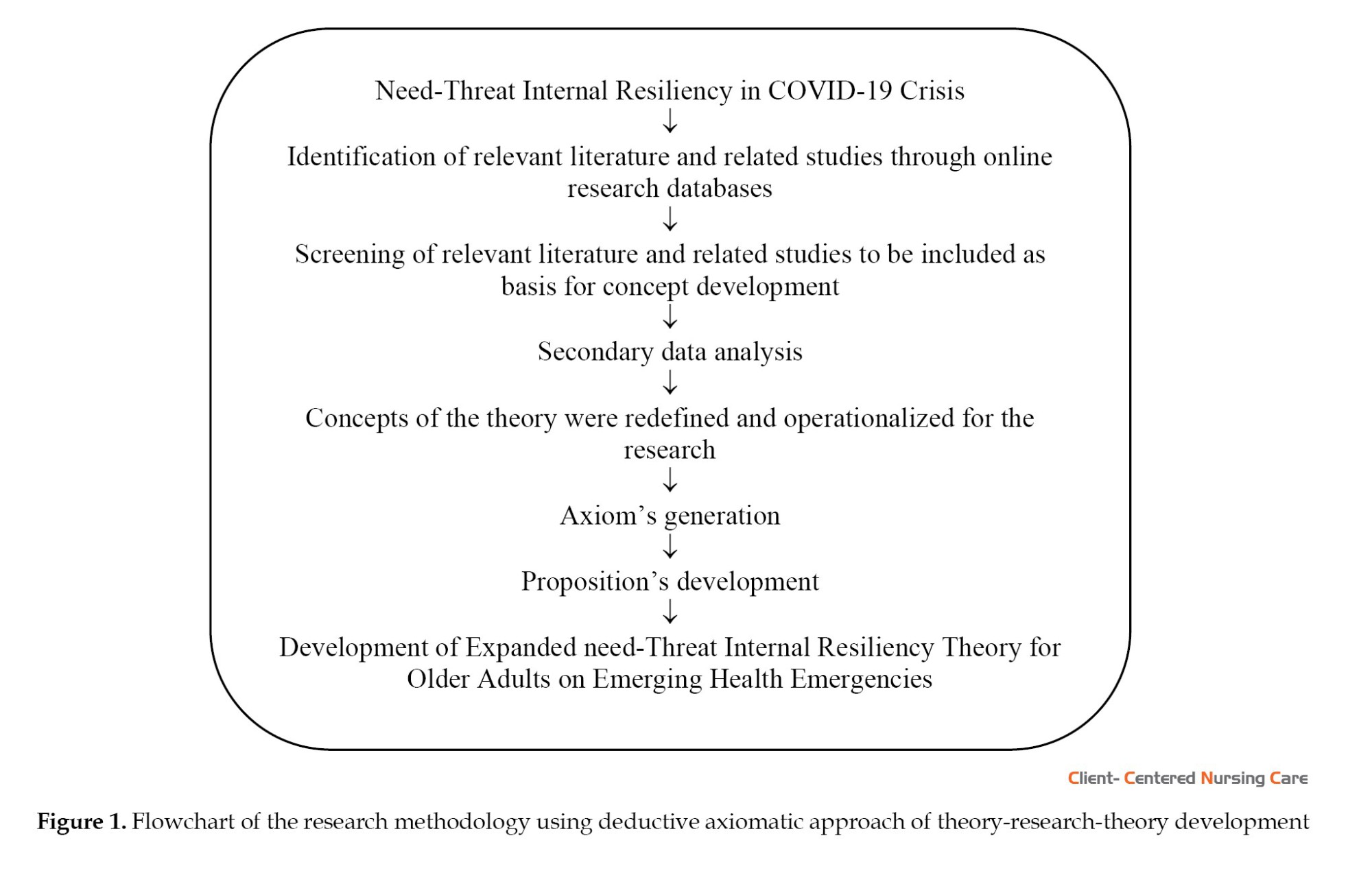
The development of theory in nursing is a critical element that contributes to a foundational body of knowledge, addresses pressing issues, and defines the conceptual parameters of the field. The present study sought to construct an expanded need-threat internal resiliency theory focused on global health emergencies, employing a structured methodological approach as outlined in the flowchart depicted in Figure 1.
To support this process, a comprehensive literature search was conducted by the researcher using major electronic databases, including PubMed, CINAHL, Scopus, Web of Science, ScienceDirect, and Google Scholar search engine. The search covered studies published between January to December 2022, aligning with periods of significant global health emergencies. Keywords used in various combinations included “older adults,” “resilience,” “internal resiliency,” “coping,” “health emergency,” “health crisis,” “emerging infectious diseases,” “health threats,” and “biopsychosociospiritual adaptation.”
A deductive-axiomatic approach underpinned the generation of the expanded theory, aligning with a theory-to-research-to-theory strategy. Deductive reasoning facilitates movement from broad principles to specific conclusions, commonly identified as a “top-down” method. This process initiates with axioms—self-evident truths that elucidate the operation of phenomena. In the current study, these axioms served to explore need-threat internal resiliency dynamics among older adults during global health emergencies (Sadang & Palompon, 2021). The underpinning theory for this expansion was the original need-threat internal resiliency theory developed during the COVID-19 crisis, which posits that older adults experience heightened vulnerability when their health needs exceed available resources, thereby perceiving a threat (Sadang & Palompon, 2021). The theory is grounded on three core concepts: (1) health needs, representing the biopsychosociospiritual demands shaped by an emergency; (2) perceived threats, arising when these needs are unmet or overwhelming; and (3) internal resiliency, defined as the adaptive capacity older adults mobilize through spiritual anchoring, coping strategies, and personal strength to maintain stability and QoL. This foundational theory guided the identification of axioms and informed the deductive process, ensuring that the expanded framework remained conceptually aligned with its theoretical roots.
Existing theories relevant to the subject matter
In applying the theory-to-research-to-theory strategy, the research questions were framed based on existing theoretical frameworks relevant to older adults’ coping and resilience, including the need-threat internal resiliency theory, resilience theory, and stress and coping theory (Sadang & Palompon, 2021; Navarrete et al., 2017; Gooding et al., 2011). These theories provided a conceptual lens for understanding how older adults perceive threats, mobilize coping strategies, and develop internal resiliency during health emergencies. This iterative approach enables researchers to interpret findings meaningfully and make the necessary refinements or extensions to establish a comprehensive theoretical framework. Within this approach, “research” refers to the systematic synthesis of empirical studies, which served as a bridge for validating, expanding, and refining the original need-threat internal resiliency theory in the COVID-19 crisis for older adults. Such a rigorous structure is essential for conducting research and enhancing theoretical understanding within the context of health emergencies (Sadang et al., 2021).
A comprehensive review of existing literature and related investigations was first conducted, followed by a secondary analysis of documented findings. This secondary analysis involved systematically extracting key concepts, patterns, and empirical evidence from previously published studies and reanalyzing them across contexts to identify recurring themes related to threat perception, coping processes, and resiliency among older adults. The synthesized patterns were then compared with the assumptions of the original need-threat internal resiliency theory to determine which elements required refinement or expansion (Fiocco et al., 2021; Windle, 2010). This method led to the formulation of foundational axioms, from which four key propositions emerged. These propositions articulate how older adults display internal resiliency, effectively cope with health threats, and uphold their well-being amid health crises. The necessity for creating these axioms and propositions reflects observations in prior studies, which confirm that effective coping strategies contribute positively to the resilience of older adults (Sadang et al., 2021; Weitzel et al., 2021). The literature incorporated in forming these axioms adhered to explicit eligibility criteria: articles were included if they involved participants aged 60 years and above, examined health emergencies or emerging health threats, and provided empirical or theoretical insights into resilience, coping processes, threat perception, or QoL among older adults. Studies that involved younger populations, non-health-related emergencies, or lacked relevance to resiliency constructs were excluded.
Through this systematic methodological framework, the expanded need-threat internal resiliency theory aims to capture the complexities of older adults’ responses to health emergencies, thereby informing future interventions and policy decisions aimed at this vulnerable population (Sadang et al., 2023). Such knowledge is crucial for enhancing their QoL in times of crisis, emphasizing the importance of internal resilience in fostering positive outcomes (Gioia et al., 2012; Laird et al., 2019).
Results
The analysis of literature and related studies provided the foundation for the formulation of four axioms as shown on Table 1.
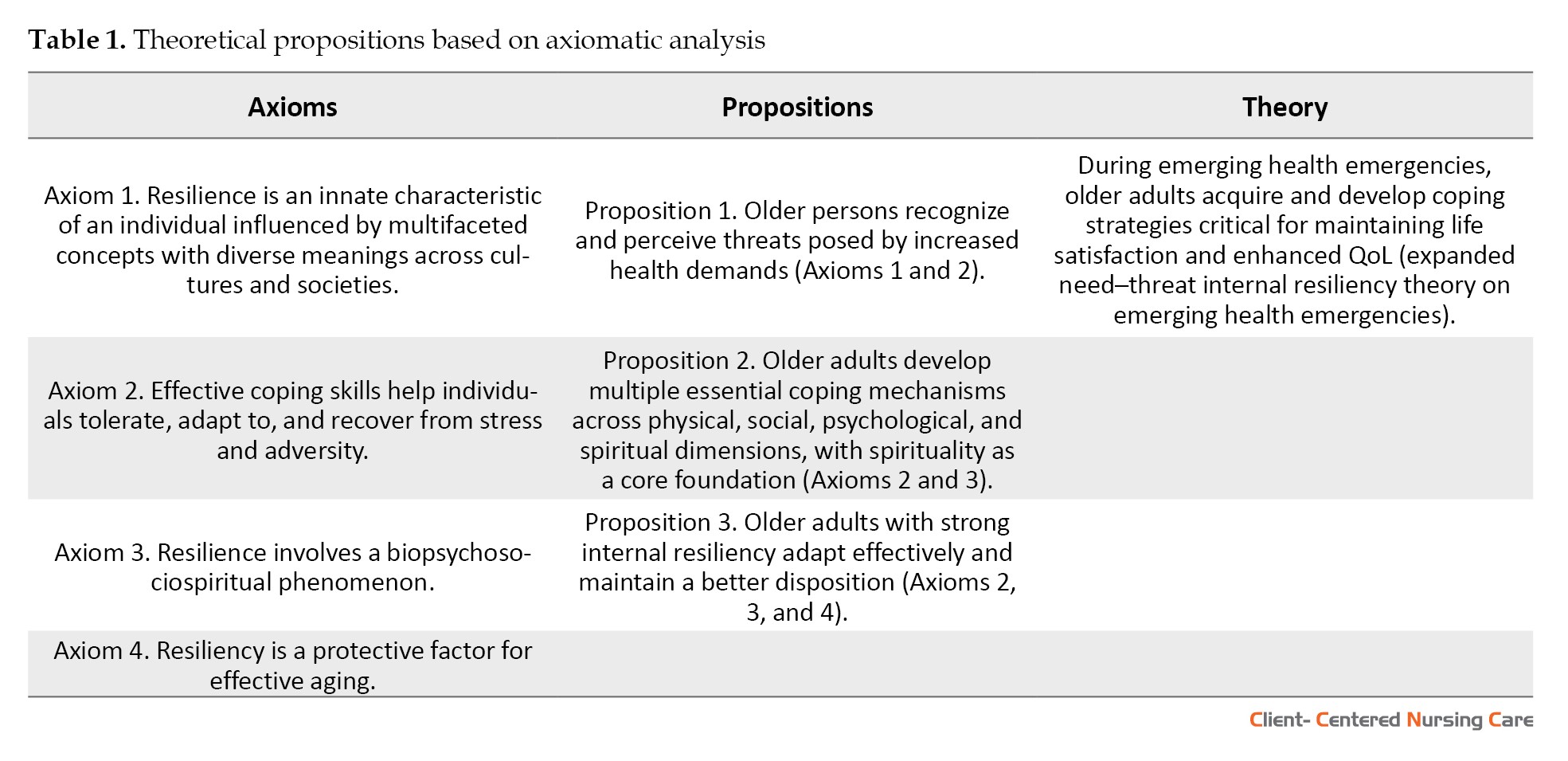
The analysis of literature and related studies provided the foundation for the formulation of four axioms, which were subsequently synthesized into three propositions forming the conceptual structure of the expanded need-threat internal resiliency theory on emerging health emergencies. In the context of emerging health emergencies—such as pandemics, outbreaks of novel infectious diseases, natural disaster-related health crises, and conflict-driven disruptions—older adults face heightened vulnerability due to increasing health needs and perceived threats (McKinlay et al., 2020). These emergencies intensify the demand for continuous health monitoring, access to medications, stable social support, and reliable information, while simultaneously exposing older individuals to threats, such as disease exposure, mobility restrictions, service disruptions, and psychological distress (Bell et al., 2021).
Axiom 1 identifies resilience as an innate characteristic of individuals, influenced by multifaceted concepts with diverse meanings across cultures and societies. Literature indicates that older adults’ resilience is shaped not only by resource availability and social support but also by prior life experiences, which collectively determine their ability to cope effectively during health crises (Khorram‐Manesh et al., 2025; Windle et al., 2020). Emerging health emergencies amplify pre-existing health needs—such as chronic disease management, timely medical consultation, and protection from infection—while creating new threats, including fear of contagion, social isolation, and disruption of routine care. These conditions activate older adults’ inherent resilience as they draw upon learned life lessons and culturally embedded meanings of survival and endurance (Ali & Shaban, 2025).
Axiom 2 emphasizes that effective coping skills are essential in enabling individuals to tolerate, adapt to, and recover from stress and adversity. Older adults employ a range of coping strategies during health emergencies, including problem-focused, emotion-focused, social support, religious engagement, and cognitive reframing techniques, which are often used simultaneously or consecutively to navigate the challenges posed by crises (Beckman & Gustavsson, 2023; Cherry et al., 2022). These coping strategies become increasingly crucial as emerging health emergencies heighten both physiological needs (e.g. access to medicines, nutrition, clinical monitoring) and psychosocial needs (e.g. reassurance, clarity of information, sustained connection). The perceived threats of infection, functional decline, and reduced access to care drive older adults to rely on adaptive strategies to maintain equilibrium and safety (Khalil et al., 2022).
Axiom 3 posits that resilience is a biopsychosocial phenomenon. Empirical evidence demonstrates that older adults’ adaptive capacities encompass physical, social, psychological, and spiritual domains, with spirituality serving as a foundational component that enhances holistic well-being. During health emergencies, these multidimensional capacities are tested as older adults confront threats, such as compromised immunity, limited mobility, disrupted social networks, and heightened uncertainty. Their biopsychosocial strengths act as buffers against these threats, enabling them to meet emerging health needs while sustaining hope, meaning, and psychological stability (Newmark et al., 2023).
Finally, Axiom 4 recognizes resiliency as a protective factor for effective aging. High resilience in older adults is associated with successful aging, life satisfaction, longevity, and the ability to withstand health threats. Emerging health emergencies further illustrate this protective effect by showing how resilient older adults are more capable of managing escalating health needs—such as continuous disease prevention, medication adherence, and stress regulation—despite the presence of multiple threats to their physical health and social functioning (Avelino‐Silva & Moini, 2025; Cherry et al., 2022).
From these axioms, three interrelated propositions were generated. Proposition 1 posits that older adults recognize and perceive threats posed by emerging health emergencies due to increased health demands, highlighting the role of threat recognition as a precursor to activating coping mechanisms. This recognition includes understanding the severity of health emergencies, anticipating risks to their chronic conditions, and identifying gaps in meeting essential needs, such as medication access, mobility, and emotional reassurance (Saputra et al., 2025).
Proposition 2 asserts that older adults develop multiple essential coping mechanisms across physical, social, psychological, and spiritual dimensions, with spirituality serving as the core foundation. These coping strategies are shaped directly by the level of health needs generated by the emergency (e.g. need for protection, medical stability, information, and social connection) and by the intensity of perceived threats to health, safety, and survival (Avelino‐Silva & Moini, 2025).
Proposition 3 proposes that older adults who establish a strong sense of internal resiliency are able to adapt effectively to health emergencies, maintaining a positive disposition and overall well-being. This adaptive capacity demonstrates how internal resilience moderates the complex interaction between heightened health needs and the threats posed by emerging health emergencies, resulting in improved ability to cope, sustain well-being, and preserve functional independence (Ali & Shaban, 2025).
Collectively, these axioms and propositions provide the structural framework for understanding how internal resiliency functions as a dynamic process in older populations during emerging health crises. By explicitly integrating the components of health emergencies, health needs, and perceived health threats, the expanded need-threat internal resiliency theory clarifies how older adults evaluate risks, mobilize coping systems, and maintain adaptive functioning despite escalating challenges (Sadang et al., 2023).
Discussion
The findings of this study emphasize the complex and multidimensional nature of resilience among older adults in the context of emerging health emergencies. The formulated axioms support the notion that resilience is not merely an inherent trait; rather, it is influenced by various contextual factors. Effective coping strategies play a pivotal role in maintaining well-being during these crises. This understanding shifts the perception of resilience from the absence of vulnerability to an active process through which older adults sustain their holistic health during adversities (Gautam et al., 2019; Ferreira-Valente et al., 2019).
The expanded need-threat internal resiliency theory builds on the framework established during the COVID-19 pandemic, originally positing that the health needs of older adults transform into health threats under crisis conditions. This adaptation instigates the emergence of internal resiliency aimed at preserving overall well-being. However, the original theory had limitations, as it may not fully encapsulate the complexities associated with a range of future global health emergencies—such as severe acute respiratory syndrome (SARS), Ebola, or other unforeseen crises (Adedeji et al., 2023; Finlay et al., 2021).
In contrast, the expanded theory offers a broader conceptual framework, illustrating how health needs and threats coexist and drive the cultivation of internal resiliency. It categorizes specific coping mechanisms—physical, psychological, social, and spiritual—with spirituality emerging as a foundational component impacting all areas of resilience. As evidenced in various studies, spirituality serves as a valuable resource, encouraging older adults to adapt and persevere through challenging situations, thereby enhancing their life satisfaction and overall QoL (Shamblaw et al., 2021; Malone & Dadswell, 2018; Chan et al., 2022).
The propositions derived from the axioms elucidate a tailored process where the recognition of threats catalyzes the activation of coping strategies across multiple dimensions. This process ultimately leads to effective adaptation and sustained well-being, highlighting the intricate relationship between internal resilience, coping strategies, and the socio-environmental challenges faced by older adults during health emergencies (Adedeji et al., 2023; Finlay et al., 2021).
Overall, the expanded theory reflects the significant role of internal resiliency as a protective factor for aging populations. By defining resilience as a biopsychosociospiritual construct encompassing threat recognition, adaptive coping, and favorable outcomes, the theory provides a comprehensive framework for understanding how older adults navigate through challenging health crises. This nuanced understanding suggests that internal resilience is a dynamic capacity rather than a fixed trait, allowing older adults to survive, recover, and thrive even in the face of substantial adversity, ultimately contributing to enhanced life satisfaction (Muhammad et al., 2023; Fauk et al., 2022).
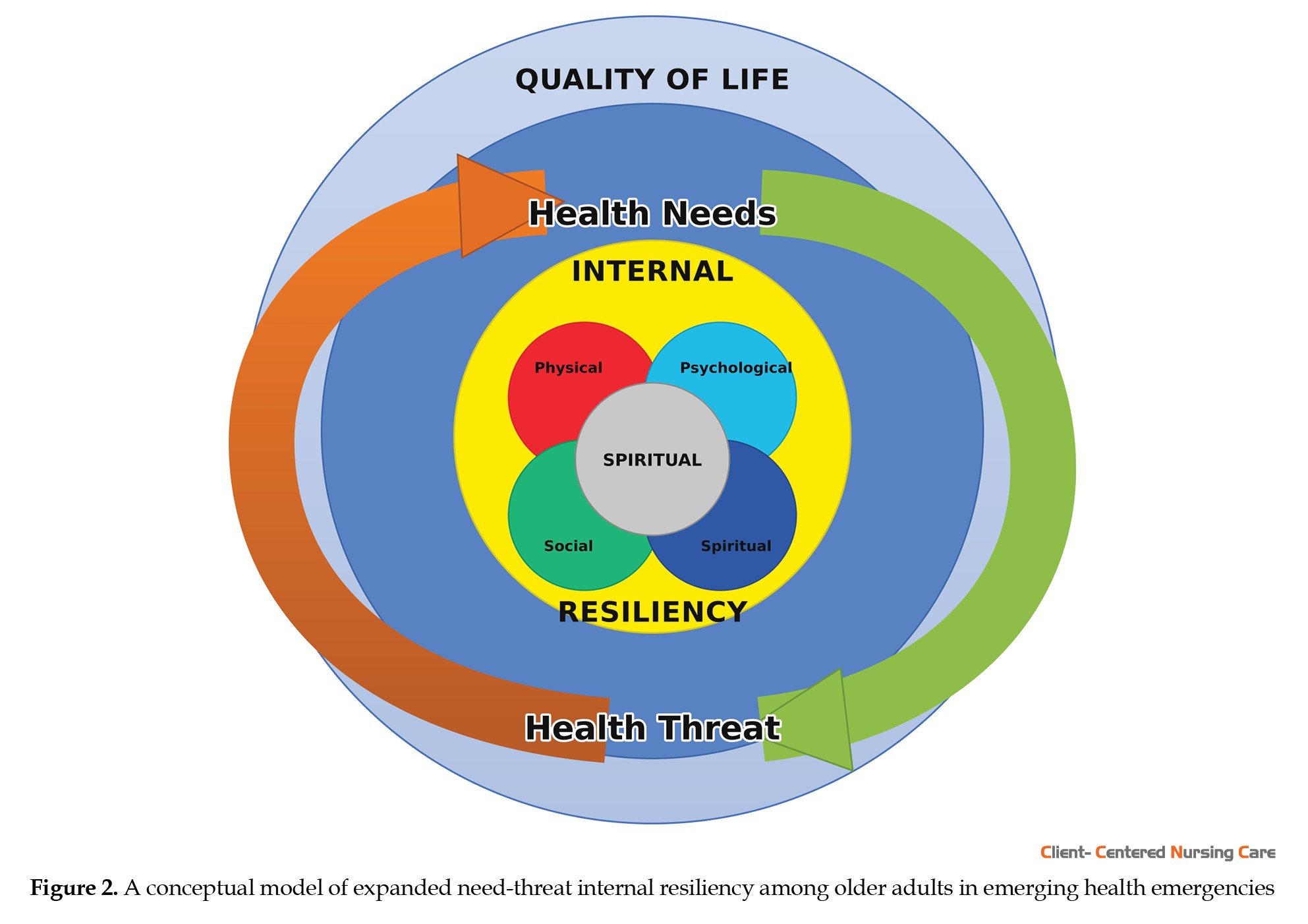
The conceptual model of the expanded need-threat internal resiliency theory in Figure 2 illustrates how older adults navigate health needs and health threats during emerging health emergencies.
A deductive-axiomatic approach underpinned the generation of the expanded theory, aligning with a theory-to-research-to-theory strategy. Deductive reasoning facilitates movement from broad principles to specific conclusions, commonly identified as a “top-down” method. This process initiates with axioms—self-evident truths that elucidate the operation of phenomena. In the current study, these axioms served to explore need-threat internal resiliency dynamics among older adults during global health emergencies (Sadang & Palompon, 2021). The underpinning theory for this expansion was the original need-threat internal resiliency theory developed during the COVID-19 crisis, which posits that older adults experience heightened vulnerability when their health needs exceed available resources, thereby perceiving a threat (Sadang & Palompon, 2021). The theory is grounded on three core concepts: (1) health needs, representing the biopsychosociospiritual demands shaped by an emergency; (2) perceived threats, arising when these needs are unmet or overwhelming; and (3) internal resiliency, defined as the adaptive capacity older adults mobilize through spiritual anchoring, coping strategies, and personal strength to maintain stability and QoL. This foundational theory guided the identification of axioms and informed the deductive process, ensuring that the expanded framework remained conceptually aligned with its theoretical roots.
Existing theories relevant to the subject matter
In applying the theory-to-research-to-theory strategy, the research questions were framed based on existing theoretical frameworks relevant to older adults’ coping and resilience, including the need-threat internal resiliency theory, resilience theory, and stress and coping theory (Sadang & Palompon, 2021; Navarrete et al., 2017; Gooding et al., 2011). These theories provided a conceptual lens for understanding how older adults perceive threats, mobilize coping strategies, and develop internal resiliency during health emergencies. This iterative approach enables researchers to interpret findings meaningfully and make the necessary refinements or extensions to establish a comprehensive theoretical framework. Within this approach, “research” refers to the systematic synthesis of empirical studies, which served as a bridge for validating, expanding, and refining the original need-threat internal resiliency theory in the COVID-19 crisis for older adults. Such a rigorous structure is essential for conducting research and enhancing theoretical understanding within the context of health emergencies (Sadang et al., 2021).
A comprehensive review of existing literature and related investigations was first conducted, followed by a secondary analysis of documented findings. This secondary analysis involved systematically extracting key concepts, patterns, and empirical evidence from previously published studies and reanalyzing them across contexts to identify recurring themes related to threat perception, coping processes, and resiliency among older adults. The synthesized patterns were then compared with the assumptions of the original need-threat internal resiliency theory to determine which elements required refinement or expansion (Fiocco et al., 2021; Windle, 2010). This method led to the formulation of foundational axioms, from which four key propositions emerged. These propositions articulate how older adults display internal resiliency, effectively cope with health threats, and uphold their well-being amid health crises. The necessity for creating these axioms and propositions reflects observations in prior studies, which confirm that effective coping strategies contribute positively to the resilience of older adults (Sadang et al., 2021; Weitzel et al., 2021). The literature incorporated in forming these axioms adhered to explicit eligibility criteria: articles were included if they involved participants aged 60 years and above, examined health emergencies or emerging health threats, and provided empirical or theoretical insights into resilience, coping processes, threat perception, or QoL among older adults. Studies that involved younger populations, non-health-related emergencies, or lacked relevance to resiliency constructs were excluded.
Through this systematic methodological framework, the expanded need-threat internal resiliency theory aims to capture the complexities of older adults’ responses to health emergencies, thereby informing future interventions and policy decisions aimed at this vulnerable population (Sadang et al., 2023). Such knowledge is crucial for enhancing their QoL in times of crisis, emphasizing the importance of internal resilience in fostering positive outcomes (Gioia et al., 2012; Laird et al., 2019).
Results
The analysis of literature and related studies provided the foundation for the formulation of four axioms as shown on Table 1.
The analysis of literature and related studies provided the foundation for the formulation of four axioms, which were subsequently synthesized into three propositions forming the conceptual structure of the expanded need-threat internal resiliency theory on emerging health emergencies. In the context of emerging health emergencies—such as pandemics, outbreaks of novel infectious diseases, natural disaster-related health crises, and conflict-driven disruptions—older adults face heightened vulnerability due to increasing health needs and perceived threats (McKinlay et al., 2020). These emergencies intensify the demand for continuous health monitoring, access to medications, stable social support, and reliable information, while simultaneously exposing older individuals to threats, such as disease exposure, mobility restrictions, service disruptions, and psychological distress (Bell et al., 2021).
Axiom 1 identifies resilience as an innate characteristic of individuals, influenced by multifaceted concepts with diverse meanings across cultures and societies. Literature indicates that older adults’ resilience is shaped not only by resource availability and social support but also by prior life experiences, which collectively determine their ability to cope effectively during health crises (Khorram‐Manesh et al., 2025; Windle et al., 2020). Emerging health emergencies amplify pre-existing health needs—such as chronic disease management, timely medical consultation, and protection from infection—while creating new threats, including fear of contagion, social isolation, and disruption of routine care. These conditions activate older adults’ inherent resilience as they draw upon learned life lessons and culturally embedded meanings of survival and endurance (Ali & Shaban, 2025).
Axiom 2 emphasizes that effective coping skills are essential in enabling individuals to tolerate, adapt to, and recover from stress and adversity. Older adults employ a range of coping strategies during health emergencies, including problem-focused, emotion-focused, social support, religious engagement, and cognitive reframing techniques, which are often used simultaneously or consecutively to navigate the challenges posed by crises (Beckman & Gustavsson, 2023; Cherry et al., 2022). These coping strategies become increasingly crucial as emerging health emergencies heighten both physiological needs (e.g. access to medicines, nutrition, clinical monitoring) and psychosocial needs (e.g. reassurance, clarity of information, sustained connection). The perceived threats of infection, functional decline, and reduced access to care drive older adults to rely on adaptive strategies to maintain equilibrium and safety (Khalil et al., 2022).
Axiom 3 posits that resilience is a biopsychosocial phenomenon. Empirical evidence demonstrates that older adults’ adaptive capacities encompass physical, social, psychological, and spiritual domains, with spirituality serving as a foundational component that enhances holistic well-being. During health emergencies, these multidimensional capacities are tested as older adults confront threats, such as compromised immunity, limited mobility, disrupted social networks, and heightened uncertainty. Their biopsychosocial strengths act as buffers against these threats, enabling them to meet emerging health needs while sustaining hope, meaning, and psychological stability (Newmark et al., 2023).
Finally, Axiom 4 recognizes resiliency as a protective factor for effective aging. High resilience in older adults is associated with successful aging, life satisfaction, longevity, and the ability to withstand health threats. Emerging health emergencies further illustrate this protective effect by showing how resilient older adults are more capable of managing escalating health needs—such as continuous disease prevention, medication adherence, and stress regulation—despite the presence of multiple threats to their physical health and social functioning (Avelino‐Silva & Moini, 2025; Cherry et al., 2022).
From these axioms, three interrelated propositions were generated. Proposition 1 posits that older adults recognize and perceive threats posed by emerging health emergencies due to increased health demands, highlighting the role of threat recognition as a precursor to activating coping mechanisms. This recognition includes understanding the severity of health emergencies, anticipating risks to their chronic conditions, and identifying gaps in meeting essential needs, such as medication access, mobility, and emotional reassurance (Saputra et al., 2025).
Proposition 2 asserts that older adults develop multiple essential coping mechanisms across physical, social, psychological, and spiritual dimensions, with spirituality serving as the core foundation. These coping strategies are shaped directly by the level of health needs generated by the emergency (e.g. need for protection, medical stability, information, and social connection) and by the intensity of perceived threats to health, safety, and survival (Avelino‐Silva & Moini, 2025).
Proposition 3 proposes that older adults who establish a strong sense of internal resiliency are able to adapt effectively to health emergencies, maintaining a positive disposition and overall well-being. This adaptive capacity demonstrates how internal resilience moderates the complex interaction between heightened health needs and the threats posed by emerging health emergencies, resulting in improved ability to cope, sustain well-being, and preserve functional independence (Ali & Shaban, 2025).
Collectively, these axioms and propositions provide the structural framework for understanding how internal resiliency functions as a dynamic process in older populations during emerging health crises. By explicitly integrating the components of health emergencies, health needs, and perceived health threats, the expanded need-threat internal resiliency theory clarifies how older adults evaluate risks, mobilize coping systems, and maintain adaptive functioning despite escalating challenges (Sadang et al., 2023).
Discussion
The findings of this study emphasize the complex and multidimensional nature of resilience among older adults in the context of emerging health emergencies. The formulated axioms support the notion that resilience is not merely an inherent trait; rather, it is influenced by various contextual factors. Effective coping strategies play a pivotal role in maintaining well-being during these crises. This understanding shifts the perception of resilience from the absence of vulnerability to an active process through which older adults sustain their holistic health during adversities (Gautam et al., 2019; Ferreira-Valente et al., 2019).
The expanded need-threat internal resiliency theory builds on the framework established during the COVID-19 pandemic, originally positing that the health needs of older adults transform into health threats under crisis conditions. This adaptation instigates the emergence of internal resiliency aimed at preserving overall well-being. However, the original theory had limitations, as it may not fully encapsulate the complexities associated with a range of future global health emergencies—such as severe acute respiratory syndrome (SARS), Ebola, or other unforeseen crises (Adedeji et al., 2023; Finlay et al., 2021).
In contrast, the expanded theory offers a broader conceptual framework, illustrating how health needs and threats coexist and drive the cultivation of internal resiliency. It categorizes specific coping mechanisms—physical, psychological, social, and spiritual—with spirituality emerging as a foundational component impacting all areas of resilience. As evidenced in various studies, spirituality serves as a valuable resource, encouraging older adults to adapt and persevere through challenging situations, thereby enhancing their life satisfaction and overall QoL (Shamblaw et al., 2021; Malone & Dadswell, 2018; Chan et al., 2022).
The propositions derived from the axioms elucidate a tailored process where the recognition of threats catalyzes the activation of coping strategies across multiple dimensions. This process ultimately leads to effective adaptation and sustained well-being, highlighting the intricate relationship between internal resilience, coping strategies, and the socio-environmental challenges faced by older adults during health emergencies (Adedeji et al., 2023; Finlay et al., 2021).
Overall, the expanded theory reflects the significant role of internal resiliency as a protective factor for aging populations. By defining resilience as a biopsychosociospiritual construct encompassing threat recognition, adaptive coping, and favorable outcomes, the theory provides a comprehensive framework for understanding how older adults navigate through challenging health crises. This nuanced understanding suggests that internal resilience is a dynamic capacity rather than a fixed trait, allowing older adults to survive, recover, and thrive even in the face of substantial adversity, ultimately contributing to enhanced life satisfaction (Muhammad et al., 2023; Fauk et al., 2022).
The conceptual model of the expanded need-threat internal resiliency theory in Figure 2 illustrates how older adults navigate health needs and health threats during emerging health emergencies.
The model is composed of three concentric layers, with intertwined circles and arrows symbolizing continuous, reciprocal interactions among the constructs. The outer layer, labeled QoL, represents the ultimate outcome influenced by all inner constructs, emphasizing that maintaining or enhancing well-being is the central goal of adaptive processes. The middle layer includes health needs at the top and health threats at the bottom, highlighting their dual impact on older adults’ coping strategies. The intertwined circles and arrows between these elements signify that health needs and threats are mutually influential and dynamic, where unmet needs can intensify perceived threats, and emerging threats can generate additional health demands.
The innermost layer depicts internal resiliency, encompassing physical, psychological, social, and spiritual domains, with a small circle around spirituality indicating its foundational role in supporting the other domains. The arrows connecting the domains illustrate that resilience is multidimensional and integrative, functioning as a protective mechanism that enables older adults to respond effectively to health crises. Collectively, the intertwined circles and arrows across all layers convey the dynamic and reciprocal relationships among health needs, health threats, internal resiliency, and QoL. This visual representation aligns with the theory’s propositions, showing that older adults continuously assess threats, activate internal resilience, and employ adaptive coping strategies to maintain or improve QoL during emerging health emergencies.
Implication and limitations
The expanded need-threat internal resiliency theory on emerging health emergencies offers important implications for nursing practice, education, research, and policy by highlighting the need to foster older adults’ internal resiliency and coping strategies across physical, psychological, social, and spiritual dimensions to maintain QoL during health crises. It provides a conceptual framework for designing holistic care plans, training practitioners, guiding empirical studies, and informing community-based programs and emergency preparedness policies. However, as a theory developed primarily from secondary literature analysis, it may not fully capture the lived experiences of older adults across diverse cultural and socioeconomic contexts. Its applicability may vary depending on the type of health emergency, and the propositions have yet to be empirically tested and validated. Additionally, the dynamic and complex nature of emerging health crises means that not all influencing factors may be accounted for. Despite these limitations, the theory provides a valuable foundation for future research and practical strategies aimed at promoting resilience and well-being in older populations during evolving health emergencies.
Conclusion
While several theories address resilience in older adults, none are specifically designed to focus on the challenges posed by emerging health emergencies, which present unique and complex stressors for this population. The expanded need-threat internal resiliency theory on emerging health emergencies provides a broader, more nuanced perspective, illustrating how older adults’ health needs and health threats coexist and drive the development of internal resiliency. This internal resiliency emerges as a critical protective factor, enabling older adults to survive, recover, and adapt in dynamic and high-risk circumstances, thereby enhancing their overall QoL.
From a nursing perspective, the theory aligns closely with the four metaparadigms of nursing, which serve as the foundational concepts guiding the discipline. The person is represented by older adults, whose physical, psychological, social, and spiritual capacities are central to understanding resilience. The environment comprises emerging health emergencies, including pandemics and other crises, which create threats that challenge the person’s well-being. Nursing is reflected in the facilitation of coping strategies and the promotion of internal resiliency, which enables older adults to navigate adversity effectively. Finally, health is operationalized as the QoL, encompassing physical, psychological, social, and spiritual dimensions that are maintained and enhanced through adaptive coping and resilient behaviors.
The development of this expanded theory makes a significant contribution to the nursing and geriatric disciplines by providing a theoretical framework that is specifically applicable to older adults facing emerging health crises. It offers guidance for research, practice, and policy, emphasizing the importance of targeted interventions that foster coping skills, resilience, and holistic well-being. Future research is encouraged to empirically validate the theory across different methodologies, settings, and demographics, ensuring its relevance and applicability in diverse populations of older adults. Ultimately, this theory not only strengthens the conceptual foundations of gerontological nursing but also informs evidence-based strategies to support older adults in navigating the challenges of emerging health emergencies.
Ethical Considerations
Compliance with ethical guidelines
This theoretical study did not involve human or animal participants and therefore did not require formal approval from an Ethics Committee. Nevertheless, the study was submitted to the Cebu Normal University Research Ethics Committee and received exemption clearance to ensure adherence to institutional ethical standards.
Funding
This study did not receive any financial support or funding from external or internal sources.
Conflict of interest
The author declared that there are no conflict of interest associated with this study.
Acknowledgments
The author gratefully acknowledges the guidance and support of Dr. Daisy R. Palompon of Cebu Normal University, whose mentorship was instrumental in the conceptualization and development of this study. Appreciation is also extended to Mindanao State University–Marawi (Main Campus), where the author is currently serving as Professor VI, for providing a professional environment that fostered the author’s scholarly growth. Special recognition is given to colleagues and mentors whose insights and encouragement contributed significantly to the completion of this work. The contributions of these individuals and institutions have been invaluable in shaping the theoretical framework and ensuring the rigor and relevance of this study.
References
Adedeji, I., Lawal, S. & Aluko‐Arowolo, S., 2023. Qualitative analysis of coping strategies among older persons during COVID-19 lockdown in Nigeria: Considerations for community health promotion. Community Health Equity Research & Policy, 44(3), pp. 253-63. [DOI:10.1177/2752535x231173527] [PMID]
Ali, S. I. & Shaban, M., 2025. ‘We had to be strong for him’: A cultural lens on family resilience during critical illness of older people’s families in the Middle East. Nursing in Critical Care, 30(4), pp. e70096. [DOI:10.1111/nicc.70096] [PMID]
Almazan, J., et al., 2019. Disaster-related resiliency theory among older adults who survived Typhoon Haiyan. International Journal of Disaster Risk Reduction, 35, pp. 101070. [DOI:10.1016/j.ijdrr.2019.101070]
Avelino-Silva, T. J. & Moini, N., 2025. Cocota’s story: Life lessons in aging, resilience, and end-of-life agency from a Brazilian matriarch. Journal of The American Geriatrics Society, 73(10), pp. 3002-8. [DOI:10.1111/jgs.19566] [PMID]
Beckman, L. & Gustavsson, J., 2023. Coping strategies for increased wellbeing and mental health among older adults during the COVID-19 pandemic - A Swedish qualitative study. Ageing and Society, 45(4), pp. 617-35. [DOI:10.1017/s0144686x23000569]
Bell, S. A., et al., 2021. “Helping fill that gap:” A qualitative study of aging in place after disaster through the lens of home-based care providers. BMC Geriatrics, 21(1), pp. 235. [DOI:10.1186/s12877-021-02159-0] [PMID]
Chan, S., et al., 2022. Resilience and coping strategies of older adults in Hong Kong during COVID-19 pandemic: A mixed methods study. BMC Geriatrics, 22(1), pp. 299. [DOI:10.1186/s12877-022-03009-3] [PMID]
Cherry, K. E., et al., 2023. Religiosity and social support predict resilience in older adults after a flood. The International Journal of Aging and Human Development, 96(3), pp. 285-311. [DOI:10.1177/00914150221088543] [PMID]
Fauk, N., et al., 2022. Impact of COVID-19 lockdowns on the activity and mental health of older people in Indonesia: A qualitative study. International Journal of Environmental Research and Public Health, 19(20), pp. 13115. [DOI:10.3390/ijerph192013115] [PMID]
Ferreira-Valente, A., et al., 2020. The role of spirituality in pain, function, and coping in individuals with chronic pain. Pain Medicine, 21(3), pp. 448-57. [DOI:10.1093/pm/pnz092] [PMID]
Finlay, J., et al., 2021. Coping during the COVID-19 pandemic: A qualitative study of older adults across the United States. Frontiers in Public Health, 9, pp. 643807. [DOI:10.3389/fpubh.2021.643807] [PMID]
Fiocco, A., Gryspeerdt, C. & Franco, G., 2021. Stress and adjustment during the COVID-19 pandemic: A qualitative study on the lived experience of older adults. International Journal of Environmental Research and Public Health, 18(24), pp. 12922. [DOI:10.3390/ijerph182412922] [PMID]
Fuller, H., & Huseth-Zosel, A. (2020). Lessons in resilience: Initial coping among older adults during the COVID-19 pandemic.The Gerontologist, 61(1), 114-125. [DOI:10.1093/geront/gnaa170] [PMID] [PMCID]
Gautam, S., Neville, S. & Montayre, J., 2019. What is known about the spirituality in older adults living in residential care facilities? An integrative review. International Journal of Older People Nursing, 14(2), pp. e12228. [DOI:10.1111/opn.12228] [PMID]
Gioia, D., Corley, K. & Hamilton, A., 2013. Seeking qualitative rigor in inductive research: Notes on the Gioia Methodology: Notes on the Gioia Methodology. Organizational Research Methods, 16(1), pp. 15-31. [DOI:10.1177/1094428112452151]
Gooding, P., et al., 2011. Psychological resilience in young and older adults. International Journal of Geriatric Psychiatry, 27(3), pp. 262–70. [DOI:10.1002/gps.2712] [PMID]
Hvalič‐Touzery, S., Laznik, J. & Petrovčič, A., 2024. “I’m still struggling with it, and it scares me”: A qualitative analysis of older adults’ experiences with digital health portals during and after COVID-19. Digital Health, 10. [DOI:10.1177/20552076241282247] [PMID]
Khalil, M., et al., 2022. What is “hospital resilience”? A scoping review on conceptualization, operationalization, and evaluation. Frontiers in Public Health, 10, pp. 1009400. [DOI:10.3389/fpubh.2022.1009400] [PMID]
Khorram‐Manesh, A., Eskici, G. T. & Gray, L., 2025. Enhancing global disaster preparedness: A scoping review of the current integration of situational awareness and disaster mindset in healthcare education. AIMS Public Health, 12(3), pp. 735–66.[DOI:10.3934/publichealth.2025038] [PMID]
Laird, K., et al., 2019. Psychobiological factors of resilience and depression in late life. Translational Psychiatry, 9(1), pp. 88. [DOI:10.1038/s41398-019-0424-7] [PMID]
Malone, J. & Dadswell, A., 2018. The role of religion, spirituality and/or belief in positive ageing for older adults. Geriatrics, 3(2), pp. 28. [DOI:10.3390/geriatrics3020028] [PMID]
McKinlay, A., Fancourt, D. & Burton, A., 2020. It makes you realise your own mortality: A qualitative study on mental health of older adults in the UK during COVID-19. Preprint. [DOI:10.1101/2020.12.15.20248238]
Minahan, J., et al., 2020. The COVID-19 pandemic and psychosocial outcomes across age through the stress and coping framework. The Gerontologist, 61(2), pp. 228-39. [DOI:10.1093/geront/gnaa205] [PMID]
Muhammad, T., Sulaiman, K. & Ansari, S., 2023. A positive correlation between daily spiritual practice and reduced depressive symptoms among older adults: Evidence from a nationally representative survey among the Indian population. Psychogeriatrics, 23(2), pp. 273-85. [DOI:10.1111/psyg.12928] [PMID]
Navarrete, M. M. L., et al., 2017. Coping strategies and quality of life in elderly population. Open Journal of Social Sciences, 5(10), pp. 207-16. [DOI:10.4236/jss.2017.510017]
Newmark, R. L., et al., 2023. The role of digital technologies in facilitating psychosocial resilience to sudden social isolation among older adults: Lessons learned from the COVID-19 pandemic. Journal of Applied Gerontology, 42(12), pp. 2348-59. [DOI:10.1177/07334648231190228] [PMID]
Sadang, J. M., et al., 2023. A multiple case study of older adults’ internal resiliency and quality of life during the COVID-19 health emergency. Annals of Geriatric Medicine and Research, 27(2), pp. 158-71. [DOI:10.4235/agmr.23.0030] [PMID]
Sadang, J. & Palompon, D., 2021. The development of need-threat internal resiliency theory in COVID-19 crisis utilizing deductive axiomatic approach. Belitung Nursing Journal, 7(2), pp. 72-7. [DOI:10.33546/bnj.1300] [PMID]
Sadang, J. M., Palompon, D. R., & Suksatan, W. (2021). Older Adults' Experiences and Adaptation Strategies during the Midst of COVID-19 Crisis: A Qualitative Instrumental Case Study. Annals of Geriatric Medicine and Research, 25(2), 113–121. [DOI: https://doi.org/10.4235/agmr.21.0051]
Saputra, H., et al., 2025. Multidimensional factors shaping older persons’ resilience to floods in Madura Island. Jamba (Potchefstroom, South Africa), 17(1), pp. 1755. [DOI:10.4102/jamba.v17i1.1755] [PMID]
Shamblaw, A., Rumas, R. & Best, M., 2021. Coping during the COVID-19 pandemic: Relations with mental health and quality of life. Canadian Psychology/Psychologie Canadienne, 62(1), pp. 92-100. [Link]
Weitzel, E., et al., 2021. Prevalence of high resilience in old age and association with perceived threat of COVID-19-Results from a representative survey. International Journal of Environmental Research and Public Health, 18(13), pp. 7173. [DOI:10.3390/ijerph18137173] [PMID]
Windle, G., 2011. What is resilience? A review and concept analysis. Reviews in Clinical Gerontology, 21(2), pp. 152-69. [DOI:10.1017/s0959259810000420]
World Health Organization., 2025. WHO South-East Asia Regional Strategy on Healthy Ageing 2024-2030. Geneva:World Health Organization. [Link]
Type of Study: Review Article |
Subject:
General
Received: 2025/08/18 | Accepted: 2026/02/12 | Published: 2026/05/1
Received: 2025/08/18 | Accepted: 2026/02/12 | Published: 2026/05/1
Send email to the article author
| Rights and permissions | |
 |
This work is licensed under a Creative Commons Attribution-NonCommercial 4.0 International License. |

Copyright © The Author(s);
This is an open access article distributed under the terms of the Creative Commons Attribution License (CC-By-NC), which permits use, distribution, and reproduction in any medium, provided the original work is properly cited and is not used for commercial purposes.
Contact Information
