Mon, Oct 26, 2026
[Archive]
Volume 11, Issue 4 (Autumn 2025)
JCCNC 2025, 11(4): 307-318 |
Back to browse issues page




Download citation:
BibTeX | RIS | EndNote | Medlars | ProCite | Reference Manager | RefWorks
Send citation to:


BibTeX | RIS | EndNote | Medlars | ProCite | Reference Manager | RefWorks
Send citation to:
Fayazi S, Abbasi M, Hosseinkhani A, Ahmadi S, Haseli A. Pre-eclampsia and Intimate Partner Violence: A Case-control Study. JCCNC 2025; 11 (4) :307-318
URL: http://jccnc.iums.ac.ir/article-1-728-en.html
URL: http://jccnc.iums.ac.ir/article-1-728-en.html


1- Department of Midwifery, School of Nursing and Midwifery, Zanjan University of Medical Sciences, Zanjan, Iran.
2- Department of Midwifery, School of Nursing and Midwifery, Zanjan University of Medical Sciences, Zanjan, Iran. ,abbasimina818@gmail.com
3- Family Health and Population Growth Research Center, Health Policy and Promotion Research Institute, Kermanshah University of Medical Sciences, Kermanshah, Iran.
2- Department of Midwifery, School of Nursing and Midwifery, Zanjan University of Medical Sciences, Zanjan, Iran. ,
3- Family Health and Population Growth Research Center, Health Policy and Promotion Research Institute, Kermanshah University of Medical Sciences, Kermanshah, Iran.
Keywords: Pre-eclampsia (PE), Intimate partner violence (IPV), Pregnancy, Maternal health, Postpartum period
Full-Text [PDF 641 kb]
(412 Downloads)
| Abstract (HTML) (1231 Views)
Full-Text: (266 Views)
Introduction
Pre-eclampsia (PE) ranks as the third leading cause of mortality for both pregnant mothers and babies worldwide (Webster et al., 2019). This condition impacts numerous physiological systems and can lead to various complications. Approximately 5% to 20% of pregnancies affected by PE are associated with severe complications for both the mother and the fetus (Leveno et al., 2009). The diagnosis of PE involves assessing indicators such as hypertension, edema in the lower extremities, proteinuria, and thrombocytopenia from the 20th week of gestation until 7 days postpartum (Webster et al., 2019). PE is associated with various risk factors, including low socioeconomic status, a family history of PE, gestational hypertension, smoking, obesity, and diabetes (Rana et al., 2019).
Intimate partner violence (IPV) against women is a prevalent phenomenon, exhibiting variations in occurrence rates across different countries (García-Moreno et al., 2013). The World Health Organization (WHO) categorizes any form of violent behavior based on gender as domestic violence. This type of violence inflicts physical, emotional, and sexual harm upon the victim (García-Moreno et al., 2013; Kalani et al., 2009), subsequently leading to detrimental consequences on the overall quality of life for expectant mothers (Gharacheh et al., 2016). Research has shown that approximately 30% of women worldwide experience physical or sexual violence from their partners, indicating a concerning prevalence of such incidents (García-Moreno et al., 2013). Additionally, Systematic reviews indicate that 48% of Iranian pregnant women experience domestic violence, with the prevalence rates for physical, psychological, and sexual violence being 17%, 41%, and 21%, respectively (Niazi et al., 2015).
IPV can have a direct or indirect effect on pregnancy outcomes (Martin-de-Las-Heras et al., 2019). Pregnancy naturally brings physical, emotional, and mental stress, which IPV can exacerbate. This added stress may negatively impact both the mother and baby. Physical violence during pregnancy can lead to serious issues such as infections, poor nutrition, delayed care, hypertension, bleeding, fetal injury, premature birth, low birth weight, and stillbirth (Pires de Almeida et al., 2013; Nejatizade et al., 2017).
Studies have shown a direct correlation between mental and psychological disorders and the severity and incidence of PE. Furthermore, it has been observed that for every unit increase in maternal stress, the likelihood of developing this condition increases by 3% (Moeinimehr et al., 2015; Bellizzi et al., 2019; Sarmasti et al., 2019; Kordi et al., 2015). However, some other studies found no correlation between the dimensions of domestic violence and PE (Mohamadi et al., 2021; Puccia et al., 2018; Martin-de-Las-Heras et al., 2019). Considering the diverse studies and conflicting findings in this field, alongside the probable influence of cultural, social, ethnic, and racial factors on the prevalence and types of IPV among pregnant women, coupled with its limited exploration across various geographical regions, this study was conducted to investigate the correlation between IPV and PE among postpartum women admitted to the Postpartum Ward of Ayatollah Mousavi Hospital, Zanjan City, Iran.
Materials and Methods
Study plan
This research is a case-control study involving 110 postpartum women (55 cases and 55 controls). The study was conducted over 6 months (from December 2022 to May 2023) to allow sufficient time to reach the required sample size. During this time, mothers who met the inclusion criteria were selected through simple random sampling, and those who had recently given birth completed questionnaires with the assistance of two trained researchers.
Study population and sampling method
The case group included women diagnosed with PE during pregnancy, identified through ongoing monitoring of new admissions and based on medical records reviewed by a gynecologist. PE is diagnosed when high blood pressure (140/90 mm Hg or higher) occurs together with one or more of the following symptoms after 20th week pregnancy: Protein in the urine (determined by analysis of a urine sample), swelling and fluid in the feet, hands and face (confirmed on two separate occasions with a minimum interval of 4 hours) (Dashe et al., 2018, Webster et al., 2019, Obstetricians & Gynecologists, 2020). The control group was selected from women who had given birth and had no history of hypertension, proteinuria, disease, or drug use during pregnancy. The eligibility criteria included being between 18 and 45 years of age, being able to read and write, having given birth to a single baby in the postpartum unit, lacking any medical conditions such as gestational diabetes or heart problems, not experiencing any obstetric problems such as miscarriage, premature birth, or placenta previa, not reporting any stressful events such as bereavement or accidents in the last 6 months, and having received prenatal care at health and treatment centers. Participants were excluded from the study if they had a history of PE, diabetes, maternal smoking, a body mass index over 30 without any associated medical conditions, or if they submitted incomplete questionnaires. In such cases, a replacement participant was selected.
Taking 110 samples at once was unfeasible due to a limited sample supply and time constraints. So, the case and control groups were randomly selected from postpartum mothers using a random number table over 6 months. This random method was used to assign each community member a code or number. Numbered balls were then placed in a designated container, from which a specific number of individuals were randomly selected. For instance, if there were 10 cases or controls in the postpartum ward during each sampling period, 5 individuals from each group were randomly chosen using this method. The remaining mothers were excluded from the study.
Sample size estimation
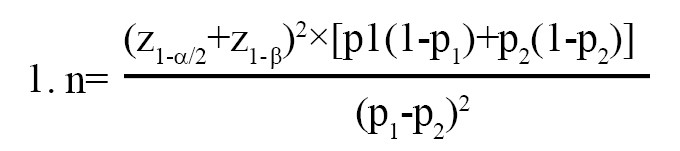
Based on the study by Fernando, (2015) with odds ratio (OR)=2.5 (P1=44% and P2=60%), alpha of 5% and beta of 20%, the sample size was calculated using Cochran’s formula, which resulted in 55 participants in each group. For each individual with PE, a control subject was selected from the postpartum unit without PE, and ultimately, 110 subjects were included in the study. Based on Cochran’s formula (Equation 1), the required sample size was estimated as 55 per group.
Data collection tools
The data collection tools included a demographic information checklist designed by the researcher and a domestic violence questionnaire obtained from the WHO (Shuib et al., 2013).
The demographic-midwifery checklist: The researcher-made demographic-midwifery checklist includes questions about the personal and midwifery attributes of the study participants, such as age, gender, ethnicity, occupation for both males and females, as well as midwifery-specific information such as gestational age, number of pregnancies, and number of births.
The domestic violence questionnaire: This questionnaire, developed by the WHO, consists of 34 questions, 26 of which relate to physical (7 items), sexual (3 items), economic (5 items), and psychological violence (11 items). The remaining items of the questionnaire concern demographic characteristics and other variables associated with the causes and factors of violence. This tool assesses instances of IPV within the past 12 months. The frequency of violent incidents is measured on a 5-point Likert scale, including never (0), rarely (1), sometimes (2), often (3), and always (4). Mothers were surveyed about their experiences with violent behavior in the past 12 months.
The WHO questionnaire on IPV has undergone psychometric evaluation in several international and national studies. A global study reported the Cronbach α values of 0.92 for physical abuse, 0.89 for emotional abuse (also referred to as psychological abuse), and 0.88 for controlling behavior, indicating strong internal consistency (Gliem & Gliem, 2003). Additionally, this questionnaire has been validated and widely applied in Iranian research (Farrokh-Eslamlou et al., 2014; Hajian et al., 2014; Aghakhani, 2003). For instance, in the study by Hajian et al. (2014), internal consistency values were reported for three domains: physical (92%), psychological (89%), and sexual (88%) violence. It is noteworthy that the terms “emotional” and “psychological” violence are used interchangeably in different studies and refer to the same concept. In the present study, we employed the whole WHO domestic violence questionnaire, which includes four distinct dimensions: physical, psychological (emotional), sexual, and economic violence. Therefore, the economic domain was assessed and analyzed in alignment with the original WHO tool’s structure.
Data analysis
Numerical variables are described as Mean±SD, while categorical variables are presented as frequencies (percentages). The Shapiro-Wilk test was conducted to assess the normality of numerical variables, and Levene’s test was used to verify the homogeneity of variances for the independent t-test. An independent t-test was employed to compare age differences between groups, while the Fisher exact test was applied to evaluate associations between categorical variables. Logistic regression analysis was performed to examine the relationship between potential predictors and the outcome variable, considering the total scores of psychological, physical, economic, and sexual violence domains, as well as the overall violence score. To examine the association between domestic violence and PE, univariate analyses were first conducted for each domain of violence (psychological, physical, economic, and sexual). Variables with significant associations were then included in a multivariable logistic regression model, adjusting for potential confounders such as maternal age, paternal age, age gap, and other demographic or clinical factors. This approach helped estimate the independent effect of IPV on the risk of PE. All analyses were conducted using R software, version 4.3.1, with statistical significance set at a P threshold of <0.05.
Results
Descriptive statistics by PE status
Table 1 shows the demographic and clinical characteristics of the study participants stratified by their PE status.
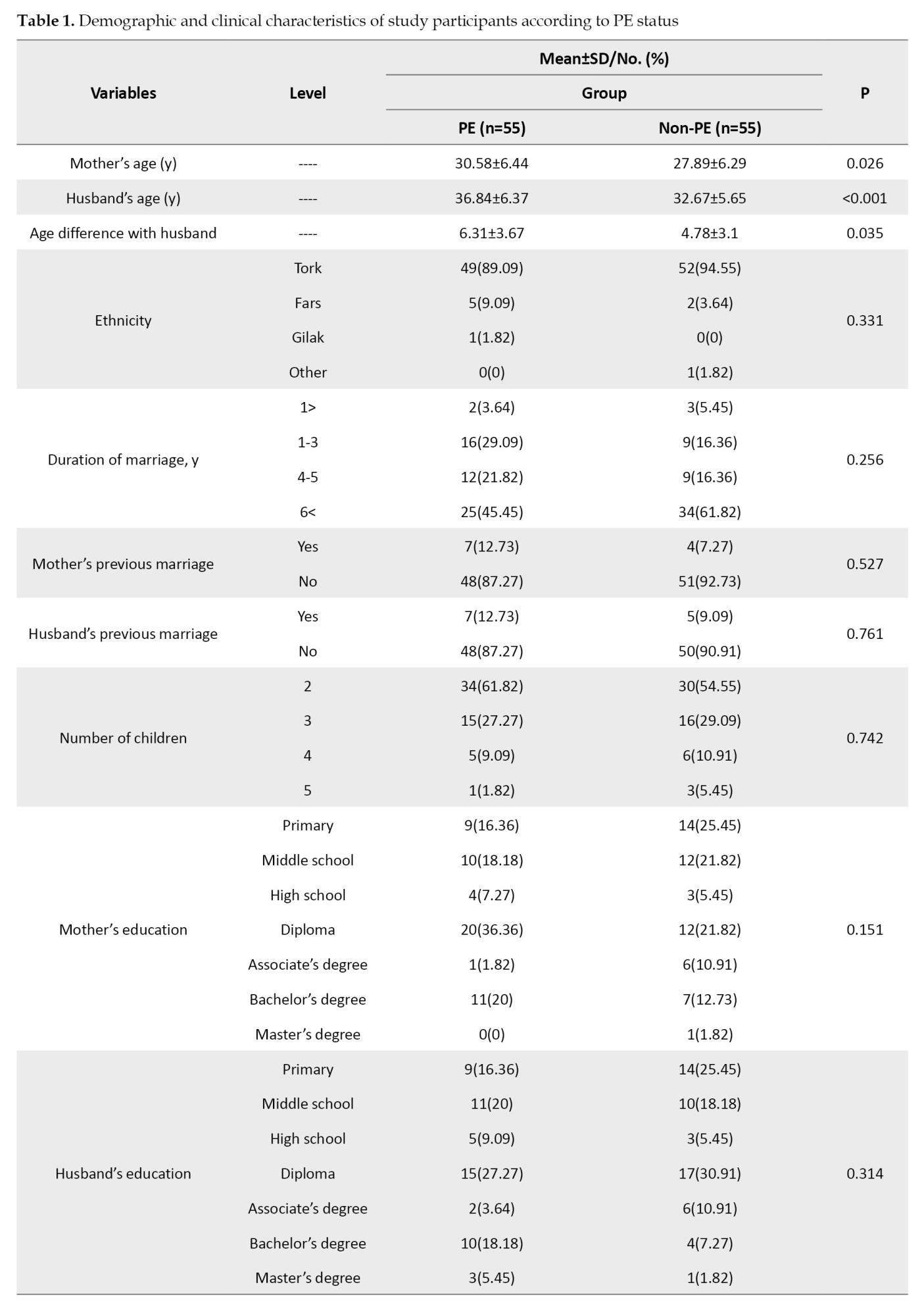
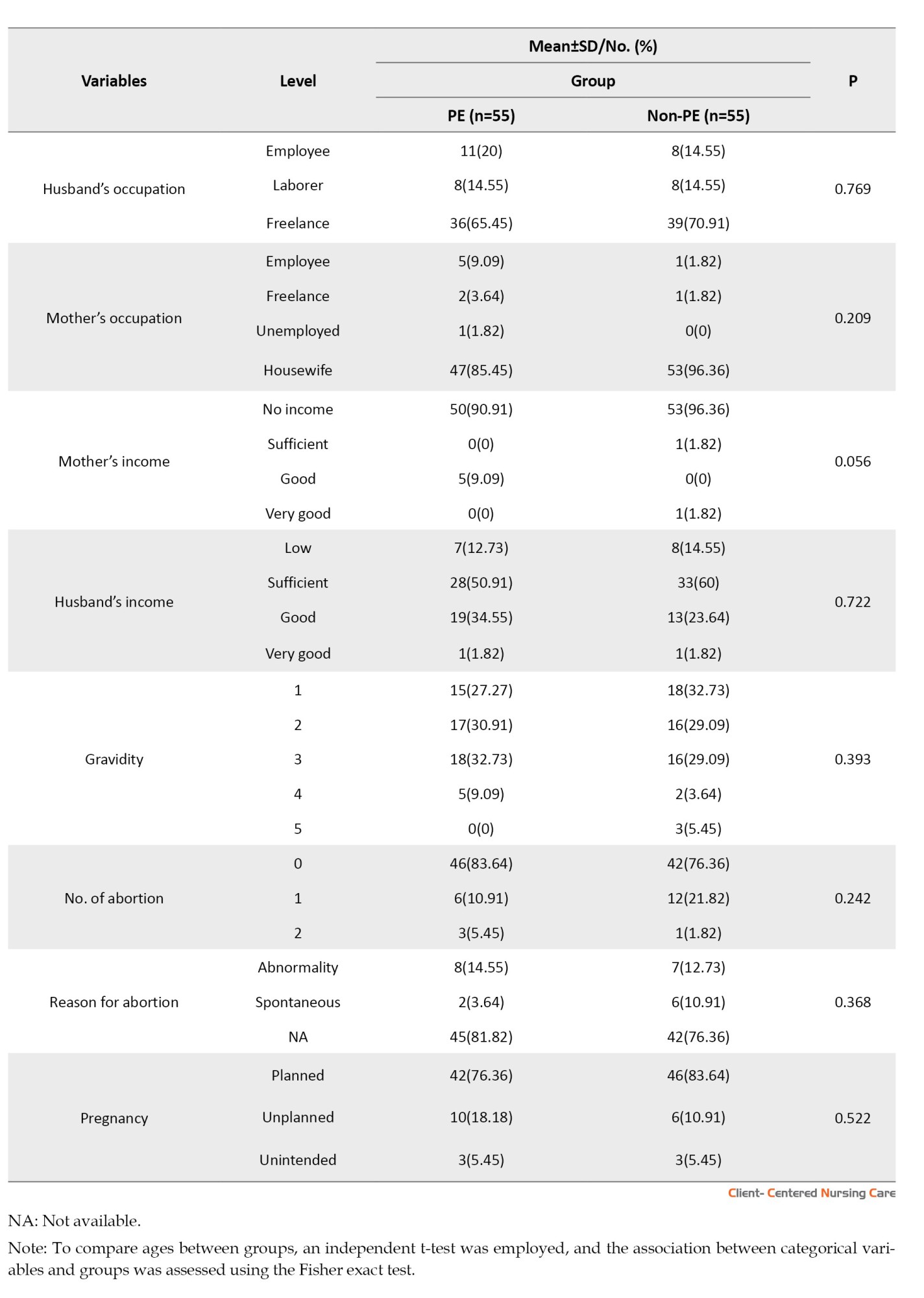
A total of 110 women were included in the study, of whom 55(50%) had PE, and the remaining 55 did not. Among the notable findings, mothers in the case group were, on average, older than those in the control group (30.58 vs 27.89 years; P=0.026), as were their husbands (36.84 vs 32.67 years; P<0.001), with significant differences observed. Additionally, there was a statistically significant difference in the age difference between mothers and husbands (6.31 vs 4.78 years; P=0.035). Ethnicity, duration of marriage, marital history, number of children, level of education, occupation, and income showed no significant differences between the two groups (Table 1).
The impact of sociodemographic and violence-related factors on PE risk
The analysis of variables affecting the odds of PE revealed several significant associations. Maternal age (OR: 1.07; 95% CI, 1.01%, 1.14%; P=0.032), husband’s age (OR: 1.13; 95% CI, 1.05%, 1.21%; P=0.001), and the age difference between spouses (OR: 1.15; 95% CI, 1.02%, 1.3%; P=0.024) were positively associated with an increased risk of PE, suggesting that older maternal and paternal ages, as well as larger spousal age gaps, contribute to heightened vulnerability. Other demographic and socioeconomic factors, such as marital duration, previous marriages, number of children, and education levels, did not exhibit statistically significant associations with PE risk. While maternal and paternal education appeared to influence the odds, their confidence intervals were wide, and significance was not achieved. Additionally, violence-related variables, including the overall violence score (OR: 1.02, 95% CI, 0.98%, 1.07%; P=0.329), psychological violence (OR: 1.05, 95% CI, 0.96%, 1.14%, P=0.303), economic violence (OR: 1.05, 95% CI, 0.89%, 1.24%; P=0.592), physical violence (OR: 1.11; 95% CI, 0.91%, 1.36%; P=0.309), and sexual violence (OR: 1.02; 95% CI, 0.68%, 1.54%; P=0.917), were not significantly associated with PE (Table 2).
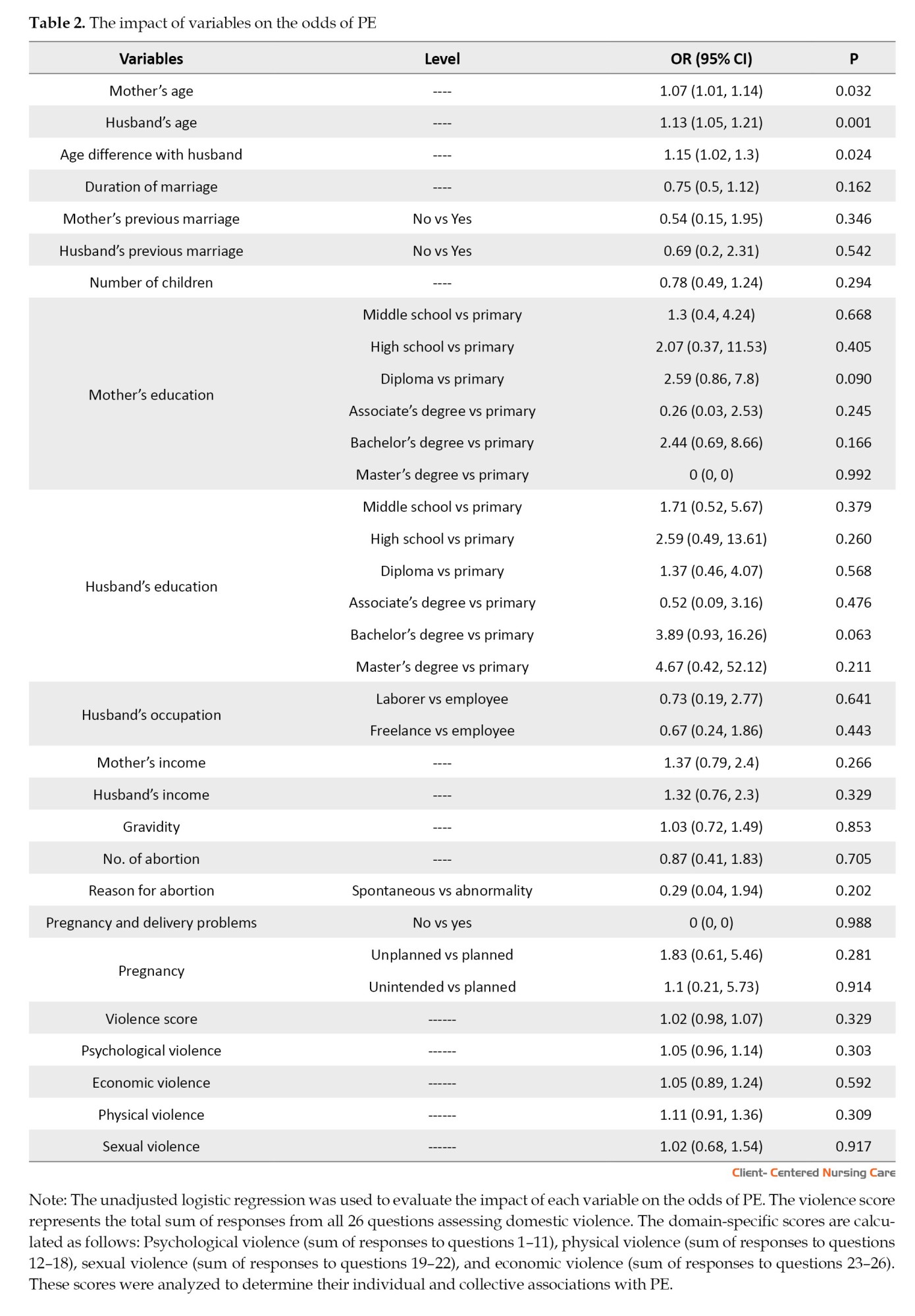
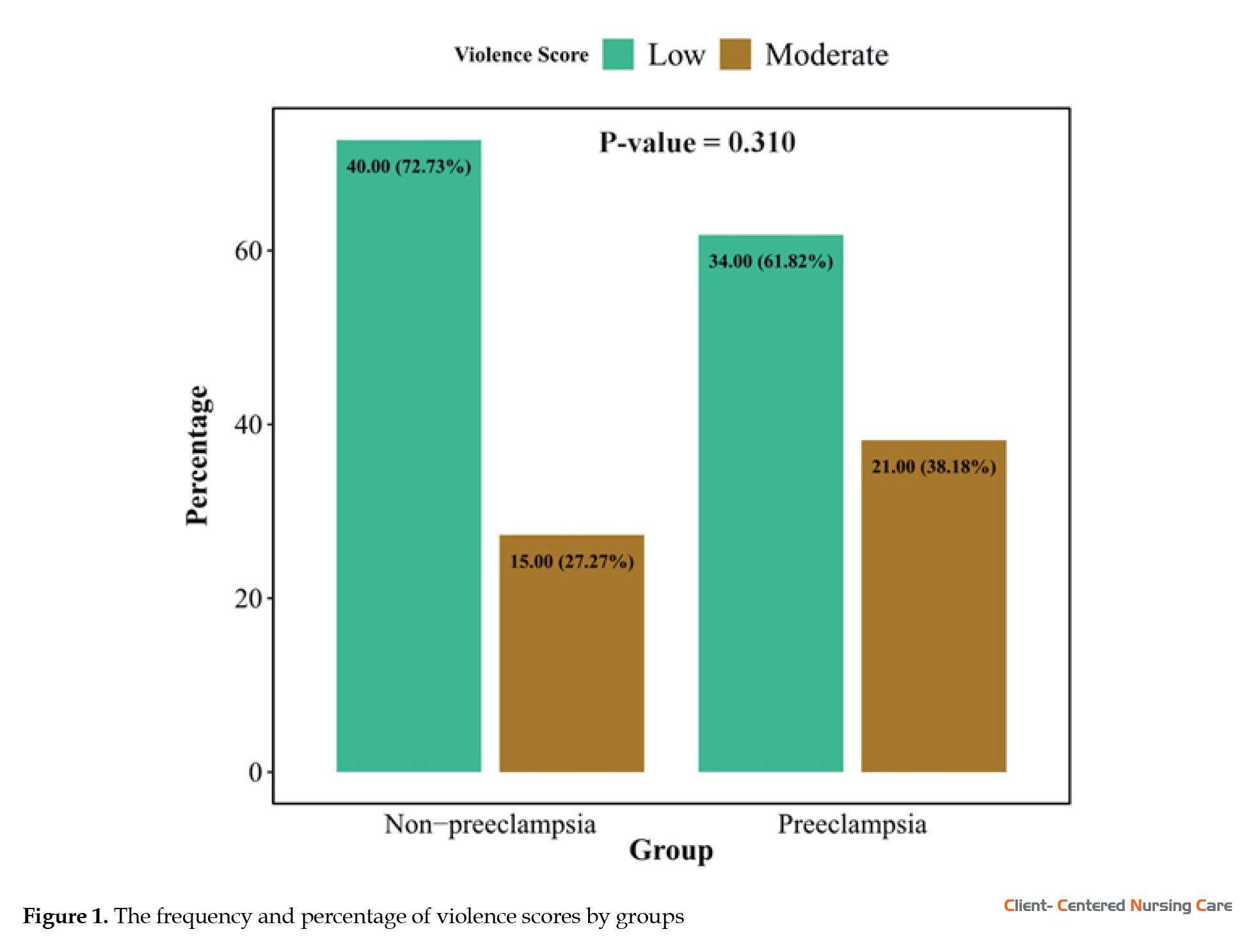
Figure 1 also shows the column chart of violence scores by group (non-PE and PE).
Pre-eclampsia (PE) ranks as the third leading cause of mortality for both pregnant mothers and babies worldwide (Webster et al., 2019). This condition impacts numerous physiological systems and can lead to various complications. Approximately 5% to 20% of pregnancies affected by PE are associated with severe complications for both the mother and the fetus (Leveno et al., 2009). The diagnosis of PE involves assessing indicators such as hypertension, edema in the lower extremities, proteinuria, and thrombocytopenia from the 20th week of gestation until 7 days postpartum (Webster et al., 2019). PE is associated with various risk factors, including low socioeconomic status, a family history of PE, gestational hypertension, smoking, obesity, and diabetes (Rana et al., 2019).
Intimate partner violence (IPV) against women is a prevalent phenomenon, exhibiting variations in occurrence rates across different countries (García-Moreno et al., 2013). The World Health Organization (WHO) categorizes any form of violent behavior based on gender as domestic violence. This type of violence inflicts physical, emotional, and sexual harm upon the victim (García-Moreno et al., 2013; Kalani et al., 2009), subsequently leading to detrimental consequences on the overall quality of life for expectant mothers (Gharacheh et al., 2016). Research has shown that approximately 30% of women worldwide experience physical or sexual violence from their partners, indicating a concerning prevalence of such incidents (García-Moreno et al., 2013). Additionally, Systematic reviews indicate that 48% of Iranian pregnant women experience domestic violence, with the prevalence rates for physical, psychological, and sexual violence being 17%, 41%, and 21%, respectively (Niazi et al., 2015).
IPV can have a direct or indirect effect on pregnancy outcomes (Martin-de-Las-Heras et al., 2019). Pregnancy naturally brings physical, emotional, and mental stress, which IPV can exacerbate. This added stress may negatively impact both the mother and baby. Physical violence during pregnancy can lead to serious issues such as infections, poor nutrition, delayed care, hypertension, bleeding, fetal injury, premature birth, low birth weight, and stillbirth (Pires de Almeida et al., 2013; Nejatizade et al., 2017).
Studies have shown a direct correlation between mental and psychological disorders and the severity and incidence of PE. Furthermore, it has been observed that for every unit increase in maternal stress, the likelihood of developing this condition increases by 3% (Moeinimehr et al., 2015; Bellizzi et al., 2019; Sarmasti et al., 2019; Kordi et al., 2015). However, some other studies found no correlation between the dimensions of domestic violence and PE (Mohamadi et al., 2021; Puccia et al., 2018; Martin-de-Las-Heras et al., 2019). Considering the diverse studies and conflicting findings in this field, alongside the probable influence of cultural, social, ethnic, and racial factors on the prevalence and types of IPV among pregnant women, coupled with its limited exploration across various geographical regions, this study was conducted to investigate the correlation between IPV and PE among postpartum women admitted to the Postpartum Ward of Ayatollah Mousavi Hospital, Zanjan City, Iran.
Materials and Methods
Study plan
This research is a case-control study involving 110 postpartum women (55 cases and 55 controls). The study was conducted over 6 months (from December 2022 to May 2023) to allow sufficient time to reach the required sample size. During this time, mothers who met the inclusion criteria were selected through simple random sampling, and those who had recently given birth completed questionnaires with the assistance of two trained researchers.
Study population and sampling method
The case group included women diagnosed with PE during pregnancy, identified through ongoing monitoring of new admissions and based on medical records reviewed by a gynecologist. PE is diagnosed when high blood pressure (140/90 mm Hg or higher) occurs together with one or more of the following symptoms after 20th week pregnancy: Protein in the urine (determined by analysis of a urine sample), swelling and fluid in the feet, hands and face (confirmed on two separate occasions with a minimum interval of 4 hours) (Dashe et al., 2018, Webster et al., 2019, Obstetricians & Gynecologists, 2020). The control group was selected from women who had given birth and had no history of hypertension, proteinuria, disease, or drug use during pregnancy. The eligibility criteria included being between 18 and 45 years of age, being able to read and write, having given birth to a single baby in the postpartum unit, lacking any medical conditions such as gestational diabetes or heart problems, not experiencing any obstetric problems such as miscarriage, premature birth, or placenta previa, not reporting any stressful events such as bereavement or accidents in the last 6 months, and having received prenatal care at health and treatment centers. Participants were excluded from the study if they had a history of PE, diabetes, maternal smoking, a body mass index over 30 without any associated medical conditions, or if they submitted incomplete questionnaires. In such cases, a replacement participant was selected.
Taking 110 samples at once was unfeasible due to a limited sample supply and time constraints. So, the case and control groups were randomly selected from postpartum mothers using a random number table over 6 months. This random method was used to assign each community member a code or number. Numbered balls were then placed in a designated container, from which a specific number of individuals were randomly selected. For instance, if there were 10 cases or controls in the postpartum ward during each sampling period, 5 individuals from each group were randomly chosen using this method. The remaining mothers were excluded from the study.
Sample size estimation
Based on the study by Fernando, (2015) with odds ratio (OR)=2.5 (P1=44% and P2=60%), alpha of 5% and beta of 20%, the sample size was calculated using Cochran’s formula, which resulted in 55 participants in each group. For each individual with PE, a control subject was selected from the postpartum unit without PE, and ultimately, 110 subjects were included in the study. Based on Cochran’s formula (Equation 1), the required sample size was estimated as 55 per group.
Data collection tools
The data collection tools included a demographic information checklist designed by the researcher and a domestic violence questionnaire obtained from the WHO (Shuib et al., 2013).
The demographic-midwifery checklist: The researcher-made demographic-midwifery checklist includes questions about the personal and midwifery attributes of the study participants, such as age, gender, ethnicity, occupation for both males and females, as well as midwifery-specific information such as gestational age, number of pregnancies, and number of births.
The domestic violence questionnaire: This questionnaire, developed by the WHO, consists of 34 questions, 26 of which relate to physical (7 items), sexual (3 items), economic (5 items), and psychological violence (11 items). The remaining items of the questionnaire concern demographic characteristics and other variables associated with the causes and factors of violence. This tool assesses instances of IPV within the past 12 months. The frequency of violent incidents is measured on a 5-point Likert scale, including never (0), rarely (1), sometimes (2), often (3), and always (4). Mothers were surveyed about their experiences with violent behavior in the past 12 months.
The WHO questionnaire on IPV has undergone psychometric evaluation in several international and national studies. A global study reported the Cronbach α values of 0.92 for physical abuse, 0.89 for emotional abuse (also referred to as psychological abuse), and 0.88 for controlling behavior, indicating strong internal consistency (Gliem & Gliem, 2003). Additionally, this questionnaire has been validated and widely applied in Iranian research (Farrokh-Eslamlou et al., 2014; Hajian et al., 2014; Aghakhani, 2003). For instance, in the study by Hajian et al. (2014), internal consistency values were reported for three domains: physical (92%), psychological (89%), and sexual (88%) violence. It is noteworthy that the terms “emotional” and “psychological” violence are used interchangeably in different studies and refer to the same concept. In the present study, we employed the whole WHO domestic violence questionnaire, which includes four distinct dimensions: physical, psychological (emotional), sexual, and economic violence. Therefore, the economic domain was assessed and analyzed in alignment with the original WHO tool’s structure.
Data analysis
Numerical variables are described as Mean±SD, while categorical variables are presented as frequencies (percentages). The Shapiro-Wilk test was conducted to assess the normality of numerical variables, and Levene’s test was used to verify the homogeneity of variances for the independent t-test. An independent t-test was employed to compare age differences between groups, while the Fisher exact test was applied to evaluate associations between categorical variables. Logistic regression analysis was performed to examine the relationship between potential predictors and the outcome variable, considering the total scores of psychological, physical, economic, and sexual violence domains, as well as the overall violence score. To examine the association between domestic violence and PE, univariate analyses were first conducted for each domain of violence (psychological, physical, economic, and sexual). Variables with significant associations were then included in a multivariable logistic regression model, adjusting for potential confounders such as maternal age, paternal age, age gap, and other demographic or clinical factors. This approach helped estimate the independent effect of IPV on the risk of PE. All analyses were conducted using R software, version 4.3.1, with statistical significance set at a P threshold of <0.05.
Results
Descriptive statistics by PE status
Table 1 shows the demographic and clinical characteristics of the study participants stratified by their PE status.
A total of 110 women were included in the study, of whom 55(50%) had PE, and the remaining 55 did not. Among the notable findings, mothers in the case group were, on average, older than those in the control group (30.58 vs 27.89 years; P=0.026), as were their husbands (36.84 vs 32.67 years; P<0.001), with significant differences observed. Additionally, there was a statistically significant difference in the age difference between mothers and husbands (6.31 vs 4.78 years; P=0.035). Ethnicity, duration of marriage, marital history, number of children, level of education, occupation, and income showed no significant differences between the two groups (Table 1).
The impact of sociodemographic and violence-related factors on PE risk
The analysis of variables affecting the odds of PE revealed several significant associations. Maternal age (OR: 1.07; 95% CI, 1.01%, 1.14%; P=0.032), husband’s age (OR: 1.13; 95% CI, 1.05%, 1.21%; P=0.001), and the age difference between spouses (OR: 1.15; 95% CI, 1.02%, 1.3%; P=0.024) were positively associated with an increased risk of PE, suggesting that older maternal and paternal ages, as well as larger spousal age gaps, contribute to heightened vulnerability. Other demographic and socioeconomic factors, such as marital duration, previous marriages, number of children, and education levels, did not exhibit statistically significant associations with PE risk. While maternal and paternal education appeared to influence the odds, their confidence intervals were wide, and significance was not achieved. Additionally, violence-related variables, including the overall violence score (OR: 1.02, 95% CI, 0.98%, 1.07%; P=0.329), psychological violence (OR: 1.05, 95% CI, 0.96%, 1.14%, P=0.303), economic violence (OR: 1.05, 95% CI, 0.89%, 1.24%; P=0.592), physical violence (OR: 1.11; 95% CI, 0.91%, 1.36%; P=0.309), and sexual violence (OR: 1.02; 95% CI, 0.68%, 1.54%; P=0.917), were not significantly associated with PE (Table 2).
Figure 1 also shows the column chart of violence scores by group (non-PE and PE).
In the non-PE group, 72.7% had a low violence score, while 27.3% had a moderate score. In contrast, in the PE group, 61.8% had a low violence score, and 38.2% had a moderate score. Overall, 67.3% of all participants had a low violence score, and 32.7% had a moderate score. No significant association was found between violence scores and group status (P=0.310) (Figure 1).
Discussion
Our findings do not provide substantial evidence of an association between IPV and PI. Although IPV was slightly higher in the PE group, this difference did not reach statistical significance. Our findings are consistent with previous research in this field. In a case-control study conducted in Iran, Mohamadi et al. found no notable association between PE and various forms of violence. In their research, exposure to physical violence increased the odds of developing PE by 1.5 times, exposure to sexual violence increased the odds by 6.6 times, and exposure to any form of violence raised it by 1.2 times compared to the control group. However, no significant association was found between physical, sexual, and mental violence with PE (Mohamadi et al., 2021). In another study conducted in Brazil (despite differences in methodology and the definition of severe acute maternal morbidity), no correlation was found between spousal violence during pregnancy and severe maternal complications (Puccia et al., 2018). Martin-de-Las-Heras et al. conducted a cohort study in 2019, examining maternal outcomes associated with psychological and physical partner violence during pregnancy in 779 pregnant women. Psychological IPV showed a clear association with urinary tract infection, vaginal infection, and spontaneous preterm delivery. Physical aggression was correlated with maternal hospitalizations during pregnancy and before delivery, but no association was found between IPV and other maternal outcomes, including blood pressure disorders (Martin-de-Las-Heras et al., 2019).
Despite many reports suggesting an association between PE and sexual abuse of women by their partners, our research provides conflicting results. In all these studies, researchers have found that pregnant women often experience IPV, which is associated with an increased risk of PE (Sanchez et al., 2008; Silverman et al., 2006). The accuracy of our findings regarding the severity and dimensions of violence during pregnancy may have been affected by potential errors in maternal self-report of the frequency of exposure to violent behavior. Furthermore, the observed differences may be due to the lack of a universally accepted definition of violence, differences in data collection methods, differences in sample sizes, and other confounding factors, such as differences in the demographic and ethnic composition of the study populations. In contrast, Bellizzi et al. examined demographic and health surveys (DHS) from 7 low- and middle-income countries, including 50748 women who had experienced sexual violence. They found that reported sexual violence was associated with a 2-fold increase in eclampsia symptoms and signs (Bellizzi et al., 2019). The DHS is widely recognized as the primary provider of health information in low- and middle-income countries, and its reputation for providing high-quality data is based on its meticulous use of standardized questionnaires and operational techniques.
Nevertheless, it should be noted that the data analyzed in this study were collected from Afghanistan, Colombia, India, Mali, Peru, the Philippines, and São Tomé and Príncipe. These countries serve as prime examples of the diversity of sexual violence incidence and of the strategies used to prevent and manage PE/eclampsia (Bellizzi et al., 2019). Afghanistan, particularly in its rural areas, is characterized by a prevailing patriarchal culture, resulting in an alarming increase in violence against women (Jewkes et al., 2018). It is worth noting, however, that Colombia has made remarkable progress in enacting legislation to protect women’s rights (Tankard et al., 2019). Hence, the considerable heterogeneity observed in this study may be a plausible explanation for the discrepancies between our findings and those of previous studies. Based on our findings and prior research, it is evident that conducting well-designed studies with larger sample sizes is crucial to accurately assess the severity, type, and timing of maternal exposure to IPV. The comprehensive explanation of these cases is a crucial element of women’s health research.
Our findings indicate that increased maternal age is significantly associated with a higher risk of developing PE. This relationship may be partly explained by physiological changes that occur with aging, such as reduced vascular compliance and an increased prevalence of chronic conditions, which are known as contributors to hypertensive disorders during pregnancy (Tyas et al., 2019; Ling et al., 2021). Moreover, older mothers, particularly those in economically and socially disadvantaged settings, are more vulnerable to domestic violence, a factor that can further exacerbate stress and compromise pregnancy outcomes (Tran et al., 2022; Martin-de-Las-Heras et al., 2019). Domestic violence, whether psychological, physical, or economic, imposes significant psychological and physiological stress on the mother, potentially disrupting normal blood pressure regulation and predisposing her to PE. In low-income settings, where social support and access to healthcare may be limited, these effects can be particularly pronounced, compounding the risks associated with advanced maternal age (Alhusen et al., 2014).
Similarly, our study found that increased husband’s age and a larger age difference between partners are significantly associated with a higher risk of PE. These associations may reflect underlying power imbalances within relationships that contribute to a higher incidence of domestic violence. Larger age disparities often correlate with increased control exerted by the older partner, leading to an environment where domestic abuse is more likely to occur (Mweteni et al., 2021; Conroy, 2014). This abuse, in turn, elevates stress levels and undermines maternal health, increasing the risk of adverse outcomes such as PE. Notably, some studies have argued that while parental age is an important factor, the influence of domestic violence can magnify the physiological stress experienced during pregnancy (Hill et al., 2016; Schaefer et al., 2021). Thus, our results underscore the importance of integrating both demographic and psychosocial factors into prenatal care protocols. Future research should further explore these complex interactions to develop targeted interventions aimed at reducing domestic violence and its consequent impact on maternal health.
Our study focused on maternal exposure to violence during pregnancy. However, these participants may have also experienced violence before pregnancy. Previous research indicates that experiencing abuse before pregnancy is associated with an increased risk of maternal blood pressure disorders (Bellizzi et al., 2019). Conversely, a prospective study of 68505 women across 14 American states found that those who experienced sexual violence before the age of 18 were more likely to develop hypertension than those without a history of abuse (Riley et al., 2010). Consequently, it is crucial to recognize the possible presence of residual confounders in this study. Additionally, it is important to note that our examination of IPV occurred during the immediate postpartum period, a time when women may be less likely to report incidents of violence due to their increased sense of vulnerability (McFarlane et al., 2002).
Conclusion
This study aimed to examine the relationship between IPV and the risk of PE in pregnant women. Although IPV levels were slightly higher in the case group, no significant correlation was found between different types of IPV and PE. On the other hand, advanced parental age and a larger age difference between partners were significantly associated with an increased risk of PE. A major limitation of the study is its reliance on cross-sectional data, which may lead to recall and reporting biases. Future research should adopt longitudinal designs to investigate this link better and consider the potential bias introduced by early pregnancy terminations in IPV victims. Additionally, studies should examine the type, intensity, and frequency of IPV over time and investigate interventions to reduce the prevalence of IPV. It is also essential to monitor and counsel women carefully, especially during the third trimester, which carries the highest risk for adverse pregnancy outcomes, and ensure timely and comprehensive intervention for IPV victims to protect their health.
Ethical Considerations
Compliance with ethical guidelines
This study was approved by the Ethics Committee of Zanjan University of Medical Sciences, Zanjan, Iran (Code: IR.ZUMS.REC.1401.232). All study procedures were conducted in accordance with the protocol of the regional ethical research committee and the 1964 Declaration of Helsinki. After being informed about the study objectives, written consent was obtained from all women. They were told that their participation was voluntary, confidential, and anonymous, and they were also informed of their right to withdraw from the study at any time. (All women provided written informed consent).
Funding
This Study was funded by the Research Deputy of Zanjan University of Medical Sciences, Zanjan, Iran (Code: A-11-1455-2).
Authors' contributions
Conceptualization, study design and data interpretation: Sanaz Fayazi, Mina Abbasi, and Sahar Ahmadi; Data acquisition: Arezoo Haseli; Data analysis: Azadeh Hosseinkhani; Writing the original draft: Sanaz Fayazi, Mina Abbasi, Sahar Ahmadi, and Arezoo Haseli; Review and editing: Sanaz Fayazi, Mina Abbasi, Sahar Ahmadi, and Arezoo Haseli; Final approval: All authors.
Conflict of interest
The authors declared no conflict of interest.
Acknowledgments
The authors want to thank Zanjan University of Medical Sciences, Zanjan, Iran, and the Vice-Chancellor of Research and Technology for their financial support to carry out the study. The authors also appreciate the staff for their collaboration and the mothers for their participation.
References
Aghakhani, K., Agha Beyglouei, A., & Chehreei, Ali., 2003. [Evaluation of physical violence by spouse against womens refering to forensic medicine center of Tehran in autumn of 2000 (Persian)]. Razi Journal of Medical Sciences, 9(31), pp. 485-490. [Link]
Alhusen, J. L., et al., 2014. Intimate partner violence during pregnancy and adverse neonatal outcomes in low-income women. Journal of Women's Health (2002), 23(11), pp. 920–6. [DOI:10.1089/jwh.2014.4862] [PMID]
Bellizzi, S., et al., 2019. Sexual violence and eclampsia: Analysis of data from demographic and health surveys from seven low-and middle-income countries. Journal of Global Health, 9(2), pp. 020434. [DOI:10.7189/jogh.09.020434] [PMID]
Conroy, A. A., 2014. Gender, power, and intimate partner violence: a study on couples from rural Malawi. Journal of Interpersonal Violence, 29(5), pp. 866–88. [DOI:10.1177/0886260513505907] [PMID]
Dashe, J. S., et al., 2018. Williams obstetrics. Ohio: McGraw Hill Professional. [Link]
Farrokh-Eslamlou, H., Oshnouei, S. & Haghighi, N., 2014. Intimate partner violence during pregnancy in Urmia, Iran in 2012. Journal of Forensic and Legal Medicine, 24, pp. 28–32. [DOI:10.1016/j.jflm.2014.03.007] [PMID]
García-Moreno, C., et al., 2013. Global and regional estimates of violence against women: Prevalence and health effects of intimate partner violence and non-partner sexual violence.Geneva: World Health Organization. [Link]
Gharacheh, M., et al., 2016. Domestic violence during pregnancy and women’s health-related quality of life. Global Journal of Health Science, 8(2), pp. 27–34. [DOI:10.5539/gjhs.v8n2p27] [PMID]
Gliem, J. A. & Gliem, R. R., 2003. Calculating, interpreting, and reporting Cronbach’s alpha reliability coefficient for Likert-type scales. Paper presented at: 2003 Midwest Research to Practice Conference in Adult, Continuing, and Community Education, Columbus, OH, 8-10 October; 2003. [Link]
Hajian, S., et al., 2014. Violence against women by their intimate partners in Shahroud in northeastern region of Iran. Global Journal of Health Science, 6(3), pp. 117-30. [DOI:10.5539/gjhs.v6n3p117] [PMID]
Hill, A., et al., 2016. A systematic review and meta-analysis of intimate partner violence during pregnancy and selected birth outcomes. International Journal of Gynecology & Obstetrics, 133(3), pp. 269–76. [DOI:10.1016/j.ijgo.2015.10.023] [PMID]
Jewkes, R., Corboz, J. & Gibbs, A., 2018. Trauma exposure and IPV experienced by Afghan women: Analysis of the baseline of a randomised controlled trial. Plos One, 13, pp. e0201974. [DOI:10.1371/journal.pone.0201974] [PMID]
Kalani, Z., Pourmovahed, Z. & Dehghani, K., 2009. [Control of Risky behavior in marital relationship: Assessment and Intervention (Persian)]. Toloo-E-Behdasht, 8(4-3), pp. 15. [Link]
Kordi, M., et al., 2015. [Sleep quality and pre-eclampsia: A case-control study (Persian)]. The Iranian Journal of Obstetrics, Gynecology and Infertility, 18(167), pp. 16-24. [Link]
Leveno, K., Bloom, S., Hauth, J. & Rouse, D. 2009. Williams Obstetrics 26e. New York:: McGraw-Hill. [Link]
Ling, H. Z., 2021. Effect of maternal age on cardiac adaptation in pregnancy. Ultrasound in Obstetrics & Gynecology, 58(2), PP. 285-92. [DOI:10.1002/uog.23614] [PMID]
Martin-de-Las-Heras, S., et al., 2019. Maternal outcomes associated to psychological and physical intimate partner violence during pregnancy: A cohort study and multivariate analysis. Plos One, 14(6), pp. e0218255. [DOI:10.1371/journal.pone.0218255] [PMID]
Mcfarlane, J., et al., 2002. Abuse during pregnancy and femicide: Urgent implications for women’s health. Obstetrics & Gynecology, 100(1), pp. 27–36. [DOI:10.1016/s0029-7844(02)02054-9] [PMID]
Moeinimehr, M., et al., 2015. [Depression during pregnancy and Pre-eclampsia in third Trimester in women attending prenatal care center of Esfahan in 2010-2012 (Persian)]. Journal of Research Development in Nursing and Midwifery, 12(1), pp. 103-10. [Link]
Mohamadi, S., Shahoei, R. & Soofizadeh, N., 2021. [Relationship of domestic violence from husband and pre-eclampsia in postpartum women referred to Sanandaj Medical Education Center in 2017 (Persian)]. The Iranian Journal of Obstetrics, Gynecology and Infertility, 24(2), pp. 71-9. [DOI:10.22038/ijogi.2021.18174]
Fernando, M.C.J., 2016. [Violencia doméstica de la pareja y su relación con la pre-eclampsia en gestantes atendidas en el hospital San Juan de Lurigancho. Enero-Julio (Spanish)] [Ms thesis]. Lima: Universidad Nacional Mayor de San Marcos. [Link]
Mweteni, W., et al., 2021. Implications of power imbalance in antenatal care seeking among pregnant adolescents in rural Tanzania: A qualitative study. Plos One, 16(6), pp. e0250646.[DOI:10.1371/journal.pone.0250646] [PMID]
Nejatizade, A. A., et al., 2017. Prevalence of domestic violence on pregnant women and maternal and neonatal outcomes in Bandar Abbas, Iran. Electronic Physician, 9(8), pp. 5166–71.[DOI:10.19082/5166] [PMID]
Niazi, M., et al., 2015. [The prevalence of domestic violence among pregnant women in Iran: A systematic review and meta-analysis (Persian)]. Sadra Medical Journal, 3(2), pp. 139-50. [Link]
No Author., 2020. Gestational hypertension and preeclampsia: ACOG practice bulletin, Number 222. Obstetrics and Gynecology, 135(6), pp. e237–60. [DOI:10.1097/AOG.0000000000003891] [PMID]
Pires DE Almeida, C., Sá, E., Cunha, F. & Pires, E. P., 2013. Violence during pregnancy and its effects on mother-baby relationship during pregnancy. Journal of Reproductive and Infant Psychology, 31(4), pp. 370-80. [DOI:10.1080/02646838.2013.822058]
Puccia, M. I. R., Mamede, M. V. & De Souza, L., 2018. Intimate partner violence and severe maternal morbidity among pregnant and postpartum women in São Paulo, Brazil. Journal of Human Growth and Development, 28(2), pp. 165-74. [DOI:10.7322/jhgd.147218]
Rana, S., et al., 2019. Pre-eclampsia: Pathophysiology, challenges, and perspectives. Circulation Research, 124(7), pp. 1094-112. [DOI:10.1161/CIRCRESAHA.118.313276] [PMID]
Riley, E. H., et al., 2010. Hypertension in adult survivors of child abuse: Observations from the nurses’ health study II. Journal of Epidemiology and Community Health, 64(5), pp. 413-8. [DOI:10.1136/jech.2009.095109] [PMID]
Sanchez, S. E., et al., 2008. Intimate partner violence (IPV) and pre-eclampsia among Peruvian women. European Journal of Obstetrics & Gynecology and Reproductive Biology, 137(1), pp. 50–5. [DOI:10.1016/j.ejogrb.2007.05.013] [PMID]
Sarmasti, N., et al., 2019. Comparing perceived social support and perceived stress in healthy pregnant women and pregnant women with pre-eclampsia. Ethiopian Journal of Health Sciences, 29(3), pp. 369–76. [DOI:10.4314/ejhs.v29i3.9] [PMID]
Schaefer, L. M., et al., 2021. The road to resilience: Strength and coping among pregnant women exposed to intimate partner violence. Journal of Interpersonal Violence, 36(17-18), pp. 8382-408. [DOI:10.1177/0886260519850538] [PMID]
Shuib, R., et al., 2013. Domestic violence and women’s well-being in Malaysia: Issues and challenges conducting a national study using the WHO multi-country questionnaire on women’s health and domestic violence against women. Procedia-Social and Behavioral Sciences, 91, pp. 475-88. [DOI:10.1016/j.sbspro.2013.08.445]
Silverman, J. G., et al., 2006. Intimate partner violence victimization prior to and during pregnancy among women residing in 26 US states: Associations with maternal and neonatal health. American Journal of Obstetrics and Gynecology, 195(1), pp. 140-8. [DOI:10.1016/j.ajog.2005.12.052] [PMID]
Tankard, M. E., Paluck, E. L. & Prentice, D. A., 2019. The effect of a savings intervention on women’s intimate partner violence victimization: heterogeneous findings from a randomized controlled trial in Colombia. BMC Women’s Health, 19(1), pp. 17. [DOI:10.1186/s12905-019-0717-2] [PMID]
Tran, T. D. T., Murray, L. & Van Vo, T., 2022. Intimate partner violence during pregnancy and maternal and child health outcomes: A scoping review of the literature from low-and-middle income countries from 2016-2021. BMC Pregnancy and Childbirth, 22, 315. [DOI:10.1186/s12884-022-05117-9] [PMID]
Tyas, B. D., Lestari, P. & Akbar, M. I. A., 2019. Maternal perinatal outcomes related to advanced maternal age in pre-eclampsia pregnant women. Journal of Family & Reproductive Health, 13, pp. 191. [DOI:10.18502/jfrh.v13i4.2646]
Webster, K., et al., 2019. Diagnosis and management of hypertension in pregnancy: Summary of updated NICE guidance. BMJ (Clinical Research ed.), 366, pp. l5119. [DOI:10.1136/bmj.l5119] [PMID]
Type of Study: Research |
Subject:
Special
Received: 2024/11/17 | Accepted: 2025/04/19 | Published: 2025/11/1
Received: 2024/11/17 | Accepted: 2025/04/19 | Published: 2025/11/1
Send email to the article author
| Rights and permissions | |
 |
This work is licensed under a Creative Commons Attribution-NonCommercial 4.0 International License. |

Copyright © The Author(s);
This is an open access article distributed under the terms of the Creative Commons Attribution License (CC-By-NC), which permits use, distribution, and reproduction in any medium, provided the original work is properly cited and is not used for commercial purposes.
Contact Information
