Tue, Apr 28, 2026
[Archive]
Volume 11, Issue 4 (Autumn 2025)
JCCNC 2025, 11(4): 297-306 |
Back to browse issues page




Download citation:
BibTeX | RIS | EndNote | Medlars | ProCite | Reference Manager | RefWorks
Send citation to:


BibTeX | RIS | EndNote | Medlars | ProCite | Reference Manager | RefWorks
Send citation to:
Pangandaman H K. Recontextualizing the Trust-adaptation-intention Framework for Generative Artificial Intelligence Integration in Nursing Education. JCCNC 2025; 11 (4) :297-306
URL: http://jccnc.iums.ac.ir/article-1-862-en.html
URL: http://jccnc.iums.ac.ir/article-1-862-en.html


Department of Nursing, College of Health Sciences, Mindanao State University, Marawi, Philippines. , hamdoni.pangandaman@msumain.edu.ph
Keywords: Trust, Adaptation, Behavioral intention, Generative artificial intelligence (AI), Nursing education
Full-Text [PDF 640 kb]
(405 Downloads)
| Abstract (HTML) (697 Views)
Full-Text: (233 Views)
Introduction
The rapid advancement of generative artificial intelligence (AI) technologies has significantly reshaped educational landscapes, particularly through the introduction of tools such as ChatGPT, Google Gemini, and other large language models (LLMs) (Nikolic et al., 2024; Stevens & Stetson, 2023; Zhang et al., 2021). These systems provide real-time support for academic tasks, including summarization, feedback generation, and personalized learning guidance (Karabacak et al., 2023; Pangandaman, 2024). While their integration into standard education has sparked widespread adoption and inquiry, the application of such tools in nursing education, where ethical decision-making, clinical competence, and critical thinking are paramount, demands meticulous theoretical attention.
Existing literature confirms that technology adoption, particularly in academic or healthcare contexts, is a behavioral process influenced by factors such as perceived utility, trust, adaptation, and intention (Eager & Brunton, 2023; Nikolic et al., 2024; Zhang et al., 2021). Among the conceptual frameworks developed to explain this process is the trust-adaptation-intention (TAI) model, which outlines a behavioral sequence: Individuals first recognize a need, then form trust in a technological solution, adapt their behavior accordingly, and ultimately develop an intention for sustained use (Stevens & Stetson, 2023). The TAI framework has been previously introduced in relation to digital adoption behaviors, offering valuable insights into how users psychologically transition from uncertainty to habitual use. However, this model was initially situated in general contexts of technology engagement and has not been systematically applied to or examined within the distinct pedagogical setting of nursing education.
This study addresses that gap by recontextualizing the TAI framework within the specific environment of nursing education. Recontextualization, in this sense, involves deconstructing the original theory from its general setting and reconstructing it within a new context to reflect nursing students’ unique academic behaviors, values, and professional expectations. The TAI framework is thus not proposed here as a new theory but as a theoretically reinterpreted model tailored to the realities of how nursing students interact with generative AI tools in their learning environments (Seo & Kim, 2024).
Nursing education requires students to engage in evidence-based reasoning, navigate ethical dilemmas, and build clinical judgment—skills that are both enhanced and challenged by the use of generative AI. While such tools can offer individualized tutoring, simulation support, and fast access to information, their use also raises concerns about misinformation, academic dishonesty, and professional dependency (Abd-Alrazaq et al., 2023; Gunawan et al., 2024). Therefore, understanding how nursing students develop trust in these tools, modify their learning strategies, and form sustained intentions for AI integration is critical. Theories such as the technology acceptance model (Venkatesh & Davis, 2000), the unified theory of acceptance and use of technology (Xue et al., 2024), and the theory of planned behavior (TPB) (Ajzen, 2020) provide useful starting points but lack context-specific focus on nursing learners and the educational norms within professional healthcare training.
To guide this recontextualization, this study employs a deductive axiomatic approach, in which five axioms, drawn from educational psychology, nursing pedagogy, and AI integration literature, serve as foundational truths. From these axioms, three logical propositions are derived to illustrate how nursing students recognize educational needs, build trust in generative AI, adapt their learning behaviors, and develop the intention to integrate these tools into their ongoing academic practice. The resulting model, therefore, adopts the TAI framework into a mid-range theory specific to nursing education. Mid-range theories are valuable in nursing science for their ability to bridge broad abstract ideas and applied professional realities (Diniz et al., 2021; Liehr & Smith, 2017). Such theories can be developed using either inductive or deductive approaches. Induction involves deriving theories from specific observations, while deduction begins with established theoretical frameworks or axioms to derive propositions or hypotheses logically (Borsboom et al., 2021; Feliciano et al., 2022). By reinterpreting the TAI model through the lens of nursing education, this study provides a structured explanation of student behavior that informs policy, curriculum design, and faculty development aimed at supporting the ethical and effective use of generative AI in nursing programs.
Materials and Methods
This theoretical study employed a deductive axiomatic approach to recontextualize the TAI framework within the specific setting of nursing education (Fellows & Liu, 2020). The aim was not to construct an entirely new theory, but to reinterpret an existing behavioral model in a manner that reflects the learning experiences, cognitive processes, and ethical expectations unique to nursing students who interact with generative AI technologies in academic settings (Szulewski et al., 2021).
The deductive axiomatic method was chosen for its capacity to systematically reconstruct theoretical models through a logic-driven framework (Borsboom et al., 2021; Feliciano et al., 2022). This approach begins with the identification of foundational truths, or axioms, derived from relevant literature and conceptual foundations. These axioms are then used to logically deduce propositions that explain the phenomenon under study (Yao Jr & Monacis, 2020). In this case, the method enabled the adaptation of the original TAI framework to better account for the behavioral progression observed among nursing students as they develop trust in AI tools, adjust their academic behaviors, and form sustained intentions for integration.
To initiate this recontextualization of the theory, a clearly articulated 4-step process was followed. First, a comprehensive literature review was used to identify conceptual gaps, specifically regarding the psychological and behavioral interactions of generation Z nursing students with generative AI tools in education. For instance, existing literature often discusses general technology acceptance. Still, it lacks a detailed exploration into how Generation Z nursing students uniquely perceive risks, develop trust, adapt their learning strategies, and establish intentions when interacting with generative AI technologies, such as ChatGPT and Google Gemini.
Moreover, the second axioms were developed by extracting core themes from foundational literature, including the technology acceptance model (Venkatesh & Davis, 2000), behavioral psychology theories (Bandura, 1986), and constructivist educational theories (Gogus, 2012; Jaramillo, 1996). These axioms encapsulated essential dimensions: Perceived educational needs, trust formation, adaptive learning behaviors, and intentions towards sustained technology use. Third, propositions were logically derived from these axioms through formal deductive reasoning processes. This approach is consistent with contemporary methodologies used to develop educational and technology integration theories targeting generation Z learners, who are known for their distinct interaction patterns with digital tools (Gogus, 2012; Wajdi et al., 2024). Finally, these logically deduced propositions were synthesized to articulate the mid-range TAI Theory, clearly illustrating how trust, adaptation, and intention to use AI are interconnected within the context of nursing education.
The decision to apply this structured methodological process stems from the need to ensure conceptual clarity and theoretical coherence while aligning the framework with the values and demands of the nursing discipline. By adapting the TAI model through an axiomatic lens, this study offers a theory-informed interpretation that is both grounded in evidence and responsive to the educational and ethical dimensions of AI use in nursing education.
Results
The recontextualization of the TAI framework in this study yielded a mid-range theoretical model specifically tailored to nursing education. Through a deductive axiomatic approach, 5 axioms were derived from interdisciplinary literature in behavioral psychology (Davis et al., 2015; Horsfall et al., 2012; Maykut et al., 2024), educational technology (AlQudah et al., 2021; Marangunić & Granić, 2015), and nursing pedagogy (Chinn & Falk-Rafael, 2018; Demagny-Warmoes et al., 2024). These axioms served as foundational truths or assumptions from which 3 logically derived propositions were generated (Table 1).

Each axiom played a unique and indispensable role in building the theoretical framework, leading to the formulation of a mid-range theory that explains the behavioral pathway by which nursing students form trust, adapt their behaviors, and eventually express intention to use generative AI in academic practice.
Axiom 1 posits that nursing students have educational needs that must be met. This axiom sets the base for identifying a psychological gap or motivational force that drives students to seek out supplemental tools. In the context of AI integration, this axiom anchors the importance of perceived educational support, which is a critical determinant of trust (Stevens & Stetson, 2023). The unmet or evolving learning needs of students compel them to evaluate whether generative AI can fill those gaps, thereby linking axiom 1 directly to proposition 1, which theorizes that when AI supports needs, trust begins to form.
Axiom 2 suggests that both internal beliefs and external conditions shape students’ perceptions of AI. This axiom highlights the intricate interplay between individual attitudes (e.g. openness to technology, digital literacy) and external academic factors (e.g. institutional policies, faculty modeling of AI use). It is significant because it contextualizes the trust-building process, indicating that trust is not inherent but constructed. Axioms 1 and 2, in tandem, support the proposition that trust is a cognitive outcome arising from the alignment of needs with the perceived affordances of generative AI.
Axiom 3 holds that exposure to AI generates perceived risks and benefits. This axiom introduces the evaluative component of students’ interaction with generative AI tools. Drawing on the TPB (Ajzen, 2020), this evaluation process examines how students’ behavioral beliefs, i.e. their perceptions of potential outcomes, impact their attitudes toward using AI. Within the TPB framework, individuals are more likely to develop a favorable attitude (and ultimately an intention to act) when they believe that the behavior will lead to desirable outcomes and minimal negative consequences (Ajzen, 2020). In this context, risk perception, such as concerns about accuracy, plagiarism, or ethical misuse, can diminish trust, while perceived benefits, like increased efficiency, clinical insight, and academic support, can foster it. These perceived outcomes align with TPB’s core premise that intention formation is guided by the subjective evaluation of a behavior’s likely consequences. Thus, this axiom adds a theoretical layer to the process by which students assess the utility of AI and determine whether or not to trust and integrate it into their learning behavior.
This axiom adds nuance to proposition 1, clarifying that trust is not solely a result of needs being met, but also of a favorable appraisal of perceived risks and benefits. Specifically, students evaluate the use of AI tools based on their perceptions of potential academic gains, such as increased efficiency, deeper understanding, and enhanced learning support, versus potential risks, including concerns about accuracy, plagiarism, and ethical misuse. When the perceived benefits outweigh the risks, trust is more likely to emerge. Additionally, axiom 3 reinforces proposition 2, as these evaluative perceptions directly influence students’ willingness to adapt their learning behavior. A positive risk-benefit judgment fosters openness to integrating AI into their academic routines, signifying a behavioral shift driven by cognitive appraisal.
Axiom 4 states that learners have the capacity to adapt their learning behaviors. This axiom is critical for understanding the transition from trust to action. Once trust is established, adaptation becomes possible as students begin to modify their strategies for processing information, organizing content, or preparing for assessments using generative AI tools. This axiom supports proposition 2, which posits that trust leads to the adaptation of academic routines and learning habits. The adaptability of students becomes the bridge between passive trust and active usage.
Axiom 5 posits that perceived usefulness and ease of use influence intention. This axiom is drawn directly from the technology acceptance model (Ajzen, 2020) and provides theoretical support for proposition 3. It affirms that trust and adaptation alone are insufficient unless accompanied by favorable evaluations of the tool’s utility and usability. When these are in place, students are more likely to develop a sustained behavioral intention to use generative AI for academic purposes.
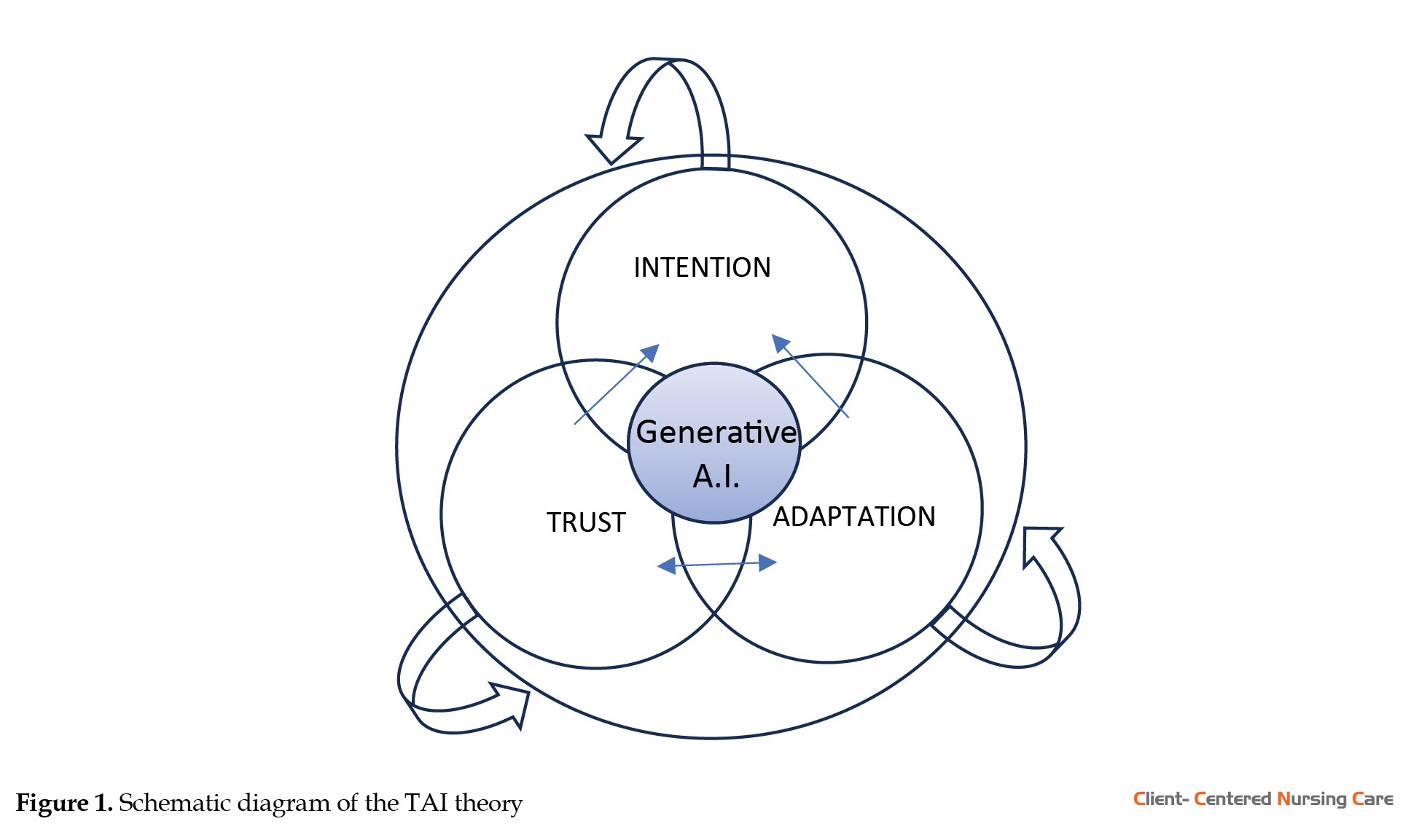
Altogether, the 5 axioms not only form the logical groundwork for the three propositions but also trace a coherent behavioral sequence. From identifying unmet needs (axiom 1), interpreting the technology through a perceptual lens (axiom 2), evaluating its benefits and risks (axiom 3), adapting to its use (axiom 4), and finally forming intention (axiom 5), the resulting propositions illustrate how nursing students engage with generative AI. These axioms are not standalone assertions but interconnected constructs that collectively explain the psychological and behavioral pathway toward AI integration in nursing education. This dynamic and interdependent relationship is illustrated in Figure 1, which presents the schematic diagram of the TAI theory.
The rapid advancement of generative artificial intelligence (AI) technologies has significantly reshaped educational landscapes, particularly through the introduction of tools such as ChatGPT, Google Gemini, and other large language models (LLMs) (Nikolic et al., 2024; Stevens & Stetson, 2023; Zhang et al., 2021). These systems provide real-time support for academic tasks, including summarization, feedback generation, and personalized learning guidance (Karabacak et al., 2023; Pangandaman, 2024). While their integration into standard education has sparked widespread adoption and inquiry, the application of such tools in nursing education, where ethical decision-making, clinical competence, and critical thinking are paramount, demands meticulous theoretical attention.
Existing literature confirms that technology adoption, particularly in academic or healthcare contexts, is a behavioral process influenced by factors such as perceived utility, trust, adaptation, and intention (Eager & Brunton, 2023; Nikolic et al., 2024; Zhang et al., 2021). Among the conceptual frameworks developed to explain this process is the trust-adaptation-intention (TAI) model, which outlines a behavioral sequence: Individuals first recognize a need, then form trust in a technological solution, adapt their behavior accordingly, and ultimately develop an intention for sustained use (Stevens & Stetson, 2023). The TAI framework has been previously introduced in relation to digital adoption behaviors, offering valuable insights into how users psychologically transition from uncertainty to habitual use. However, this model was initially situated in general contexts of technology engagement and has not been systematically applied to or examined within the distinct pedagogical setting of nursing education.
This study addresses that gap by recontextualizing the TAI framework within the specific environment of nursing education. Recontextualization, in this sense, involves deconstructing the original theory from its general setting and reconstructing it within a new context to reflect nursing students’ unique academic behaviors, values, and professional expectations. The TAI framework is thus not proposed here as a new theory but as a theoretically reinterpreted model tailored to the realities of how nursing students interact with generative AI tools in their learning environments (Seo & Kim, 2024).
Nursing education requires students to engage in evidence-based reasoning, navigate ethical dilemmas, and build clinical judgment—skills that are both enhanced and challenged by the use of generative AI. While such tools can offer individualized tutoring, simulation support, and fast access to information, their use also raises concerns about misinformation, academic dishonesty, and professional dependency (Abd-Alrazaq et al., 2023; Gunawan et al., 2024). Therefore, understanding how nursing students develop trust in these tools, modify their learning strategies, and form sustained intentions for AI integration is critical. Theories such as the technology acceptance model (Venkatesh & Davis, 2000), the unified theory of acceptance and use of technology (Xue et al., 2024), and the theory of planned behavior (TPB) (Ajzen, 2020) provide useful starting points but lack context-specific focus on nursing learners and the educational norms within professional healthcare training.
To guide this recontextualization, this study employs a deductive axiomatic approach, in which five axioms, drawn from educational psychology, nursing pedagogy, and AI integration literature, serve as foundational truths. From these axioms, three logical propositions are derived to illustrate how nursing students recognize educational needs, build trust in generative AI, adapt their learning behaviors, and develop the intention to integrate these tools into their ongoing academic practice. The resulting model, therefore, adopts the TAI framework into a mid-range theory specific to nursing education. Mid-range theories are valuable in nursing science for their ability to bridge broad abstract ideas and applied professional realities (Diniz et al., 2021; Liehr & Smith, 2017). Such theories can be developed using either inductive or deductive approaches. Induction involves deriving theories from specific observations, while deduction begins with established theoretical frameworks or axioms to derive propositions or hypotheses logically (Borsboom et al., 2021; Feliciano et al., 2022). By reinterpreting the TAI model through the lens of nursing education, this study provides a structured explanation of student behavior that informs policy, curriculum design, and faculty development aimed at supporting the ethical and effective use of generative AI in nursing programs.
Materials and Methods
This theoretical study employed a deductive axiomatic approach to recontextualize the TAI framework within the specific setting of nursing education (Fellows & Liu, 2020). The aim was not to construct an entirely new theory, but to reinterpret an existing behavioral model in a manner that reflects the learning experiences, cognitive processes, and ethical expectations unique to nursing students who interact with generative AI technologies in academic settings (Szulewski et al., 2021).
The deductive axiomatic method was chosen for its capacity to systematically reconstruct theoretical models through a logic-driven framework (Borsboom et al., 2021; Feliciano et al., 2022). This approach begins with the identification of foundational truths, or axioms, derived from relevant literature and conceptual foundations. These axioms are then used to logically deduce propositions that explain the phenomenon under study (Yao Jr & Monacis, 2020). In this case, the method enabled the adaptation of the original TAI framework to better account for the behavioral progression observed among nursing students as they develop trust in AI tools, adjust their academic behaviors, and form sustained intentions for integration.
To initiate this recontextualization of the theory, a clearly articulated 4-step process was followed. First, a comprehensive literature review was used to identify conceptual gaps, specifically regarding the psychological and behavioral interactions of generation Z nursing students with generative AI tools in education. For instance, existing literature often discusses general technology acceptance. Still, it lacks a detailed exploration into how Generation Z nursing students uniquely perceive risks, develop trust, adapt their learning strategies, and establish intentions when interacting with generative AI technologies, such as ChatGPT and Google Gemini.
Moreover, the second axioms were developed by extracting core themes from foundational literature, including the technology acceptance model (Venkatesh & Davis, 2000), behavioral psychology theories (Bandura, 1986), and constructivist educational theories (Gogus, 2012; Jaramillo, 1996). These axioms encapsulated essential dimensions: Perceived educational needs, trust formation, adaptive learning behaviors, and intentions towards sustained technology use. Third, propositions were logically derived from these axioms through formal deductive reasoning processes. This approach is consistent with contemporary methodologies used to develop educational and technology integration theories targeting generation Z learners, who are known for their distinct interaction patterns with digital tools (Gogus, 2012; Wajdi et al., 2024). Finally, these logically deduced propositions were synthesized to articulate the mid-range TAI Theory, clearly illustrating how trust, adaptation, and intention to use AI are interconnected within the context of nursing education.
The decision to apply this structured methodological process stems from the need to ensure conceptual clarity and theoretical coherence while aligning the framework with the values and demands of the nursing discipline. By adapting the TAI model through an axiomatic lens, this study offers a theory-informed interpretation that is both grounded in evidence and responsive to the educational and ethical dimensions of AI use in nursing education.
Results
The recontextualization of the TAI framework in this study yielded a mid-range theoretical model specifically tailored to nursing education. Through a deductive axiomatic approach, 5 axioms were derived from interdisciplinary literature in behavioral psychology (Davis et al., 2015; Horsfall et al., 2012; Maykut et al., 2024), educational technology (AlQudah et al., 2021; Marangunić & Granić, 2015), and nursing pedagogy (Chinn & Falk-Rafael, 2018; Demagny-Warmoes et al., 2024). These axioms served as foundational truths or assumptions from which 3 logically derived propositions were generated (Table 1).
Each axiom played a unique and indispensable role in building the theoretical framework, leading to the formulation of a mid-range theory that explains the behavioral pathway by which nursing students form trust, adapt their behaviors, and eventually express intention to use generative AI in academic practice.
Axiom 1 posits that nursing students have educational needs that must be met. This axiom sets the base for identifying a psychological gap or motivational force that drives students to seek out supplemental tools. In the context of AI integration, this axiom anchors the importance of perceived educational support, which is a critical determinant of trust (Stevens & Stetson, 2023). The unmet or evolving learning needs of students compel them to evaluate whether generative AI can fill those gaps, thereby linking axiom 1 directly to proposition 1, which theorizes that when AI supports needs, trust begins to form.
Axiom 2 suggests that both internal beliefs and external conditions shape students’ perceptions of AI. This axiom highlights the intricate interplay between individual attitudes (e.g. openness to technology, digital literacy) and external academic factors (e.g. institutional policies, faculty modeling of AI use). It is significant because it contextualizes the trust-building process, indicating that trust is not inherent but constructed. Axioms 1 and 2, in tandem, support the proposition that trust is a cognitive outcome arising from the alignment of needs with the perceived affordances of generative AI.
Axiom 3 holds that exposure to AI generates perceived risks and benefits. This axiom introduces the evaluative component of students’ interaction with generative AI tools. Drawing on the TPB (Ajzen, 2020), this evaluation process examines how students’ behavioral beliefs, i.e. their perceptions of potential outcomes, impact their attitudes toward using AI. Within the TPB framework, individuals are more likely to develop a favorable attitude (and ultimately an intention to act) when they believe that the behavior will lead to desirable outcomes and minimal negative consequences (Ajzen, 2020). In this context, risk perception, such as concerns about accuracy, plagiarism, or ethical misuse, can diminish trust, while perceived benefits, like increased efficiency, clinical insight, and academic support, can foster it. These perceived outcomes align with TPB’s core premise that intention formation is guided by the subjective evaluation of a behavior’s likely consequences. Thus, this axiom adds a theoretical layer to the process by which students assess the utility of AI and determine whether or not to trust and integrate it into their learning behavior.
This axiom adds nuance to proposition 1, clarifying that trust is not solely a result of needs being met, but also of a favorable appraisal of perceived risks and benefits. Specifically, students evaluate the use of AI tools based on their perceptions of potential academic gains, such as increased efficiency, deeper understanding, and enhanced learning support, versus potential risks, including concerns about accuracy, plagiarism, and ethical misuse. When the perceived benefits outweigh the risks, trust is more likely to emerge. Additionally, axiom 3 reinforces proposition 2, as these evaluative perceptions directly influence students’ willingness to adapt their learning behavior. A positive risk-benefit judgment fosters openness to integrating AI into their academic routines, signifying a behavioral shift driven by cognitive appraisal.
Axiom 4 states that learners have the capacity to adapt their learning behaviors. This axiom is critical for understanding the transition from trust to action. Once trust is established, adaptation becomes possible as students begin to modify their strategies for processing information, organizing content, or preparing for assessments using generative AI tools. This axiom supports proposition 2, which posits that trust leads to the adaptation of academic routines and learning habits. The adaptability of students becomes the bridge between passive trust and active usage.
Axiom 5 posits that perceived usefulness and ease of use influence intention. This axiom is drawn directly from the technology acceptance model (Ajzen, 2020) and provides theoretical support for proposition 3. It affirms that trust and adaptation alone are insufficient unless accompanied by favorable evaluations of the tool’s utility and usability. When these are in place, students are more likely to develop a sustained behavioral intention to use generative AI for academic purposes.
Altogether, the 5 axioms not only form the logical groundwork for the three propositions but also trace a coherent behavioral sequence. From identifying unmet needs (axiom 1), interpreting the technology through a perceptual lens (axiom 2), evaluating its benefits and risks (axiom 3), adapting to its use (axiom 4), and finally forming intention (axiom 5), the resulting propositions illustrate how nursing students engage with generative AI. These axioms are not standalone assertions but interconnected constructs that collectively explain the psychological and behavioral pathway toward AI integration in nursing education. This dynamic and interdependent relationship is illustrated in Figure 1, which presents the schematic diagram of the TAI theory.
The diagram features three overlapping circles labeled “trust,” “adaptation,” and “intention,” each representing a foundational construct within the theory. At the center of these intersecting domains is generative AI, symbolizing its role as the core catalyst and integrative element in the user’s engagement with AI technologies. The intertwined nature of the circles underscores that these constructs do not operate in isolation; rather, they influence and reinforce each other. For instance, the overlap between “trust” and “adaptation” suggests that confidence in AI tools encourages behavioral flexibility. At the same time, the convergence of “adaptation” and “intention” indicates that users’ readiness to engage with AI is shaped by their capacity to adapt.
Similarly, the intersection of “trust” and “intention” implies that trust enhances motivational willingness to adopt AI-based tools. Obe-way arrows encircle the diagram and represent a developmental sequence beginning with trust, leading to adaptation, and culminating in intention, indicating a psychological progression from belief to behavioral commitment. Within the center of the model, 2-way arrows illustrate reciprocal reinforcement: As trust in AI deepens, users adapt more readily, and this adaptation further enhances trust; similarly, increased intention to use AI can promote deeper adaptation, while adaptation experiences can solidify the user’s intention. Thus, the TAI schematic depicts a dynamic, non-linear process in which generative AI functions as both a driver and product of continuous interaction among trust, adaptation, and intention. This framework reflects the iterative and reflexive nature of technology acceptance in educational contexts, especially in nursing, where human factors and psychological readiness are crucial for successful integration.
Discussion
The recontextualization of the TAI framework in this study provides a structured explanation of how nursing students respond to the integration of generative AI technologies in their educational experience (Eager & Brunton, 2023; Kurtz et al., 2024; Nikolic et al., 2024). While the original TAI model conceptualizes user engagement as a behavioral sequence, beginning with trust, leading to adaptation, and culminating in intention, this study adapts that framework to reflect the cognitive, emotional, and professional dimensions specific to nursing education (Abd-Alrazaq et al., 2023; Pangandaman et al., 2025). The results offer a mid-range theoretical model that clarifies how trust in generative AI develops among nursing students, how learning behaviors shift in response, and how these elements contribute to students’ intentions to continue using such technologies as part of their academic routines.
Trust, as reinterpreted in this framework, is not merely a product of exposure or technological literacy but is formed through the intersection of perceived educational support, alignment with academic values, and the management of potential risks (Stevens & Stetson, 2023; Zhang et al., 2021). Nursing students are trained within a discipline that emphasizes evidence-based practice, accountability, and ethical integrity (Pangandaman et al., 2024; Zhang et al., 2021). These norms shape how they assess new tools, including generative AI. When students perceive that these technologies can address their academic needs, such as facilitating critical thinking, summarizing complex concepts, or supporting reflective practice. Without undermining the ethical standards of their profession, trust is more likely to emerge (Davis et al., 2015; Pangandaman, 2023; Stevens & Stetson, 2023). This finding reinforces the value of institutional guidance and curricular transparency in fostering responsible AI engagement.
Following the formation of trust, students begin to adapt their academic behaviors (Szulewski et al., 2021). This adaptation is not simply functional but strategic, involving shifts in how students approach study routines, process information, and complete assignments (Pangandaman & Mukattil, 2024; Pangandaman et al., 2024). Generative AI becomes an extension of the learner’s cognitive process, a tool not only for efficiency but also for exploration, clarification, and synthesis (Nikolic et al., 2024; Summers & et al., 2024). Importantly, the model shows that such adaptation is mediated by trust; students are unlikely to alter deeply embedded learning behaviors unless they perceive the tool as both credible and congruent with their professional learning goals (Stevens & Stetson, 2023; Zhang et al., 2021).
The progression from adaptation to intention is shaped by the perceived usefulness and ease of use of AI tools (Pangandaman, 2024; Stevens & Stetson, 2023). However, in the context of nursing education, intention is not based solely on utility; it is also conditioned by concerns around academic integrity, professional preparedness, and long-term consequences (Aragasi & Pangandaman, 2021; Fawaz et al., 2025; Gunawan et al., 2024). While many students may find AI helpful in preparing for exams, generating explanations, or guiding research tasks, sustained use depends on whether AI is perceived as a legitimate complement to human judgment rather than a shortcut or crutch (Pangandaman, 2023; Pangandaman et al., 2019). This conditionality highlights the importance of developing balanced policies and faculty models that demonstrate how AI can be ethically integrated into professional learning without compromising standards (Karabacak et al., 2023; Zhang et al., 2021).
The recontextualized TAI framework thus offers more than a descriptive model of student behavior; it provides a reflective and adaptable lens through which institutions and educators can understand and shape AI-related academic practices. It demonstrates that the adoption of generative AI in nursing education is neither linear nor automatic, but rather an evolving, contingent, value-sensitive process (Nikolic et al., 2024; Pangandaman, 2023). In doing so, it moves beyond generalized technology acceptance models by attending to the distinctive ethical, pedagogical, and disciplinary factors that characterize nursing as both an academic field and a professional practice.
This theoretical adaptation also highlights the importance of support structures in educational institutions. Without clear guidance, students may either misuse AI tools or miss opportunities to integrate them meaningfully (Diniz et al., 2021; Hayudini & Pangandaman, 2024; Pangandaman, 2023). The framework, therefore, calls for proactive curricular integration, where ethical use, critical evaluation, and reflective practice are explicitly taught as part of digital literacy in nursing education.
Despite its contributions, the recontextualized framework has several limitations. It remains conceptual and has not yet been empirically validated through direct student data. Its scope is also limited to the educational dimension and does not yet account for how generative AI may intersect with clinical training or interdisciplinary collaboration. Additionally, while it reflects the norms of nursing education broadly, it may require further adaptation to accommodate variations across cultures, institutions, or generational learning preferences.
Nonetheless, the theory offers a timely and context-sensitive foundation for future research and practice. As generative AI continues to evolve, its presence in nursing education will likely grow, making it increasingly important to understand not just how students use these tools but how they integrate them into their professional formation. The TAI framework, recontextualized through this study, offers a pathway for advancing that understanding.
Conclusion
This study recontextualized the TAI framework to offer a theoretical explanation of how nursing students behaviorally engage with generative AI tools in academic settings. Rather than proposing a new theory, this work adapted an existing behavioral model to align with the values, expectations, and learning environments specific to nursing education. Through a deductive axiomatic process, the study identified key assumptions grounded in literature and logic, resulting in a mid-range framework that elucidates how trust, adaptation, and intention are sequentially and dynamically developed in the process of AI adoption.
The reinterpreted TAI model emphasizes that nursing students initially assess whether generative AI tools meet their educational needs without compromising core academic and ethical standards. When trust is established through this evaluative process, students begin to modify their learning behaviors to integrate AI tools in ways that enhance comprehension, efficiency, and autonomy. These adapted behaviors, in turn, shape students’ intentions to use AI tools on a sustained basis—intentions that remain closely tied to students’ perceptions of usefulness, ease of use, and ethical alignment with their professional formation.
As nursing education increasingly incorporates digital and AI-driven tools, this recontextualized framework serves as a guide for educators, administrators, and policymakers seeking to integrate emerging technologies in a way that supports both academic performance and professional integrity. It encourages curricular designs that address not only access to technology but also the psychological, ethical, and pedagogical conditions necessary for the meaningful and responsible use of AI.
Future research should aim to empirically validate this recontextualized model across diverse nursing education settings and explore how it can be extended to clinical training and interprofessional learning. As generative AI continues to evolve, theoretical models such as the TAI framework, adapted thoughtfully for specific disciplinary contexts, will be crucial in helping institutions navigate the intersection of innovation, ethics, and professional education.
Ethical Considerations
Compliance with ethical guidelines
This theoretical study did not involve human or animal subjects and thus did not require the Ethics Committee approval. It complied with academic ethical standards regarding the use of secondary literature sources.
Funding
The research received no specific grant from any funding agency in the public, commercial, or not-for-profit sectors.
Conflict of interest
The author declared no conflict of interest.
Acknowledgments
The author expresses his deepest gratitude to the College of Health Sciences of Mindanao State University, Marawi, Philippines.
References
Abd-Alrazaq, A., et al., 2023. Large language models in medical education: Opportunities, challenges, and future directions. JMIR Medical Education, 9, pp. e48291. [DOI:10.2196/48291] [PMID]
Ajzen, I., 2020. The theory of planned behavior: Frequently asked questions. Human Behavior and Emerging Technologies, 2(4), pp. 314-24. [Link]
AlQudah, A. A., Al-Emran, M. & Shaalan, K., 2021. Technology acceptance in healthcare: A systematic review. Applied Sciences, 11(22), pp. 10537. [DOI:10.3390/app112210537]
Aragasi, N. A. & Pangandaman, H. K., 2021. Coping style, anxiety level, organizational support, and work commitment of educators during the COVID-19 pandemic in the Philippines: A mixed-methods study. Belitung Nursing Journal, 7(4), pp. 267–76. [DOI:10.33546/bnj.1393] [PMID]
Bandura, A. (1986). Social foundations of thought and action: A social cognitive theory. In: D. Marks (Ed.), The health psycology reader. pp. 94-106. Thousand Oaks: Sage Publication Ltd. [Link]
Borsboom, D., et al., 2021. Theory construction methodology: A practical framework for building theories in psychology. Perspectives on Psychological Science, 16(4), pp. 756-66. [DOI:10.1177/1745691620969647] [PMID]
Chinn, P. L. & Falk-Rafael, A., 2018. Embracing the focus of the discipline of nursing: Critical caring pedagogy. Journal of Nursing Scholarship, 50(6), pp. 687-94. [DOI:10.1111/jnu.12426] [PMID]
Davis, R., et al., 2015. Theories of behaviour and behaviour change across the social and behavioural sciences: A scoping review. Health Psychology Review, 9(3), pp. 323–44. [DOI:10.1080/17437199.2014.941722] [PMID]
Demagny-Warmoes, A., Quindroit, P. & Colson, S., 2024. Pedagogical strategies for teaching nursing theories in undergraduate students: A scoping review protocol. Plos One, 19(10), pp. e0308783. [DOI:10.1371/journal.pone.0308783] [PMID]
Diniz, C. M., et al., 2021. A middle-range theory for nurses to diagnose ineffective infant feeding patterns. International Journal of Nursing Knowledge, 32(2), pp. 117-24. [DOI:10.1111/2047-3095.12302] [PMID]
Eager, B. & Brunton, R., 2023. Prompting higher education towards AI-Augmented teaching and learning practice. Journal of University Teaching and Learning Practice, 20(5). [DOI:10.53761/1.20.5.02]
Fawaz, M., et al., 2025. Exploring health sciences students' perspectives on using generative artificial intelligence in higher education: A qualitative study. Nursing & Health Sciences, 27(1), pp. e70030. [DOI:10.1111/nhs.70030] [PMID]
Feliciano, E., et al., 2022. Aging-related Resiliency Theory Development. Belitung Nursing Journal, 8(1), pp. 4–10. [DOI:10.33546/bnj.1631] [PMID]
Fellows, R. & Liu, A. M. M., 2020. Borrowing theories: Contextual and empirical considerations. Construction Management and Economics, 38(7), pp. 581-8. [DOI:10.1080/01446193.2020.1727541]
Gogus, A., 2012. Constructivist Learning. In N. M. Seel (Ed.), Encyclopedia of the Sciences of Learning (pp. 783-786). Boston: Springer. [DOI:10.1007/978-1-4419-1428-6_142]
Gunawan, J., Aungsuroch, Y. & Montayre, J., 2024. ChatGPT integration within nursing education and its implications for nursing students: A systematic review and text network analysis. Nurse Education Today, 141, pp. 106323. [DOI:10.1016/j.nedt.2024.106323]
Hayudini, R. I. & Pangandaman, H. K., 2024. [Factors and preferences in modes of delivery among pregnant tausug women in Jolo, Sulu (Persian)]. Avicenna Journal of Nursing and Midwifery Care, 32(2), pp. 98-106. [DOI:10.32592/ajnmc.32.2.98]
Horsfall, J., Cleary, M. & Hunt, G. E., 2012. Developing a pedagogy for nursing teaching-learning. Nurse Education Today, 32(8), pp. 930–3. [DOI:10.1016/j.nedt.2011.10.022] [PMID]
Jaramillo, J. A., 1996. Vygotsky’s sociocultural theory and contributions to the development of constructivist curricula. Education, 117(1), pp. 133-41. [Link]
Karabacak, M., et al., 2023. The advent of generative language models in medical education. JMIR Medical Education, 9, pp.e48163. [DOI:10.2196/48163] [PMID]
Kurtz, G., et al., 2024. Strategies for integrating generative ai into higher education: Navigating challenges and leveraging opportunities. Education Sciences, 14(5), pp. 503. [DOI:10.3390/educsci14050503]
Liehr, P. & Smith, M. J., 2017. Middle range theory: A perspective on development and use. Advances in Nursing Science, 40(1), pp. 51–63. [DOI:10.1097/ans.0000000000000162] [PMID]
Marangunić, N. & Granić, A., 2015. Technology acceptance model: A literature review from 1986 to 2013. Universal Access in the Information Society, 14(1), pp. 81-95. [DOI:10.1007/s10209-014-0348-1]
Maykut, C., et al., 2024. Investigating the fundamental levels of a signature pedagogy in nursing education: A scoping review. Nurse Education Today, 134, pp. 106088. [DOI:10.1016/j.nedt.2023.106088] [PMID]
Pangandaman, H. & Mukattil, N. 2024. Barriers and strategies in the implementation of virtual learning modalities amid covid-19 among students in nursing schools at Sulu Province, Philippines. Critical Medical and Surgical Nursing Journal (CMSNJ), 13(1), pp. 20-5. [DOI:10.20473/cmsnj.v13i1.51366]
Nikolic, S., et al., 2024. ChatGPT, Copilot, Gemini, SciSpace and Wolfram versus higher education assessments: An updated multi-institutional study of the academic integrity impacts of generative artificial intelligence (GenAI) on assessment, teaching and learning in engineering. Australasian Journal of Engineering Education, 29(2), pp. 126-53. [DOI:10.1080/22054952.2024.2372154]
Pangandaman, H., 2023. Challenges faced by digital immigrant nurse educators in adopting flexible learning options during the covid-19 pandemic: A phenomenological study. Journal of Client-Centered Nursing Care, 9(4), pp. 309-16. [DOI:10.32598/jccnc.9.4.571.2]
Pangandaman, H., et al., 2024. A systematic review of the effectiveness of flipped classroom approaches in developing clinical skills among nursing students. Journal of Research Development in Nursing and Midwifery, 21(1), pp. 6-10. [DOI:10.61186/jgbfnm.21.1.4]
Pangandaman, H. K., 2024. Advantages and challenges in using AI (Artificial Intelligence) in research: A literature review. Scope Journal, 14(2), pp. 1709-21. [Link]
Pangandaman, H. K., et al., 2019. Innovative classroom pedagogy In nursing education: A systematic review. International Journal of Health Medicine and Current Research, 4(4), pp. 1543-9.[Link]
Pangandaman, H. K., et al., 2025. Exploring the role of large language models (LLMs) as an academic resource for students: A scoping review. Library Progress International, 45(1), pp. 237-43. [Link]
Pangandaman, H. K., et al., 2024. Exploring mercy killing: Ethical dilemma among muslim maranao nurses in critical care setting. Journal of Client - centered Nursing Care, 10(3), pp. 167-78. [DOI:10.32598/JCCNC.10.3.571.3]
Seo, W. J. & Kim, M., 2024. Utilization of generative artificial intelligence in nursing education: A topic modeling analysis. Education Sciences, 14(11), pp. 1234. [DOI:10.3390/educsci14111234]
Stevens, A. F. & Stetson, P., 2023. Theory of trust and acceptance of artificial intelligence technology (TrAAIT): An instrument to assess clinician trust and acceptance of artificial intelligence. p.Journal of Biomedical Informatics, 148, pp. 104550. [DOI:10.1016/j.jbi.2023.104550] [PMID]
Summers, A., et al., 2024. Navigating challenges and opportunities: Nursing students’ views on generative AI in higher education. Nurse Education in Practice, 79, 104062. [DOI:10.1016/j.nepr.2024.104062] [PMID]
Szulewski, A., et al., 2021. From theory to practice: the application of cognitive load theory to the practice of medicine. Academic Medicine, 96(1), pp. 24-30. [DOI:10.1097/ACM.0000000000003524] [PMID]
Venkatesh, V. & Davis, F. D., 2000. A theoretical extension of the technology acceptance model: Four longitudinal field studies. Management Science, 46(2), pp. 186-204. [DOI:10.1287/mnsc.46.2.186.11926]
Wajdi, M., et al., 2024. Profile of generation Z characteristics: Implications for contemporary educational approaches. Kajian Pendidikan, Seni, Budaya, Sosial dan Lingkungan, 1(1), pp. 33-44. [Link]
Xue, L., et al., 2024. The Unified Theory of acceptance and use of technology (UTAUT) in higher education: A systematic review. SAGE Open, 14(1), pp. 21582440241229570. [DOI:10.1177/21582440241229570]
Yao Jr, J. J. & Monacis, L., 2020. A theoretical perspective on aging attributions and expectations: Its role in health behaviors and outcomes. Cogent Psychology, 7(1), pp. 1798634. [DOI:10.1080/23311908.2020.1798634]
Zhang, S., et al., 2021. Motivation, social emotion, and the acceptance of artificial intelligence virtual assistants-trust-based mediating effects. Frontiers in Psychology, 12, pp. 728495.[DOI:10.3389/fpsyg.2021.728495] [PMID]
Similarly, the intersection of “trust” and “intention” implies that trust enhances motivational willingness to adopt AI-based tools. Obe-way arrows encircle the diagram and represent a developmental sequence beginning with trust, leading to adaptation, and culminating in intention, indicating a psychological progression from belief to behavioral commitment. Within the center of the model, 2-way arrows illustrate reciprocal reinforcement: As trust in AI deepens, users adapt more readily, and this adaptation further enhances trust; similarly, increased intention to use AI can promote deeper adaptation, while adaptation experiences can solidify the user’s intention. Thus, the TAI schematic depicts a dynamic, non-linear process in which generative AI functions as both a driver and product of continuous interaction among trust, adaptation, and intention. This framework reflects the iterative and reflexive nature of technology acceptance in educational contexts, especially in nursing, where human factors and psychological readiness are crucial for successful integration.
Discussion
The recontextualization of the TAI framework in this study provides a structured explanation of how nursing students respond to the integration of generative AI technologies in their educational experience (Eager & Brunton, 2023; Kurtz et al., 2024; Nikolic et al., 2024). While the original TAI model conceptualizes user engagement as a behavioral sequence, beginning with trust, leading to adaptation, and culminating in intention, this study adapts that framework to reflect the cognitive, emotional, and professional dimensions specific to nursing education (Abd-Alrazaq et al., 2023; Pangandaman et al., 2025). The results offer a mid-range theoretical model that clarifies how trust in generative AI develops among nursing students, how learning behaviors shift in response, and how these elements contribute to students’ intentions to continue using such technologies as part of their academic routines.
Trust, as reinterpreted in this framework, is not merely a product of exposure or technological literacy but is formed through the intersection of perceived educational support, alignment with academic values, and the management of potential risks (Stevens & Stetson, 2023; Zhang et al., 2021). Nursing students are trained within a discipline that emphasizes evidence-based practice, accountability, and ethical integrity (Pangandaman et al., 2024; Zhang et al., 2021). These norms shape how they assess new tools, including generative AI. When students perceive that these technologies can address their academic needs, such as facilitating critical thinking, summarizing complex concepts, or supporting reflective practice. Without undermining the ethical standards of their profession, trust is more likely to emerge (Davis et al., 2015; Pangandaman, 2023; Stevens & Stetson, 2023). This finding reinforces the value of institutional guidance and curricular transparency in fostering responsible AI engagement.
Following the formation of trust, students begin to adapt their academic behaviors (Szulewski et al., 2021). This adaptation is not simply functional but strategic, involving shifts in how students approach study routines, process information, and complete assignments (Pangandaman & Mukattil, 2024; Pangandaman et al., 2024). Generative AI becomes an extension of the learner’s cognitive process, a tool not only for efficiency but also for exploration, clarification, and synthesis (Nikolic et al., 2024; Summers & et al., 2024). Importantly, the model shows that such adaptation is mediated by trust; students are unlikely to alter deeply embedded learning behaviors unless they perceive the tool as both credible and congruent with their professional learning goals (Stevens & Stetson, 2023; Zhang et al., 2021).
The progression from adaptation to intention is shaped by the perceived usefulness and ease of use of AI tools (Pangandaman, 2024; Stevens & Stetson, 2023). However, in the context of nursing education, intention is not based solely on utility; it is also conditioned by concerns around academic integrity, professional preparedness, and long-term consequences (Aragasi & Pangandaman, 2021; Fawaz et al., 2025; Gunawan et al., 2024). While many students may find AI helpful in preparing for exams, generating explanations, or guiding research tasks, sustained use depends on whether AI is perceived as a legitimate complement to human judgment rather than a shortcut or crutch (Pangandaman, 2023; Pangandaman et al., 2019). This conditionality highlights the importance of developing balanced policies and faculty models that demonstrate how AI can be ethically integrated into professional learning without compromising standards (Karabacak et al., 2023; Zhang et al., 2021).
The recontextualized TAI framework thus offers more than a descriptive model of student behavior; it provides a reflective and adaptable lens through which institutions and educators can understand and shape AI-related academic practices. It demonstrates that the adoption of generative AI in nursing education is neither linear nor automatic, but rather an evolving, contingent, value-sensitive process (Nikolic et al., 2024; Pangandaman, 2023). In doing so, it moves beyond generalized technology acceptance models by attending to the distinctive ethical, pedagogical, and disciplinary factors that characterize nursing as both an academic field and a professional practice.
This theoretical adaptation also highlights the importance of support structures in educational institutions. Without clear guidance, students may either misuse AI tools or miss opportunities to integrate them meaningfully (Diniz et al., 2021; Hayudini & Pangandaman, 2024; Pangandaman, 2023). The framework, therefore, calls for proactive curricular integration, where ethical use, critical evaluation, and reflective practice are explicitly taught as part of digital literacy in nursing education.
Despite its contributions, the recontextualized framework has several limitations. It remains conceptual and has not yet been empirically validated through direct student data. Its scope is also limited to the educational dimension and does not yet account for how generative AI may intersect with clinical training or interdisciplinary collaboration. Additionally, while it reflects the norms of nursing education broadly, it may require further adaptation to accommodate variations across cultures, institutions, or generational learning preferences.
Nonetheless, the theory offers a timely and context-sensitive foundation for future research and practice. As generative AI continues to evolve, its presence in nursing education will likely grow, making it increasingly important to understand not just how students use these tools but how they integrate them into their professional formation. The TAI framework, recontextualized through this study, offers a pathway for advancing that understanding.
Conclusion
This study recontextualized the TAI framework to offer a theoretical explanation of how nursing students behaviorally engage with generative AI tools in academic settings. Rather than proposing a new theory, this work adapted an existing behavioral model to align with the values, expectations, and learning environments specific to nursing education. Through a deductive axiomatic process, the study identified key assumptions grounded in literature and logic, resulting in a mid-range framework that elucidates how trust, adaptation, and intention are sequentially and dynamically developed in the process of AI adoption.
The reinterpreted TAI model emphasizes that nursing students initially assess whether generative AI tools meet their educational needs without compromising core academic and ethical standards. When trust is established through this evaluative process, students begin to modify their learning behaviors to integrate AI tools in ways that enhance comprehension, efficiency, and autonomy. These adapted behaviors, in turn, shape students’ intentions to use AI tools on a sustained basis—intentions that remain closely tied to students’ perceptions of usefulness, ease of use, and ethical alignment with their professional formation.
As nursing education increasingly incorporates digital and AI-driven tools, this recontextualized framework serves as a guide for educators, administrators, and policymakers seeking to integrate emerging technologies in a way that supports both academic performance and professional integrity. It encourages curricular designs that address not only access to technology but also the psychological, ethical, and pedagogical conditions necessary for the meaningful and responsible use of AI.
Future research should aim to empirically validate this recontextualized model across diverse nursing education settings and explore how it can be extended to clinical training and interprofessional learning. As generative AI continues to evolve, theoretical models such as the TAI framework, adapted thoughtfully for specific disciplinary contexts, will be crucial in helping institutions navigate the intersection of innovation, ethics, and professional education.
Ethical Considerations
Compliance with ethical guidelines
This theoretical study did not involve human or animal subjects and thus did not require the Ethics Committee approval. It complied with academic ethical standards regarding the use of secondary literature sources.
Funding
The research received no specific grant from any funding agency in the public, commercial, or not-for-profit sectors.
Conflict of interest
The author declared no conflict of interest.
Acknowledgments
The author expresses his deepest gratitude to the College of Health Sciences of Mindanao State University, Marawi, Philippines.
References
Abd-Alrazaq, A., et al., 2023. Large language models in medical education: Opportunities, challenges, and future directions. JMIR Medical Education, 9, pp. e48291. [DOI:10.2196/48291] [PMID]
Ajzen, I., 2020. The theory of planned behavior: Frequently asked questions. Human Behavior and Emerging Technologies, 2(4), pp. 314-24. [Link]
AlQudah, A. A., Al-Emran, M. & Shaalan, K., 2021. Technology acceptance in healthcare: A systematic review. Applied Sciences, 11(22), pp. 10537. [DOI:10.3390/app112210537]
Aragasi, N. A. & Pangandaman, H. K., 2021. Coping style, anxiety level, organizational support, and work commitment of educators during the COVID-19 pandemic in the Philippines: A mixed-methods study. Belitung Nursing Journal, 7(4), pp. 267–76. [DOI:10.33546/bnj.1393] [PMID]
Bandura, A. (1986). Social foundations of thought and action: A social cognitive theory. In: D. Marks (Ed.), The health psycology reader. pp. 94-106. Thousand Oaks: Sage Publication Ltd. [Link]
Borsboom, D., et al., 2021. Theory construction methodology: A practical framework for building theories in psychology. Perspectives on Psychological Science, 16(4), pp. 756-66. [DOI:10.1177/1745691620969647] [PMID]
Chinn, P. L. & Falk-Rafael, A., 2018. Embracing the focus of the discipline of nursing: Critical caring pedagogy. Journal of Nursing Scholarship, 50(6), pp. 687-94. [DOI:10.1111/jnu.12426] [PMID]
Davis, R., et al., 2015. Theories of behaviour and behaviour change across the social and behavioural sciences: A scoping review. Health Psychology Review, 9(3), pp. 323–44. [DOI:10.1080/17437199.2014.941722] [PMID]
Demagny-Warmoes, A., Quindroit, P. & Colson, S., 2024. Pedagogical strategies for teaching nursing theories in undergraduate students: A scoping review protocol. Plos One, 19(10), pp. e0308783. [DOI:10.1371/journal.pone.0308783] [PMID]
Diniz, C. M., et al., 2021. A middle-range theory for nurses to diagnose ineffective infant feeding patterns. International Journal of Nursing Knowledge, 32(2), pp. 117-24. [DOI:10.1111/2047-3095.12302] [PMID]
Eager, B. & Brunton, R., 2023. Prompting higher education towards AI-Augmented teaching and learning practice. Journal of University Teaching and Learning Practice, 20(5). [DOI:10.53761/1.20.5.02]
Fawaz, M., et al., 2025. Exploring health sciences students' perspectives on using generative artificial intelligence in higher education: A qualitative study. Nursing & Health Sciences, 27(1), pp. e70030. [DOI:10.1111/nhs.70030] [PMID]
Feliciano, E., et al., 2022. Aging-related Resiliency Theory Development. Belitung Nursing Journal, 8(1), pp. 4–10. [DOI:10.33546/bnj.1631] [PMID]
Fellows, R. & Liu, A. M. M., 2020. Borrowing theories: Contextual and empirical considerations. Construction Management and Economics, 38(7), pp. 581-8. [DOI:10.1080/01446193.2020.1727541]
Gogus, A., 2012. Constructivist Learning. In N. M. Seel (Ed.), Encyclopedia of the Sciences of Learning (pp. 783-786). Boston: Springer. [DOI:10.1007/978-1-4419-1428-6_142]
Gunawan, J., Aungsuroch, Y. & Montayre, J., 2024. ChatGPT integration within nursing education and its implications for nursing students: A systematic review and text network analysis. Nurse Education Today, 141, pp. 106323. [DOI:10.1016/j.nedt.2024.106323]
Hayudini, R. I. & Pangandaman, H. K., 2024. [Factors and preferences in modes of delivery among pregnant tausug women in Jolo, Sulu (Persian)]. Avicenna Journal of Nursing and Midwifery Care, 32(2), pp. 98-106. [DOI:10.32592/ajnmc.32.2.98]
Horsfall, J., Cleary, M. & Hunt, G. E., 2012. Developing a pedagogy for nursing teaching-learning. Nurse Education Today, 32(8), pp. 930–3. [DOI:10.1016/j.nedt.2011.10.022] [PMID]
Jaramillo, J. A., 1996. Vygotsky’s sociocultural theory and contributions to the development of constructivist curricula. Education, 117(1), pp. 133-41. [Link]
Karabacak, M., et al., 2023. The advent of generative language models in medical education. JMIR Medical Education, 9, pp.e48163. [DOI:10.2196/48163] [PMID]
Kurtz, G., et al., 2024. Strategies for integrating generative ai into higher education: Navigating challenges and leveraging opportunities. Education Sciences, 14(5), pp. 503. [DOI:10.3390/educsci14050503]
Liehr, P. & Smith, M. J., 2017. Middle range theory: A perspective on development and use. Advances in Nursing Science, 40(1), pp. 51–63. [DOI:10.1097/ans.0000000000000162] [PMID]
Marangunić, N. & Granić, A., 2015. Technology acceptance model: A literature review from 1986 to 2013. Universal Access in the Information Society, 14(1), pp. 81-95. [DOI:10.1007/s10209-014-0348-1]
Maykut, C., et al., 2024. Investigating the fundamental levels of a signature pedagogy in nursing education: A scoping review. Nurse Education Today, 134, pp. 106088. [DOI:10.1016/j.nedt.2023.106088] [PMID]
Pangandaman, H. & Mukattil, N. 2024. Barriers and strategies in the implementation of virtual learning modalities amid covid-19 among students in nursing schools at Sulu Province, Philippines. Critical Medical and Surgical Nursing Journal (CMSNJ), 13(1), pp. 20-5. [DOI:10.20473/cmsnj.v13i1.51366]
Nikolic, S., et al., 2024. ChatGPT, Copilot, Gemini, SciSpace and Wolfram versus higher education assessments: An updated multi-institutional study of the academic integrity impacts of generative artificial intelligence (GenAI) on assessment, teaching and learning in engineering. Australasian Journal of Engineering Education, 29(2), pp. 126-53. [DOI:10.1080/22054952.2024.2372154]
Pangandaman, H., 2023. Challenges faced by digital immigrant nurse educators in adopting flexible learning options during the covid-19 pandemic: A phenomenological study. Journal of Client-Centered Nursing Care, 9(4), pp. 309-16. [DOI:10.32598/jccnc.9.4.571.2]
Pangandaman, H., et al., 2024. A systematic review of the effectiveness of flipped classroom approaches in developing clinical skills among nursing students. Journal of Research Development in Nursing and Midwifery, 21(1), pp. 6-10. [DOI:10.61186/jgbfnm.21.1.4]
Pangandaman, H. K., 2024. Advantages and challenges in using AI (Artificial Intelligence) in research: A literature review. Scope Journal, 14(2), pp. 1709-21. [Link]
Pangandaman, H. K., et al., 2019. Innovative classroom pedagogy In nursing education: A systematic review. International Journal of Health Medicine and Current Research, 4(4), pp. 1543-9.[Link]
Pangandaman, H. K., et al., 2025. Exploring the role of large language models (LLMs) as an academic resource for students: A scoping review. Library Progress International, 45(1), pp. 237-43. [Link]
Pangandaman, H. K., et al., 2024. Exploring mercy killing: Ethical dilemma among muslim maranao nurses in critical care setting. Journal of Client - centered Nursing Care, 10(3), pp. 167-78. [DOI:10.32598/JCCNC.10.3.571.3]
Seo, W. J. & Kim, M., 2024. Utilization of generative artificial intelligence in nursing education: A topic modeling analysis. Education Sciences, 14(11), pp. 1234. [DOI:10.3390/educsci14111234]
Stevens, A. F. & Stetson, P., 2023. Theory of trust and acceptance of artificial intelligence technology (TrAAIT): An instrument to assess clinician trust and acceptance of artificial intelligence. p.Journal of Biomedical Informatics, 148, pp. 104550. [DOI:10.1016/j.jbi.2023.104550] [PMID]
Summers, A., et al., 2024. Navigating challenges and opportunities: Nursing students’ views on generative AI in higher education. Nurse Education in Practice, 79, 104062. [DOI:10.1016/j.nepr.2024.104062] [PMID]
Szulewski, A., et al., 2021. From theory to practice: the application of cognitive load theory to the practice of medicine. Academic Medicine, 96(1), pp. 24-30. [DOI:10.1097/ACM.0000000000003524] [PMID]
Venkatesh, V. & Davis, F. D., 2000. A theoretical extension of the technology acceptance model: Four longitudinal field studies. Management Science, 46(2), pp. 186-204. [DOI:10.1287/mnsc.46.2.186.11926]
Wajdi, M., et al., 2024. Profile of generation Z characteristics: Implications for contemporary educational approaches. Kajian Pendidikan, Seni, Budaya, Sosial dan Lingkungan, 1(1), pp. 33-44. [Link]
Xue, L., et al., 2024. The Unified Theory of acceptance and use of technology (UTAUT) in higher education: A systematic review. SAGE Open, 14(1), pp. 21582440241229570. [DOI:10.1177/21582440241229570]
Yao Jr, J. J. & Monacis, L., 2020. A theoretical perspective on aging attributions and expectations: Its role in health behaviors and outcomes. Cogent Psychology, 7(1), pp. 1798634. [DOI:10.1080/23311908.2020.1798634]
Zhang, S., et al., 2021. Motivation, social emotion, and the acceptance of artificial intelligence virtual assistants-trust-based mediating effects. Frontiers in Psychology, 12, pp. 728495.[DOI:10.3389/fpsyg.2021.728495] [PMID]
Type of Study: Research |
Subject:
General
Received: 2025/04/4 | Accepted: 2025/05/31 | Published: 2025/11/1
Received: 2025/04/4 | Accepted: 2025/05/31 | Published: 2025/11/1
Send email to the article author
| Rights and permissions | |
 |
This work is licensed under a Creative Commons Attribution-NonCommercial 4.0 International License. |

Copyright © The Author(s);
This is an open access article distributed under the terms of the Creative Commons Attribution License (CC-By-NC), which permits use, distribution, and reproduction in any medium, provided the original work is properly cited and is not used for commercial purposes.
Contact Information
